
Phil Lilley
-
Posts
19,028 -
Joined
-
Last visited
-
Days Won
132
Content Type
Profiles
Forums
Blogs
Events
Articles
Video Feed
Gallery
Everything posted by Phil Lilley
-
Sorry- yes- that's what you tie with.
-
We should get behind this and get some OAF teams entered. Should be well worth giving up a Saturday to.... fish - think?
-
Polock - Ok when you guys say jerk bait I am thinking of soft plastic jerks that go all over the water when you jerk them... I fish these a lot on current river but never really used a hard jerk bait. What are some pointers on fishing them? Also are they the same is what you guys are calling stick baits. I do have a few of the stick baits.. I call ‘em minnows. I see they are starting to be productive. Are you guys catching them on a steady retrieve or do you pause? Jerk – jerk - pause type thing? Also, what’s a rogue? Wayne SW/MO - I think the ones that are most affective are those that suspend, Pointer, X Rap and Suspending Rogue come to mind. My technique is to test them first and check the rise when they are stopped. Make a short cast, reel them down hard and then stop and check the amount of time they take to rise a foot, the best ones will take a little time, between about 5 and 10. Sometimes its necessary to add a lead strip or dot to slow them down, this seems to be necessary more in Rogues then Pointers or Raps. You have to this anytime the water temps change, at least that’s my experience. After you have a handle on how they will perform, cast them out, reel them down hard and stop. You can adjust the pause based on the knowledge you have of the time it takes to rise. I don't pause more than about a foot of rise and I hope this takes close a 10 count, the longer the better in cold water. The takes on them in cold water are sometimes more visible than through feel so you must watch the line closely for "tics". I also like to use braid because the lack of stretch improves the feel and the hookups, but another advantage is the fact that hard jerks don't dive very deep, and because braid floats, you get away from the sag that mono creates when it sinks. Great cool water smallie bait. Gary Lange - Here is a Rogue and this should explain what they are. http://www.lurenet.com/catalog.aspx?catID=...atingSuperRogue SKMO – I think on Table Rock jerk baits are considered hard minnow type lures that absolutely suspend motionless and horizontal when you quit reeling. Also called stick baits, twitch baits, glide baits, whatever. Wayne made a lot of good valid points. The only one I would disagree with is using braided line. I feel naked as a jaybird using braided line in the super-clear water that stickbaits excel in. Just my opinion of course. I rarely use braid on TR in any situation, but that's just me. 8# fluorocarbon is what the big stick bass caught that Babler was party to. I throw #10 fluorocarbon on a short medium baitcasting rod. As Wayne said you often have to add a bit of weight, or flotation to the baits to get them to suspend just right according to water temperature. Weight is easy to figure out, but I add floatation when needed by using 3M closed cell foam tape, that double sided sticky stuff your kids hang pictures with that is a nightmare when you try to repaint a wall. (By the way this foam tape is the perfect stuff to get a jointed redfin to wake across the water but that is an entirely different topic). As far as presentation the real pros at this have the patience to jerk it down and let it sit there for a Long Time in one spot. Gotta have confidence in your spot I guess. 10-15 seconds max is about all I can handle but some folks claim to let it sit there a minute or more. The colder the water the longer you need to let it sit. I never proclaimed to be a stickbait expert but I will assure you I have never hit one minute without doing Something especially when it is 34 degrees air temperature. The Smithwick Rogue set the standard several years ago as a cold water presentation. Nowadays there are umpteen suspending stickbaits, most all of them excellent. Lots of Japanese ones out now. The custom ones are really slick, the local painters and modifiers put out real works of art, modifying rogues, pointers and others. One big advantage the customs offer is they seem to get them to run a little deeper, just a foot or 2 can make a difference. Colors are all over the board on the sticks. Clown was the historic go to color and still works, For some reason purples and lavenders seem to work well in the winter. Natural shads, gold, some chartreuse. Color much less important than fishing the right spots, in MY opinion. But don't let that discourage you from buying something off the shelf and tossing it. It'll work. They used to have a "Rogue Tournament" (only allowed to fish Rogues) on TR sponsored by Smithwick and although there were not a lot of boats entered I know a guy who won it at least 3 times. Maybe they still have it. He's just a stickbait predator. I pumped him as hard as I dared for info and he always said "just throw it where the fish are". How true of all of our pursuits for the bass-type fish. Bittle - I have a few questions regarding this topic. The first is what type of rod is better for this type. I have medium heavy rod with braided line on it. Just wondering some preferences for this technique. Also I know rogues and the x-raps, and pointers come in different profiles. Is it true that the bass will hit a larger profile in warmer water or what is the determination of the size of the bait. Bill Babler - Xnay on the line and for the most part most of us are fish medium light on the rod action. I use the same rod that I work a zara spook with. 6ft. fast tip, spongy middle and good backbone at the handle. Reason for the Rod. The quick tip allows you to move or twitch the bait while maintaining it in the same location and not moving it toward the boat, just altering the head position of the bait in a back and forth movement. Soft middle section is always what you want when using trebles as on the lift or hook set it will keep you from tearing the small hooks out. Same reason a lot of the pro's are still fishing glass rods on cranks. The butt section is self explanatory. I an most of use stickbait freaks like the long handle. Everyone except Buster and he is a master. He uses a 5 1/2 glass rod with a pistol grip handle. He has two and if you tried to buy one it would cost your house. He just flicks his wrist to alter the bait movement. Line is pretty much set a huge secret is most stickbait fools, use 8 lb. either Max. or 8 lb. P. A few guys like SKMO use fluorocarbon, I will if I want the bait to sink slightly as the fluorocarbon will sink the bait. Most guys use mono because it will stay in the same position as the bait. I have had the flora. sink at a greater rate than a neutrally boyant stickbait, if I'm letting it set for long periods, and this is ok, unless I'm fishing cedar, where I don't want the bait to get hung-up. It's all good with the line, but try and stay in the 8 to 10 lb. range if possible. If that bait is attached to a well rope you just won't get the action. RSBreth - I remember reading my brothers copy of In-Fisherman back in the old days (late 80's) and seeing an article about "custom weighted" Rapalas for use in winter at Ozark lakes. My brother tinkered with a few and being recently married, didn't get the chance to fish them, so little brother (me) got them. I tried them out on several local lakes where I caught bass crappie fishing in the winter. Man did they work! So for several winters, I went out and caught fish all winter on these strange lures. When production models came out on the market, I was first in line. The doctored Rapalas were light so I used a 6'6" spinning rod and 8 lb. maxima. These days I throw light jerks on a 7' fast action med/light spinning rod with 10 lb. test power pro or fireline. I tie a 8-10 ft. of Orvis Mirage or Rio fluorocarbon leader, 3x( about 9 lb. test) to the end of the superline. These fly tippet fluorocarbon are far stronger per diameter than Vanish or other brands meant for regular tackle. A 7' rod is too long for most guys, but I'm 6' tall and from the front deck of my boat this rod is just an inch or so front the water when I point in down where I like to work it. I like spinning tackle because I'm a puss and wear gloves, but I can also throw a Rogue a long way with this setup. By the way, my favorite new bait, works like a Rogue, casts like an X-Rap: http://www.xcaliburtackle.com/stick.asp Ham - I've been interested in this technique for quite awhile. It really doesn't get cold enough or rather stay cold enough for me to have a TR like situation occur. I have some questions regarding how weather relates to trying the suspended jerk bait. . Do ya'll prefer cloudy days over a bluebird day ? Do ya'll want some wind more than no wind? What weather conditions would make ya'll forget about even trying it if water temp and time of year were right? Bill Babler - For the most part we are wanting wind and most differently sunshine. Water temp is not really a factor and the fish will eat the bait in extremely cold water as long as it tries to increase a few degrees throughout the day. For example SK and I threw the bait for 6 hrs. today and only had one fish on a very cloudy flat smooth day. During this past week in the sun and wind, everyone was having them eat the bait. When we started today the air was 27 and the water 43.7. When we stopped the misery, the air was 38 and the water 42.1 flat on breeze. We had a horrible day. Hope others did better. We did devote about 90minutes to walleye, but they didn't like us either. If we would have had the least amount of wind and a slightly warming surface temp. they would have bit, regardless of the water temperature. SKMO - When the water is cold (below 50) I like sun. And I always like some wind, anytime on this lake unless it gets so windy I cannot fish deep (35'+) spots when that is what I am wanting to do. Seems like cloudy days would be good but if it is flat calm it can be a bugger. I would definitely disagree with Bill on our fishing foray today. He indicated we had little to no success. I would have to disagree with him on this, and I would have said: "All the bites I had were very light. So light as to be undetectable". I must have had 20-30 bites today but I never felt a one of them!
-
Drop Shot: Technology SKMO - I think It's good to be able to see your drop-shot rig (or spoon) for a few reasons: I'll often dropshot in 80-90' of water trying to keep the rig just above treetops that may be 30-40' below the surface. If you can't see your bait it's pretty hard to stay in the sweet spot and pretty easy to get hung up constantly. I also fish the rig right on the bottom in 30-50' of water. It's pretty common to go over a couple suspended fish that may be 10-15' above the bottom. When you notice this you can raise your rod or give your reel a couple cranks and get your bait on the same general level as the fish or slightly above them. With the way a bass's eyes are positioned I think fish see what's above them a lot better than what's below them. It is surprising how far above them they are looking and will respond. Many times when I am watching my rig drop to the bottom a fish will shoot up from the bottom and intercept it on the way down, often coming up 15' or more. Sometimes they eat it, sometimes they follow it back to the bottom and eat it, more often than not they do nothing but sniff it and leave it alone. Anyway it's pretty cool to watch, makes you realize how many fish see and inspect your offering with no bite. i.e. they are watching, they are simply not cooperating. Another one of my Grande Theories relates to competition. If I am seeing a single fish here, and a single fish there there, it is probably a mediocre bite and I'll have to do some serious "begging". If I am seeing 2-4 bass-type returns on the screen at once and get my bait in proximity chances are they will rush it and one will suck it in pronto. It's just like feeding my two dogs. If we are in the food bowl area I can throw down a sock soaked in kerosene and if they are both nearby, they will fight over it assuming it just might be prime rib, they can always spit it out. If only one of them is there they always approach the offering as if it WAS a kerosene soaked sock. One thing for sure is that a transducer with a wide cone angle is a lot easier for me to "video fish" with than one with a narrow cone angle. My last depthfinder had a narrow (17 degree I think) cone angle and although it was a real quality unit (X-15) it was almost impossible to keep my bait in the zone of coverage in deeper water. The boat had to be pretty much stationary. My current depthfinder has a 30 or 35 degree cone angle and it is a night and day difference in how much easier it is to keep my rig in sight. That said, keep in mind that just because your display shows your rig and a fish or two in proximity on your display, they (fish and rig) may actually be 10-15 or 20' apart horizontally, depending again on the cone angle and depth of the water. Your display will show everything at once that is within the cone and the processor does some averaging to give you the display picture. In any case when you see a display return that looks like bass it's a pretty encouraging thing, since the most important factor in deep fishing to receive a tug on the end of the line is fishing where fish are at. Sounds like a trite remark but it was not meant to be that, after some time you will know if you are fishing around fish. I think most mid-priced or better depthfinders have the capability to see your bait so if I was shopping for one I'd for sure be taking into consideration the cone angle of the transducer. Some units have more than one transducer angle available also. I think getting the highest quality depthfinder you can afford and spending the time to learn how to use it and INTERPRET what you are seeing is a really important part of making the most out of the deep fishing thing. With a good unit and some experience you can get a pretty good picture of what's down there and be able to tell what you are looking at. Hardwood trees, cedar trees, brush piles, logs/stumps, boulders, underwater bluffs, shad schools, broken up (harassed) shad schools, and different species of fish all have a unique "signature" you can learn to interpret not with 100% certainty but with some degree of confidence. I'm sure some will roll their eyes when I suggest you can tell species but I am certain when I am over something that might be bass. They have a distinct concise thickness to the line that they give on my screen. Not to say that it might not be another species but I know what bass look like. Just as importantly I know what they do not look like. Big thick arches never bite and I would assume they are carp, gar, paddlefish, catfish...whatever. Smaller numerous arches and a blotchy return are usually panfish. (I know this because I chase bluegill on occasion). A nice solid black line just off the bottom, preferably 2 or 3 at once going up and down, those are usually active bass and when I see that I go on point for the bite. So to answer your question "Are my electronics good enough for dropshotting ?" it looks to me like your Eagle Fishmark 480 is a real good quality Lowrance/Eagle unit with plenty of capability to pick up on your rig at any depth. So the ball is in your court on learning how to fine tune the settings and interpret what you are seeing on the display. Getting a good depthfinder is not the solution or answer to all the questions of what's beneath the boat, but it is the visual display of where all your questions begin. There will still be plenty of times you see something weird and say "what the heck was THAT" ? but over time you will say that less often. bobby b. - Regarding the 35 degree transducer discussed by SKMO, the Eagle Fish Mark 480 unit as well as many other Eagle units come standard with a 20 degree transducer yet they claim a 60 degree capability by making some adjustments to the unit. Does anyone know how and if this 60 degree thing works? Increasing the sensitivity gives a wider cone angle: http://www.lowrance.com/Tutorials/Sonar/so...tutorial_06.asp Transducer Cone Angles: The transducer concentrates the sound into a beam. When a pulse of sound is transmitted from the transducer, it covers a wider area the deeper it travels. If you were to plot this on a piece of graph paper, you would find that it creates a cone shaped pattern, hence the term "cone angle." The sound is strongest along the center line or axis of the cone and gradually diminishes as you move away from the center. In order to measure the transducer's cone angle, the power is first measured at the center or axis of the cone and then compared to the power as you move away from the center. When the power drops to half (or -3db[decibels] in electronic terms), the angle from that center axis is measured. The total angle from the -3db point on one side of the axis to the -3db point on the other side of the axis is called the cone angle. This half power point (-3db) is a standard for the electronics industry and most manufacturers measure cone angle in this way, but a few use the -10db point where the power is 1/10 of the center axis power. This gives a greater angle, as you are measuring a point further away from the center axis. Nothing is different in transducer performance; only the system of measurement has changed. For example, a transducer that has an 8 degree cone angle at -3db would have a 16 degree cone angle at -10db. - - - - - - - - - 20-degree cone angle - - - - - - - - - - - 8 degree cone angle Lowrance offers transducers with a variety of cone angles. Wide cone angles will show you more of the underwater world, at the expense of depth capability, since it spreads the transmitter's power out. Narrow cone angle transducers won't show you as much of what's around you, but will penetrate deeper than the wide cone. The narrow cone transducer concentrates the transmitter's power into a smaller area. A bottom signal on the sonar unit's display will be wider on a wide cone angle transducer than on a narrow one because you are seeing more of the bottom. The wide cone's area is much larger than the narrow cone. High frequency (192 - 200 kHz) transducers come in either a narrow or wide cone angle. The wide cone angle should be used for most freshwater applications and the narrow cone angle should be used for all saltwater applications. Low frequency (50 kHz) sonar transducers are typically in the 30 to 45 degree range. Although a transducer is most sensitive inside its specified cone angle, you can also see echoes outside this cone; they just aren't as strong. The effective cone angle is the area within the specified cone where you can see echoes on the display. If a fish is suspended inside the transducer's cone, but the sensitivity is not turned up high enough to see it, then you have a narrow effective cone angle. You can vary the effective cone angle of the transducer by varying the receiver's sensitivity. With low sensitivity settings, the effective cone angle is narrow, showing only targets immediately beneath the transducer and a shallow bottom. Turning the sensitivity control up increases the effective cone angle, letting you see targets farther out to the sides.
-
I usually use strung marabou for jigs but you can use the larger feathers with bigger quills. Peel the soft, lower plumes off and cut the ends off. As far as body, keep adding more and more till you have the look you want. But don't make them too big... it's better to have a low profile jig than a bulky one- I think.
-
Bass is on Friday... Trout is on Saturday. We had a bass contest on Friday last year for the fun of it- had several fish it and weighed in some nice bass. Saturday is the REAL tournament.
-
http://ozarkanglers.com/team_07.html There will be a informal bass tournament on Friday, March 2 starting at 1 p.m. and weigh in at 5 p.m. It will be an individual contest, each person will weigh in up to 6 bass, artificial baits only. Entry - $10 each... winner take all. Big bass wins a Lilleys' Landing sweatshirt.
-
May have to go fishin'..
-
That's what I have- Optio W20.
-
My hands are still stiff from the cold... what happened to 58 degrees today? Boated to the dam this morning at 7:30 am- didn't get to the cable all morning but started just above the rebar area and fished the spot where Jeremy saw the big brown. Didn't see him but caught several off that bank on 1/8th oz white jig. I anchored or tied in several eddies I usually don't hit- just trying something different. Caught several and missed more than I hooked. Did the best at Lookout Island in the little cut at the bottom side of the island- there's usually a bunch of rainbows holding there and I got them using a 1/32 oz white jig under a float about 3 feet drifting it above and thru the cut. I caught 10 nice rainbows there alone. Boated about 25 altogether. Johnson crew still out this am. It was definitely slower than last evening- colder and less wind but what there was - it was cold. Four units on hard backing off most of the morning. Should be a great afternoon and evening fishing... if you can get out. Sorry- no pics. My hands were too cold to mess with it.
-
Any word on your dad? We prayed for him last night. Trusting the Lord He had his hand on him and your family through this event.
-
Using fluorocarbon. Didn't notice. Cool.
-
Taney Flow Rate and Fishing Options
Phil Lilley replied to John Smoot's topic in Upper Lake Taneycomo
Cousin Bill was using a closed face rig this afternoon and wore construction gloves to keep his hands warm... do I have to say more? In saying that, we kept the boat moving slower than the current and I tied a two-jig rig for him, the last jig smaller than the first. He casted behind the boat and the current held the jig off the bottom- most of the time the jig was no more than 3 feet below the surface. He caught 12 and missed a ton of bites. John and I chuckled several times cause his rod would be bending with a fish and he never felt it. You can fish a fly rig the same way. Slow the boat and cast downstream, either swing or dead drift a bunny shad or another shad pattern, keeping a tight line. Strip slowly. Generation... one unit at least at 704 feet. Can get to rebar at this level but be careful to get higher. -
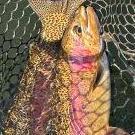
Boated to the dam with John Johnson and 'Cousin Bill' for an evening of fellowship and fishing. The wind was tough for the first 2 hours but we managed quite a few trout- all on white jigs, mostly 1/8 oz. I tied a trailer on Bill's rig with a 1/32 oz white jig which he caught most of his fish on. The wind died down about 5 pm and fishing was great... too bad the sun has to go down on a day like today. Pics... hope you enjoy. The following pics- is me playing around with my underwater camera. Kinda cool.
-
Taney Flow Rate and Fishing Options
Phil Lilley replied to John Smoot's topic in Upper Lake Taneycomo
This time of year typically you're in a boat. If you get to wade, it's a bonus, if that's what you like to do. With the lake levels and spring approaching, I'd say we're going to see generation for several weeks, if not most of this spring, depending on rain of course. I'd say 20,000 cfs-you're boating. If there any generation at all, you can't wade and fish rebar or any waters on that wide of the lake unless you wade from the south side and then it's not feasible... tough at best. Sorry for the negative report... but fishing is really good out of a boat. -
http://www.ozarkflyfishers.org/pages/newsl...2/nl_y07m02.pdf
-
It fell on the building and crushed rafters/wall supports- then rolled to the ground where it busted the sidewalk concrete in 3 places. Just glad no one was walking outside when it happened. It's already cleaned up... but the cabin will need some serious work.
-
Must be your first fish... you're not even sweating.
-
-
I betcha we wake up in the morning and hear of wind damage in the area from tonights front. We had a sycamore tree snap in half- 12 feet off the ground- and fall on a unit tonight (#6). It didn't penetrate the roof but did crush the rafters. The guys inside got a rush... put them in another unit just in case. Missed all the power lines thankfully. Pics in the morning.
-
Well it wasn't the greatest day of fishing here... John Johnson and his crew from Kingfisher, OK arrived last night and fished today. They reported fishing was alittle tough although John and his son Jeff did pretty well early in the am on white jigs at the dam (by boat). But it tapered off quickly and the rest of the day was just "ok". In the afternoon they fished power eggs below Fall Creek and finished with their limits of rainbows for the fish fry scheduled for tomorrow evening.
-
A Friendly Reminder!!!
Phil Lilley replied to Danoinark's topic in General Angling Discussion Archives
Non-res Ark annual - $40 Non-res Mo annual - $40 Ark trout stamp - $12 Mo trout stamp - $7 -
Fox- is there any patterns on your site... pics... that I can link from the article?
-
For Immediate Release: February 22, 2007 A service of the Oklahoma Department of Wildlife Conservation News Contacts: Michael Bergin or Micah Holmes (405) 521-3856 Web site: www.wildlifedepartment.com 2007 Oklahoma Wildlife Expo to include new Outdoor Marketplace Applications available now for Wildlife Department Youth Camp Wildlife Department employment exam scheduled Outdoor Calendar Fishing Report 2007 Oklahoma Wildlife Expo to include new Outdoor Marketplace Oklahomans interested in the outdoors should mark their calendars now for the Oklahoma Department of Wildlife Conservation's third annual Oklahoma Wildlife Expo slated for September 28-30 at the Lazy E Arena. The Wildlife Department will be working with a range of organizations, individuals and outdoor-related companies to host the Expo - an event intended to promote and develop appreciation for Oklahoma's wildlife and natural resources. "The Expo is the state's largest indoor and outdoor recreation event," said Greg Duffy, director of the Wildlife Department. "Literally thousands of people get a chance to enjoy the outdoors and maybe experience something new." Among many other activities, Expo visitors will be able to fish, shoot shotguns, kayak, ride mountain bikes, see and touch wildlife, attend dog training seminars and learn about recreation in the great outdoors. They will also be able to win a variety of free prizes thanks to the Expo's generous sponsors. New this year, the Expo will feature the Outdoor Marketplace, a large tent where commercial vendors will be selling their hunting and fishing-related merchandise, services and memberships to outdoor organizations. "We are confident that the Outdoor Marketplace will be a good addition to the Expo," Duffy said. "It will be one more thing for visitors to enjoy, and it will give Oklahoma's outdoor businesses one more way to showcase their products and services at an event that offers maximum exposure to the state's outdoor-minded individuals." Log on to wildlifedepartment.com regularly to stay up to date on the upcoming Oklahoma Wildlife Expo. For more information about obtaining a booth in the Outdoor Marketplace or to obtain an application for a booth, contact Rhonda Hurst, Wildlife Expo Coordinator at (405) 522-6279. -30- Applications available now for Wildlife Department Youth Camp Youth interested in wildlife, fisheries and law enforcement can apply now to attend the ninth annual Oklahoma Wildlife Department Youth Camp scheduled for June 10-15. "This camp is free, and youth get a chance to learn about several interesting careers in wildlife conservation," said Jon Cunningham, camp coordinator and Oklahoma game warden stationed in Payne County. Held at Camp McFadden near Ponca City, the camp is open to Oklahoma youths ages 14 to 16 and is designed to give an increased awareness of protecting and managing Oklahoma's wildlife resources. Participants will attend courses in firearms handling, wildlife law enforcement, wildlife and fisheries biology, water safety, self-defense, rifle and shotgun training, waterfowl hunting and archery. The camp is free of charge, but will be limited to 35 participants. Applicants should be interested in fish and wildlife management or law enforcement and must submit a 75-word essay explaining why they want to attend the camp, why they believe they should be selected and what they expect to learn while attending. They must also submit a letter of recommendation from a person of their choice other than a family member. The application deadline is April 27, and applicants must turn 14 prior to June 10, 2007. Obtain applications by logging on to the Wildlife Department's Web site at http://www.wildlifedepartment.com/campap.htm. Simply print off the application, fill it out and mail it in with the essay and letter of recommendation to: Oklahoma Department of Wildlife Conservation, Law Enforcement Division Youth Camp, P.O. Box 53465 Oklahoma City, OK 73152. -30- Wildlife Department employment exam scheduled? The Oklahoma Department of Wildlife Conservation will be holding an open employment exam Friday, March 30. Taking the test is the first step in the hiring process for individuals seeking positions as game wardens, biologists, fish hatchery assistant managers or technicians with the Department. The standardized employment exam is set for 10 a.m. at the Tom Steed Development Center Auditorium located on the Rose State College campus. The Center is located immediately north of I-40 on Hudiburg Road in Midwest City. The exam is free, and participants must have photo identification upon check-in. Late arrivals will not be permitted to enter the examination room after 10 a.m. Specific job and education requirements for Department positions as well as suggested study material for the exams are listed on the Department's official Web site at http://www.wildlifedepartment.com/jobs.htm. Individuals may take the exam once in a 12-month period. Test scores are valid for 12 months from the test date, and top scorers will be invited to submit an employment application. When a job opening becomes available, selected applicants from the test register will be scheduled for an interview. For more information, contact the Wildlife Department's Human Resources office at (405) 521-4640. -30- OUTDOOR CALENDAR MARCH 12 & 13 & 15: Hunter Education: Bass Pro Shop (101 Bass Pro Dr.), Broken Arrow; 6:30 p.m. - 9 p.m.; (918) 355-7600, ask for promotion manager. 12 & 13 & 15: Hunter Education: Bass Pro Shop (101 Bass Pro Dr.), Broken Arrow; 6:30 p.m. - 9 p.m.; (918) 355-7600, ask for promotion manager. 14 & 15: Hunter Education: Francis Tuttle 1400A (12777 N Rockwell), OKC; 5:30 p.m. - 9:30 p.m.; (405) 521-4636. 16 & 17: Stars over the Wichitas interpretive program. The public is invited to participate in an evening with the stars where they will study major constellations and other heavenly bodies with the assistance from an amateur astronomer. The two hour program begins 30-minutes after sunset. Participants will meet at the Boulder/Lost Lake picnic area. Program is limited to 15 people and participants must be at least eight years of age. Registration is required and a $5 fee will be collected. Reservations can be made by call (580) 429-3222. 17: Hunter Education: High School, Sallisaw; 8 a.m. - 5 p.m. 17: Hunter Education: Civic Center, Wagoner; 8 a.m. - 5 p.m.; 23-25: The Third Annual Oklahoma Selfbow Jamboree, hosted by the Rutter family. The farm has a three-acre pond next to the campsite, where those who wish can fish. A small covered pavilion will serve as the center of activities. Portable out-houses will be provided, and limited trailer camping is available. There is sufficient room for primitive (tent) camping. For directions and additional information go to www.ojam.org. 26: Hunter Education, High Plains Tech Center, Woodward. 8 a.m. - 4:30 p.m. 26: Hunter Education Home Study, Bass Pro (200 Bass Pro Drive), OKC; 5 p.m. - 9 p.m. (405) 218-5200 30: Standardized Employment Exam, at Rose State College, Tom Steed Building, Auditorium, I-40 & Hudiburg Rd, Midwest City. Exam starts at 10 am. Bring a photo ID. 30 & 31: Project WILD for college credit at Oklahoma State University, Stillwater. Class runs from 4 p.m. - 10 p.m. on Friday and Saturday from 9 a.m.-5 p.m.. For more information or to enroll call Education Outreach at 800-765-8933. FISHING REPORT FEBRUARY 21, 2007 CENTRAL Hefner: Water 40 and clear. Crappie being caught slip corking off the dam. Report submitted by Kelly Roberson, game warden stationed in Oklahoma County. Overholser: Water 44 and murky. Crappie being caught around docks. Report submitted by Kelly Roberson, game warden stationed in Oklahoma County. NORTHEAST Carl Blackwell: Elevation 4 ft. below normal, water 42 and murky. Crappie fair in deeper water on small jigs. Report submitted by Jon Cunningham, game warden stationed in Payne County. Copan: Elevation 2 ft. below normal and murky. Crappie good at 14-15 ft. on chartreuse or black and pink tube jigs from the bank. Catfish fair to good on juglines in or near the river channel. Report submitted by Marni Loftis, state game warden stationed in Washington County. Eucha: Elevation slightly above normal, water 43 and clear. Crappie good on jigs and minnows at 15-16 ft. Largemouth bass fair on spinnerbaits. Report submitted by Dwight Moore, City of Tulsa Fisheries. Ft. Gibson: Elevation normal and clear. Channel catfish good on juglines in the river channel and around drop-offs on whole shad. Crappie fair on minnows and jigs at 10-15 ft. Report submitted Don Cole, game warden stationed in Wagoner County. Grand: Elevation normal and clear. Channel catfish fair on juglines at 20 ft. on cut shad. Crappie fair around baited docks on minnows and jigs. Report submitted by Jim Littlefield, game warden stationed in Delaware County. Greenleaf: Elevation normal and clear. Channel catfish fair on cut bait and stink bait on bottom along creek channels and points. Channel catfish fair on cut bait and stink bait on bottom. Crappie fair on minnows and jigs around fishing dock and brush structure. Report submitted by Lark Wilson, game warden stationed in Muskogee County. Hulah: Elevation 2 ft. below normal and murky. Crappie good at 14-15 ft. on chartreuse or black/pink tube jigs from the bank. Catfish fair to good on jug lines in or near the river channel. Report submitted by Marni Loftis, state game warden stationed in Washington County. Kaw: Elevation normal, water 42 and clear. Crappie good at 22 ft. around both marina boat slips. The average size is 3/4 lbs. Most crappie are being caught from brush piles that have been placed in areas close to natural structure, drop-offs and riprap. The riprap on the Washunga Bay Bridge and Sarge Creek Bridge are historically good areas and good from the upper Arkansas River to the dam. There are brush piles that have been placed by the Wildlife Department, and these areas are marked with fishing buoys. When fishing from a boat, a depth finder is necessary to find the brush. Generally, if your lure or minnow is not in close proximity to the brush (approximately 2 ft. or closer), the fish won't see your bait. When fishing for crappie, try using 1/8 oz jigs with 2-inch body, black and green. Ten lb. supper lines (fire line) helps the abrasive effects of the zebra mussels or minnows. Blue catfish will pickup as the water temps edge closer to 50. Jug fishing with cut bait is a very effective technique with hooks set at 5 ft. intervals from 5 ft. to 30 ft. When fish are caught concentrate hooks and bait in the productive zone. The best areas are the upper portion of the lake in the river channel. Trotlines are also very effective, most anglers use fresh gizzard shad cut into pieces caught with a cast net in the same area. Fishing below Kaw dam has been slow due to limited amount of water being released through the dam. Report submitted by Larry Green, game warden stationed in Osage County. Keystone: Elevation 2 ft. above normal, water 38-42 and clear to murky. Largemouth, smallmouth and spotted bass slow to fair on jig and chunk and suspended baits at 8-15 ft. off points, bluffs and ledges. White bass slow to fair on jigging spoons and minnows at 15-25 ft. in river channel drop-offs. Striped bass below the dam slow on red fins and Long-A bombers at 2-4 ft. early mornings and cloudy days. Striped bass in the lake slow on live shad and big swim baits at 15-25 ft. in river channel drop-offs. Channel catfish slow to fair on worms and shrimp at 8-15 ft. in creeks. Blue catfish fair to good on shad at 15-20 ft. along ledgers and humps. Flathead catfish slow on goldfish at 12-20 ft. along riprap. Crappie fair to good on small jigs and minnows at 15-25 ft. around docks and brush piles. Saugeye fair on 1/8 oz jigs tipped with minnows or crawlers at 4-8 ft. downstream to pedestrian bridge. Report submitted by Larry Sellers, Woody's Bait and Tackle. Oologah: Elevation normal, water in the lower 40s and clear. Crappie fair on jigs around brush piles at 20 ft. Report submitted by Brek Henry, game warden stationed in Rogers County. Skiatook: Elevation 12 ft. below normal, water 38 and clear. Fishing generally poor, but warming temperatures should improve things by the weekend. Crappie fair on minnows at docks. Report submitted by Greenwood Fishing Center. Spavinaw: Elevation slightly above normal, water 40 and clear. Crappie fair on jigs and minnows around dam area. Largemouth bass fair on jigs. Report submitted by Dwight Moore, City of Tulsa Fisheries. Tenkiller: Elevation 2 ft. above normal, water 38 and clear in the upper end. Catfish fair mid-lake on flip flops with cut shad at 30-40 ft. Crappie slow with some action in the upper and lower ends around docks or brush. Report by Monte Brooks, Cookson Village Resort. Webbers Falls: Elevation 1 ft. above normal and murky. Largemouth bass slow. Channel catfish fair on cut bait on bottom. Crappie fair on minnows and jigs at 12 ft. around brush structure. Report submitted by Lark Wilson, game warden stationed in Muskogee County. SOUTHEAST Arbuckle: Elevation normal, water 41 and clear to stained. Due to weather, not many fisherman on lake. Bass best on jig and pig off bluffs. Report submitted by Jack Melton. Blue River: Elevation normal, water 47 and clear. Largemouth bass fair on minnows and flies. Channel catfish fair on liver and worms. Trout good on power bait, super dupers, rooster tails and meal worms. Report submitted by Charles Baker, technician at Blue River Public Fishing and Hunting Area. Eufaula: Elevation 1 1/2 ft. below normal and murky. Largemouth bass and white bass slow. Blue catfish fair on shad at 6-20 ft. off flats. Crappie fair on jigs or minnows at 12-20 ft. around boat docks. Report submitted Ed Rodebush, game warden stationed in McIntosh County. Hugo: Elevation 1/2 ft. above normal, water 45 and murky. Largemouth bass fair on spinnerbaits. Crappie fair on live minnows. Blue catfish fair on liver and cut bait. Report submitted by Wendell Smalling, game warden stationed in Choctaw County. Konawa: Elevation normal, water 44 and clear. Largemouth bass fair on cut baits off points and along roadbeds at 8-10 ft. White bass and striped bass hybrids good on minnows and jigs in the discharge channel at 15 ft. Report submitted by Daryl Howser, game warden stationed in Seminole County. McGee Creek: Elevation 1/2 ft. above normal, water 46 and clear. Largemouth bass fair on soft plastic lures, fished slow over deep drop-offs. White bass fair on grubs, fished along windy points. Report submitted by Larry Luman, game warden stationed in Atoka County. Lower Mountain Fork River: Trout good on March brown mayflies and dry flies. Emerging mayfly and midge fly patterns have also worked well at times. The powerhouse seems to be releasing water daily, but the schedule is erratic. Report submitted by Sid Ingram, Beavers Bend Fly Shop. Pine Creek: Elevation above normal, water 45 and murky. Bass good on crankbaits around points. Crappie fair around tops on jigs. Catfish good on cut shad on juglines. Report submitted by Mark Hannah, game warden stationed in McCurtain County. Robert S. Kerr: Elevation normal, water 41 and murky. Largemouth bass slow at 8-10 ft. using jigs and plastic baits fishing the rock and riprapped areas next to the old channels. Crappie fair at 10 ft. using small minnows fishing the old creek channels. White bass slow at 10 ft. using jigs fishing below the Webbers Falls and Kerr dams. Blue catfish fair using fresh cut bait fishing from the windy shorelines. Report submitted by Rick Olzawski, game warden stationed in Haskell County. Sardis Lake: Elevation 3 ft. below normal. Largemouth bass slow to fair off points and around islands on crankbaits and crawdads. White bass good around islands trolling rattle traps and below the dam on grubs. Catfish fair on trotlines and juglines baited with cut shad in deep flats and channels. Crappie good on minnows around bridges and tower. Walleye fair on jigs and grubs below the dam. Report submitted by Allen Couch, game warden stationed in Pushmataha County. Texoma: Elevation normal, water 46 and clear. Largemouth and smallmouth bass fair on deep-diving baits at 15-20 ft. deep along drop offs. Striped bass fair on live bait at 15-20 ft. in the coves. Channel and blue catfish fair on live minnows at 15-20 ft. above the highway 70 bridge. Crappie fair on small minnows and jigs at 10-15 ft. in underwater brush. Report submitted by Danny Clubb, game warden stationed in Bryan County. Wister: Elevation 1- 1 1/2 ft. above normal. Largemouth bass slow. Crappie good on minnows and jigs. Channel catfish good on cut shad. Report submitted by Randy Fennell, game warden stationed in LeFlore County. SOUTHWEST Ellsworth: Elevation 13 ft. below normal. Crappie fair at Ralph's Resort at 12-15 ft. Catfish fair off rocky points on cut bait. Report submitted by Mike Carroll, game warden stationed in Comanche County. Foss: Elevation 5 ft. below normal, water 38 and clear. Striped bass hybrids good on slabs in deep water near the dam. Walleye good in deep water. Crappie good around structures. Catfish fair. Report submitted by Eric Puyear, B & K Bait House. Ft. Cobb: Elevation 1 3/4 ft. below normal. Crappie slow to fair around marina and boat slips. Saugeye slow to fair along east end of dam. Report submitted by James Edwards Jr., game warden station in Caddo County. Tom Steed: Crappie good on jigs 15-20 ft. over brush piles. Report submitted by David Smith, game warden stationed in Kiowa County. Waurika: Elevation normal, water 38 and murky. Blue catfish fair on shad and punch bait. Report submitted by Phillip Cottrill, game warden stationed in Jefferson County.
-
Having software problems... probably going to have to buy another kind. Sent in a trouble ticket but no response.
