
Phil Lilley
-
Posts
19,030 -
Joined
-
Last visited
-
Days Won
132
Content Type
Profiles
Forums
Blogs
Events
Articles
Video Feed
Gallery
Everything posted by Phil Lilley
-
The Whos Coming List (and Bringing What)
Phil Lilley replied to Leonard's topic in Upper Lake Taneycomo
Brian - where were you?? -
Wesley Delport is a Naturalist in Springfield. I wholeheartedly recommend anyone making an appointment and seeing him. He doesn't charge that much and will tell you exactly what you need to do to be healthy. I saw him last week and was amazed how much I learned. I knew this before but he reinforced this - cancer cannot live in an non-acid environment. Buy some alkaline strips and see where your body is at and then make adjustments in what you eat and what you take as far as supplements. If you get cancer, go to dramatic measures to become acid free. Delport's wife had no chance to live with liver cancer several years ago and lived on supplements and carrot juice and recovered 100%. Talking to a friend yesterday - a person has to make a heart change and decide at some point that we have to change our way of living and do the things to make us healthy and stay that way. It's hard but better than the alternative... being sick and dying. http://www.getwellnaturally.net
-
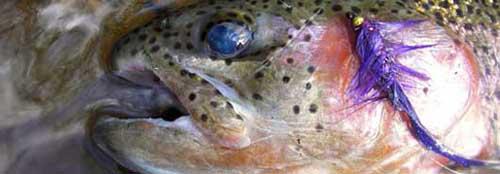 by Don Mulnik ~~ It was last summer when I discovered the Woolly Bugger while fishing in Lake Taneycomo. It was one of those days when nothing seemed to work well in the trophy area below the dam. So, a friend of mine said "try this" as the sun started to heat up the rocks below the dam. I tied on the odd looking creature in a brown color on a #8 hook and let it fly. The rest is history, I have been hooked on the woolly bugger since. Since that summer encounter with the woolly it has produced consistently right thorough Fall and into the Winter and onto my trips thus far in the Spring. What is it about this thing that consistently produces results? Well, it seems to be everything and nothing at the same time to the waiting trout. It is both a simple attractor and imitator of aquatic life all at the same time. It can imitate the Sculpin, the Crayfish, and larger insects and minnows in the food chain. Joel Vance has a feature article in the April 99' issue of the Missouri Conservationist about the Woolly Bugger. In it he tells us that this fly gets no respect but has been around since the days of Izaak Walton. He further states that "Woolly buggers are woolly worms with chrome fenders", meaning they are usually tied with a little flash in the tail or body. And, I agree with his conclusions that this fly is "Dynamite" in Missouri waters. Having had almost a years experience with this fly let me tell you how I fish it in Taneycomo. Just like the Soft Hackle I cast this fly across current or at a quarter downstream. I use a five weight rod with a tapered leader of 7 feet and at least a 4 foot section of 5x tippet. After casting cross current I let the fly sink while watching the line, many times strikes occur while the fly sinks. After the line takes a natural bow I begin slowly stripping the line and watch for the strike. Sometimes they will hit on the strip in the swing other times they will hit when the line is almost straight downstream from you. At times you have to vary the retrieve, so experiment. To trout it must seem a big meal compared to our usual offerings below the dam and I especially like it when things get a little windy and there's a healthy chop on the water. The woolly has done well for me since last summer catching trout of all sizes, from the dinks that come from our Federal hatchery to the nicer fish put in by the DOC and on to the brutes that have been around awhile. My favorite woolly color is a dark olive, on a size 10 hook, with a 2x long shank. I tie mine with several strands of flash in the tail and a little along the body. I also weight them with 15-20 turns of medium lead on the hook. I have also had success with black, brown, and light olive. And, while I have made them in various sizes from 12 to 6. It seems that the size 10 produce the best for me. So, next time when you have the need to try something different get out the woolly buggers with "Chrome fenders" and hang on. They are easy to tie, available at local fly shops, and releasing fish is a breeze thanks to the long shank.
 -
by Don Mulnik ~~ It was last summer when I discovered the Woolly Bugger while fishing in Lake Taneycomo. It was one of those days when nothing seemed to work well in the trophy area below the dam. So, a friend of mine said "try this" as the sun started to heat up the rocks below the dam. I tied on the odd looking creature in a brown color on a #8 hook and let it fly. The rest is history, I have been hooked on the woolly bugger since. Since that summer encounter with the woolly it has produced consistently right thorough Fall and into the Winter and onto my trips thus far in the Spring. What is it about this thing that consistently produces results? Well, it seems to be everything and nothing at the same time to the waiting trout. It is both a simple attractor and imitator of aquatic life all at the same time. It can imitate the Sculpin, the Crayfish, and larger insects and minnows in the food chain. Joel Vance has a feature article in the April 99' issue of the Missouri Conservationist about the Woolly Bugger. In it he tells us that this fly gets no respect but has been around since the days of Izaak Walton. He further states that "Woolly buggers are woolly worms with chrome fenders", meaning they are usually tied with a little flash in the tail or body. And, I agree with his conclusions that this fly is "Dynamite" in Missouri waters. Having had almost a years experience with this fly let me tell you how I fish it in Taneycomo. Just like the Soft Hackle I cast this fly across current or at a quarter downstream. I use a five weight rod with a tapered leader of 7 feet and at least a 4 foot section of 5x tippet. After casting cross current I let the fly sink while watching the line, many times strikes occur while the fly sinks. After the line takes a natural bow I begin slowly stripping the line and watch for the strike. Sometimes they will hit on the strip in the swing other times they will hit when the line is almost straight downstream from you. At times you have to vary the retrieve, so experiment. To trout it must seem a big meal compared to our usual offerings below the dam and I especially like it when things get a little windy and there's a healthy chop on the water. The woolly has done well for me since last summer catching trout of all sizes, from the dinks that come from our Federal hatchery to the nicer fish put in by the DOC and on to the brutes that have been around awhile. My favorite woolly color is a dark olive, on a size 10 hook, with a 2x long shank. I tie mine with several strands of flash in the tail and a little along the body. I also weight them with 15-20 turns of medium lead on the hook. I have also had success with black, brown, and light olive. And, while I have made them in various sizes from 12 to 6. It seems that the size 10 produce the best for me. So, next time when you have the need to try something different get out the woolly buggers with "Chrome fenders" and hang on. They are easy to tie, available at local fly shops, and releasing fish is a breeze thanks to the long shank. View full article
-
The Whos Coming List (and Bringing What)
Phil Lilley replied to Leonard's topic in Upper Lake Taneycomo
I'll be there about 10 am. Water was off this afternoon. May be off some tomorrow too. -
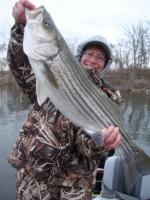
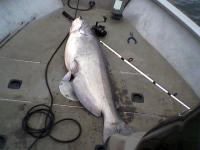
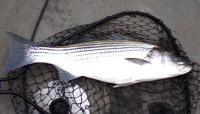
Five years ago today was my first really good day of striper fishing on Lake Norfork. Had caught some earlier but on this day five years ago I caught six nice stripers across from Bidwell point, each one larger than the one before. The sixth striper was a pretty good one. So today I went to the same spot but didn't really mark anything that promising so I went to Float Creek and put out shiners. Quickly caught a couple of small stripers and had numerous tugs on the shiners, but after awhile my back balloon starting moving away so I set the hook and starting pulling. Wasn't a fast fish but when it got close to the boat it took off at a steady pace. I kept pulling on that fish for awhile realizing that this was no small fish, it was a horse, but I finally got it to the boat and it was no small job getting it into the boat. It weighed over 41 pounds but unfortunately it was one of those stripers with whiskers, so after taking a picture, I dumped it back into the lake. That Blue Cat was the second largest fish I have ever caught. I did catch another striper after that. What a difference in how they fight. The striper runs and pulls like mad, the catfish just pulls slowly and steadily. You never know what you might hook into out there and that is the secret, being out there. 12-31 1 of 7 stripers caught today Depth; 60 ft; TEMP; 48 Place; Hudson point Bait; 3/4 oz white with green back binks spoon Time; 9:30 to 11o clock Did not mark alot of fish, but when you did some one got a strike! Happy New Years Bink
-
Here's a link to the Sow Bug Site including the schedule of events. http://www.northarka.../SBSeminar.html Attached it the December issue of the North Arkansas FFF Newsletter. nafff-12-09_newsletter.pdf
-
Here's a link to the Sow Bug Site including the schedule of events. http://www.northarkansasflyfisher.org/SBSeminar.html Attached it the December issue of the North Arkansas FFF Newsletter. nafff-12-09_newsletter.pdf
-
I've used the old cell phone call trick several times and it's worked more times than not.
-
Boated up to Big Hole about 3 pm today. Hardly no one on the lake. No one above Fall Creek except some guys wading along the edges. No wind at all. Very dark, cloud cover, misty rain. I had my spin and fly rod but hadn't done any good jig fishing in a while so the fly rod didn't get used. Started with a 1/8th oz scuplin/ginger jig. Didn't want to boat above Big Hole... they weren't running enough water to mess with it. Started drifting and catching rainbows. They were hitting it on the drop, not real hard but hard enough to get a good hookset. Drifted all the way to Fall Creek - took 90 minutes. 40 rainbows boated. 11 were under 12 inches. Hooked 30 other trout that pulled out before landing them. Caught 4 below Fall Creek. 19 rainbows came above Lookout, 4 were under 12 inches. Largest- about 15 inches. Had several big-bellied rainbows like they'd been eating shad but I seriously doubt it. All but a few were very healthy and thick. A couple were skinny. 2 dark males. Most of the <12 inchers were very colorful with white tipped fins. And so were a few of the other rainbows. I wanted to take some pics but it was dark and the fish were biting too well. They quit when I hit Fall Creek- I tried for another 30 minutes there and down at Short Creek but to no avail. Temp was about 40. Nice not to freeze your fingers!
-
Fishing goals - still have alot of rivers and streams in the Ozarks I haven't fished. Hope to add new ones and write about them.
-
Foot in mouth... Donna is a gal. She's a veteran member and well respected on the Table Rock Forum.
-
No quick ones... I had it for 18 months once. Forced me to go to a Chiropractor for the first time. He worked on it 3 times a week, then twice a week for about 6 weeks total. It hurt - he basically would find the pressure point (the place where it was the most sore) and push as hard as he could. It would break up the tendentious and let the blood in to heal it. It worked. Never stopped going to the Chiropractor... haven't had any issues since (6 years). Have a friend do the same thing - save some money. But be sure to sit on the opposite hand cause if you don't, you'll smack your friend when he pushes... it hurts that much. But after it's done, it does feel much better.
-
I am. New member. Just got the newsletter. Have asked permission to attach it here on the forum. Waiting for a response.
-
Talked to Buster... he hasn't talked to the guy he got the initial report from in a week. But he said they haven't changed the water flow pattern so fishing should not have changed - still should be good. Babler and I are going to try to get down there next week. Try.
-
Love those crappies!! Lots of guys here do too so you're in good company! Welcome.
-
Man, those fish are pretty!
-
Ozarkanglers Forum Quoted In St Louis Post
Phil Lilley replied to Phil Lilley's topic in Conservation Issues
Thanks for the compliment... but this forum is nothing without the members who post here. -
Ozarkanglers Forum Quoted In St Louis Post
Phil Lilley replied to Phil Lilley's topic in Conservation Issues
My guess on polls... consistency is the key in collecting information. They have been using creel people for years - for better or worse, it's the same way every time. They could start a new way of doing it but it would take many years to develop the consistency they have now. You're right though... there's better ways for sure. Just a guess. There might be people here that do this thing for a living and could speak to it better than me. -
If you call our lodge, Bill Babler is our #1 guide. If he's busy, we have numerous others, most specialize in fishing the trophy area. We'll be sure to put you with someone that matches your needs as well as desire to learn how to fish the upper lake.
-
<p><img src="http://forums.ozarkanglers.com/images/2009/prey2.jpg" width="250" height="226" hspace="6" vspace="6" align="right"> Living in the Ozarks offers year round opportunities to enjoy the outdoors. Anglers, hunters, boaters, hikers and campers have limitless options regardless of the season. Anglers have the bounty of multiple lakes offering some of the best winter fishing anywhere in the world. While many fisherman rave about catches on Lake of the Ozarks, Norfolk or Bull Shoals, Table Rock Lake shines like an unrivaled jewel producing smallmouth, largemouth and spotted bass throughout the winter months. <br> Understanding winter fishing on Table Rock Lake requires an awareness of seasonal movements as they relate to the changing water temperature. Water temperature and the movement of forage determine fish location through out the winter, your knowledge of this seasonal progression will determine your success. </p> <p><strong>60 – 70 Degrees:</strong><br> While truly not winter fishing, water temperatures in this range are more likely in the mid to late fall. In this temperature range most forage and fish are active. Shad are concentrated in the main lake and in deeper major creeks, wind and current are crucial to the positioning of zooplankton and shad. This is also the time when the corps of engineers will begin to draw down Table Rock for the winter months; current caused by the draw down will group shad on points and other current breaks ambushing zooplankton in the passing current. The concentration of shad naturally attracts feeding fish. Typical summer patterns continue to be effective during this temperature range; drop shotting, football jigs, Carolina rigs and deep crankbaits are all productive presentations on points and humps throughout the lake. Additionally, spinnerbaits and other fast moving lures begin to emerge as valuable presentations. Isolated cover on current breaks such as cedar trees and docks are important areas to throw spinnerbaits. This time of year large fish will suspend in and around isolated cover, throw spinnerbaits beyond the cover, burn it back pausing the retrieve long enough to flare the skirt next to the cover. Strikes will come right after the pause; most will be visible and violent. <br> Crawfish are also important forage in this temperature range, at approximately sixty degrees they begin to feed for their upcoming hibernation period. Preparing for hibernation requires crawfish to move more in search of food leaving the security of rocks and other cover and becoming susceptible to feeding fish. Transition areas and isolated rock cover on gravel banks are key locations, craw fish imitation baits like jigs, shaky heads and tubes are prime producers. <br> Productive depths vary with water clarity on Table Rock within this temperature range. On the lower end clear water concentrates most fish from 15’ to 40’ deep while the upper ends of the lake are more turbid with shallow cover and fish can be as in water as thin as a couple of feet. </p> <p><strong><img src="http://forums.ozarkanglers.com/images/2009/prey3.jpg" width="241" height="288" hspace="6" vspace="6" align="left">50 – 60 Degrees</strong><br> As the water cools below 60 degrees the activity through the water column rapidly increases. Shad begin to move shallower following zooplankton toward the bank, crawfish move more and more as hibernation inches closer, in turn bass move shallower in search of forage. <br> Shallow cover is increasingly important to both forage and fish; both seeking the protection provided by shallow rocks, wood and brush. Natural shallow cover can be sparse on Table Rock, forge and fish will concentrate on anything. While there may be few stumps or brush, rocks and docks provide all the cover they need. <br> Fishing locations differ in this temperature range, key locations require both cover and access to deep water. Steep rocky banks are very important; rocks hold crawfish and steep banks offer bass quick access to deep water. Feeding fish will tend to stay fairly shallow through out the lake, with most active fish staying in less than ten feet deep while feeding and retreating to the safety of 20’ deep or more when less active. These rocky banks are perfect locations for paralleling medium running crankbaits like Storm Wiggle Warts or Bomber 7A’s, these baits mimic fleeing crawfish bouncing off rocks and other cover and draw reaction strikes from feeding and inactive fish. Keep your boat 8’ – 10’ deep and make parallel cast ahead of the boat while working along the bank. <br> Larger docks are important in this temperature range, big commercial and community docks offer cover over a greater depth range and allow fish and forage to move through that range without leaving the safety of cover. Docks on gravel and mixed gravel and rock points will generally be more productive than those on straight banks, the effect of current coupled with the cover of a dock can be fantastic within this temperature range. Jigs, tubes and spoons are the key presentations around docks. Smaller jigs like a Jewel Eakins jig tend to fall slower and draw more strikes from suspending fish, natural browns and greens are key producers. On the deeper end of docks, spoons should be fished within the stalls and around any ladders or other extensions. Pitch spoons close to walkways and corners, allow the spoon to fall vertically by feeding line and paying attention to the fall. Most strikes will come as the bait is falling so pay close attention to any changes in fall rate. <br> While numbers of fish move shallow in this temperature range many remain in the safety of deep water and feed on schools of shad and larger crawfish on the move over gravel points and humps. Typically these fish will be located in depths from 25’ – 50’ deep, holding tight to the bottom or isolated cover. Two distinct methods are effective on deep locations; vertically fishing spoons and drop shot rigs and casting heavy football jigs. For vertical presentations using a depth finder to locate fish holding tight to bottom is crucial, locate schools or individual fish on or near the bottom and drop bait directly in front of or just above the fish. Watch the fish carefully for a reaction to the bait and adjust your bait color, size or movement until a strike is drawn. For horizontal presentations make long casts with ¾ oz or 1 oz Jewel or Chompers football jigs covering a variety of depths on a point or hump. Change up the retrieve from a slow drag to short hops, big hops and even a series of jerks until a strike is drawn. Once a fish is caught pay close attention to the depth, retrieve and any cover the fish may be on to repeat the pattern. <br> Within this temperature range the lake will turn over and the oxygen level throughout water column will stratify. The equal levels of oxygen through all depths allow fish to survive and feed at any depth in the lake. During this time fish can be caught at any depth from 1’ – 200’ deep, effectively scattering fish and making fishing more difficult for a brief period.</p> <p><strong>4<img src="http://forums.ozarkanglers.com/images/2009/prey1.jpg" width="250" height="268" hspace="6" vspace="6" align="right">0 – 50 Degrees</strong><br> Cooler water changes the location of forage through out the water column. As the water cools into the 40’s shad begin a migration to the larger creek arms in search of current and zooplankton. While shad continue to move in and out of creeks throughout this temperature range, the cooler water temperatures have slowed their metabolism to a point that any movement is slow and deliberate. In addition, water temperatures in the lower 40’s are the bottom of threadfin shad’s survival range and a shad kill will begin. <br> Targeting fish during these conditions is relatively easy; finding bait = finding fish. Look for schools of shad suspended around tree tops in the middle of creek arms through out the lake. Traditionally the most productive depths have been 40’ – 60’ over as much as 150’ of water. Look for trees that top out in these depths with shad close by to be productive. Seagulls and Loons will also help to locate fish; Lake Loons will congregate over and dive to schools of shad, Loons will force shad closer to the surface and Seagulls will hover over the schools diving into the water to feed on shad. This much movement and activity by shad will attract bass and a feeding frenzy will ensue. <br> Patterns for these fish are simple, fish vertically with spoons, drop shot rigs, ice baits and “cluster rigs”. White ¾ oz spoons are a mainstay but ½ oz and 1 oz spoons have their place when matching the size of shad, drop shot rigs are very effective in and around trees, use worms and shad imitating baits to increase success, Rapala ice baits are great in open water for suspended fish, their erratic movement will draw strikes when nothing else will and cluster rigs combine the best of both worlds incorporating multiple drop shot hooks and an ice bait or grub. Once shad have been located use a depth finder to locate fish holding in trees, on ledges or under schools of shad. Drop baits directly in front of or above suspended fish, vary colors, movement and size of baits until a strike is drawn. Once a single fish is hooked the entire school will become active and several fish can be caught before fish settle back down. <br> While deep fishing off shore is the most predictable pattern in this temperature range there is still a shallow bite on Table Rock. In the upper reaches of the lake incoming current from rivers and major creeks will help to keep shad and fish shallow throughout the early winter months. Bass will hold on steeper rocky banks throughout rivers and creeks, these areas are usually deeper channel swing banks with transitions on both ends. Target these areas with Jewel Eakins jigs, Chompers tubes and shaky heads. Fish baits slowly, working from the bank into the channel. Pay close attention to any wood cover or larger rocks mixed in the channel bank, these areas will usually hold fish waiting to ambush forage as it happens by. Ultra slow retrieves are critical for success when the water is in this temperature range and colder. </p> <p><strong>30 – 40 Degrees</strong><br> Generally speaking this is as cold as the water temperature on Table Rock gets. At these temperatures there will be a shad kill taking place and the metabolic rate of fish will be slow causing limited movement and feeding. The forage base at these temperatures is primarily shad, brook silverside and pan fish. Locating fish again revolves around locating forage; large schools of threadfin shad will be located in major creek arms, gizzard shad will hold close to trees and vertical cover, bluegill and other pan fish will be holding in trees or around docks and brook silverside will be on points and humps on both the main lake and creek arms. <br> Vertical fishing is still the most predictable and productive form of fishing in these water temperatures. Locate the schools of bait and utilize techniques described earlier. As the shad kill takes place fishing will improve, less active fish will readily feed on dying shad throughout the water column. While it is impossible to see shad dying and falling from the school in deep water, a spike in fish activity below a school of shad (seen on a depth finder) is a good indicator of shad dying off and falling from the school. Spoons are king during this time of year; a falling spoon mimics a dying shad and will draw strikes from fish waiting below a school. <br> Shallow fishing can be slow and difficult in this temperature range; fish tend to be sluggish, crawfish are in short supply, and once found fish tend to be slow to chase bait and feed. Suspending jerkbaits offer shallow fisherman a productive option in this temperature range. Working suspending jerkbaits on bluffs or steep chunk rock banks can be very effective in colder water temperatures; cedar trees and other vertical cover are also key locations to work these baits. Make casts perpendicular to deeper banks and work the bait in a series of jerks or sweeping motions allowing the bait to rest from five seconds to a full minute between jerks. Perpendicular casts allow the entire depth range to be covered on a single cast. The cadence and pause time will vary throughout the temperature range and mood of fish, on clear cold days longer pauses are the general rule as fish will be slower to chase and are coming out of deeper water. On cloudy and / or windy days shorter pauses and a quicker cadence will work better as fish tend to be more active. </p> <p><strong>Warming Water</strong><br> As water temperatures begin to rise the scenarios described above work in reverse order; spoons and jerkbaits to jigs and drop shot rigs, football jigs and crankbaits and eventually spinnerbaits and soft plastics. While the timing may vary due to the severity of winter and water levels, fish will follow the same patterns based on water temperature season after season and year after year. <br> Success on Table Rock Lake in the winter is coupled to an understanding the affect of water temperature on the forage base and fish. Paying close attention to the temperature and not the calendar will be the key to your success.</p>
-
Great information. Thanks! May change after tonight's snow... not sure what the area will get.
-
http://www.stltoday.com/stltoday/sports/stories.nsf/outdoors/story/751EDFBEF873632D86257697008219FD?OpenDocument
-
With cancellations this weekend on account of the weather (snow mainly), we have quite a few rooms open including most of our bigger condos. We're offering half price on these larger units (15, 17, 18, 23) with at least a 2-night stay. http://lilleyslanding.com for details on units. Call Lisa at 1-800-284-2196 for reservations. Our phone is very busy - taking reservations for the summer - so keep trying or drop her an email at office@lilleyslanding.com. Be sure to include a callback phone number. Fishing/Shopping/Shows are still open too.
-
That's fantastic news!! Praise God!!!


