
Phil Lilley
-
Posts
19,030 -
Joined
-
Last visited
-
Days Won
132
Content Type
Profiles
Forums
Blogs
Events
Articles
Video Feed
Gallery
Everything posted by Phil Lilley
-
I’m going to take a leap of faith and predict water flows for the next 3 months. Do I have your attention? Am I serious? Kinda. But what I’d like to do in this short article is to suggest a couple of fly fishing patterns for this fall… or anytime when they water is running 1-2 generators. I’m going to take a leap of faith and predict water flows for the next 3 months. Do I have your attention? Am I serious? Kinda. But what I’d like to do in this short article is to suggest a couple of fly fishing patterns for this fall… or anytime when they water is running 1-2 generators. I have found our rainbows like to hold in very shallow water when the lake is at certain levels. With one to two units running the level is between 701.4 and 707.8, 701.3 being power pool. When the level rises over 12 inches above gravel flats, rainbows move up on them and feed on mainly midge larva and adults. Holding on the bottom, they don’t have far to move to take anything flowing by. This includes my fly. Where are these areas? To start, the bank’s edge, north side, from #1 outlet to #2 outlet. From the TU stairs (above outlet #3), north side, all the way down to big hole and covers all the gravel bar thereof. Levels dictate where trout will hold. At the “leak” or where water rushes from the north bank below big hole about 300 yards, north bank, downstream about 100 yards before dropping off into deeper water along the north bank. South bank from the old boat ramp gravel bar down to the bottom island just before the KOA Campground. Now to the north bank, where the lake bends to the south from the last set of stairs below the MDC boat ramp- that entire shallow flat to the top of “Clay Banks”. Trout will hold on the north bank all the way through clay banks but not as well as the bottom of this area. North and south banks from well above Lookout Island through the island. The north bank is extremely good. Around the corner, starting just past Andy’s house (big white mansion), north bank all the way to the steps at Fall Creek Condos. Switch to the other side immediately and fished the south side to the tip of the island. One more- the gravel bar at Short Creek- all of it. Now that we’ve covered where to fish, now how to… swinging stripping, lifting, twitching………. sounds like a PEO party gone bad. From my boat, I like to throw out an anchor, concrete and round on a fairly short rope, and drag it, slowing the boat down just enough to let me work the water. I know this will offend some who think dragging chains or anchors is unethical, but I’m not sure how else to achieve this drift without someone working the trolling motor for me. I choose a fly. Crackleback, soft hackle, woolly, elk hair caddis, stimulator, griffin’s gnat all are good choices at times. I usually start with a #16 crackleback and move on from there. I try to position the boat out in the current but close to the bank I’m fishing—close enough to make a downstream perpendicular to the bank, letting the fly skim across the surface from the edge of the grass to the deeper water. The retrieve is the fun part. My favorite is the lift. After casting, I quickly start lifting the rod tip, dragging the fly immediately after it hits the water. Slow, fast, shacking or twitching the tip for effect—I try them all, trying to find what mood the trout are in—aggressive or passive. Lifting and dragging the fly so quickly keeps the fly on the surface longer, not letting it sit and soak up water or letting the tippet sink, pulling the fly down. If you don’t want the fly to sink at all, grease the leader and tippet before starting. I’ve also found working the fly straight downstream is effective. While I’m still moving downstream, I’ve worked a woolly using only the rod tip, up and down, dropping the fly back and then pulling it forward and up to the surface. The trout usually take the fly as it’s dropped back and/or holding it still after it’s dropped back. Standing high above the surface of the water allows me to see all the action--and that’s the best part. I’ve seen rainbows come from well off the bank, in deep pockets, race up and slam my fly. I’ve also seen them move slowly over in position to take a peak at this so-called bug floating downstream, put his nose on the bug and turn away, laughing all the while. I’m serious! I’ve seen them smile at me!! “Do I look stupid to you,” they exclaimed. View full article
-
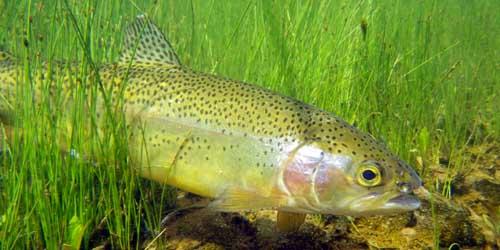 On an evening fishing trip on Lake Taneycomo, you may have swatted at a swarm of bugs over head, assuming they were mosquitoes. But you were flailing at some of your best fishing buddies. Midges -- not mosquitoes – swarm on Taneycomo and the trout you were targeting absolutely love those tiny bugs. If you were fly fishing, their presence should have cued you to tie on a midge pattern. Midges, or true flies, are part of the order Diptera. The presence of a single pair of wings distinguishes true flies from other insects with “fly” in their name, such as dragonflies and mayflies. Diptera is a large order, containing an estimated 240,000 species of mosquitoes, gnats and midges. There are others, as well, but for now, those are the flies that interest fishermen. Enough background science; let’s talk fishing. The most popular midge we fish here on Lake Taneycomo is the zebra midge. It best imitates the midge in the stage where it’s rising in the water from the bottom to the surface to hatch. This is where it’s easiest to be taken by our hungry trout. Just imagine a small pupa drifting slowly towards the surface. All a rainbow has to do is cruise around just below the surface and eat. They don’t have to chase them down, and, therefore, expend very little energy. All we have to do is drop a zebra midge in front of them and they’ll take it, at least most of the time if they’re feeding. There are literally dozens and dozens of types of midges. Their size and color differ widely, so you can imagine how many different midge patterns there are. But I’ve found there are a few go-to patterns that work most of the time. You can make them as simple or as complicated as you want. I like simple, and I like to catch fish, so I stay with a few patterns and colors and do well enough to satisfy my fish catching addiction. First, where do you look for rainbows feeding on midges? Everywhere. Midges can hatch on every square inch of Lake Taneycomo—any lake or stream for that matter. The depth of water makes no difference. Late afternoon and evening seem to be the best times to look for hatches, but again, they can hatch at all hours of the day, and night. Clouds, wind, weather patterns and even generation all trigger hatches. One of my favorite areas to look for midging trout is above Fall Creek in Taneycomo’s trophy area. The water is not as deep, and I find this factor enhances my chance of catching fish, Plus there are more trout per cubic foot of water than other parts of the lower lake. More trout means more competition for food and, therefore, more aggressive strikes. The other area is out in front of my resort (Lilleys' Landing). In the evenings, if they're not running too much water or if the water is off and not moving, I love to go out and fish the last 45 minutes of the day for midging rainbows. If they are fallen leaves on the lake's surface, trout till hang under them and that's where I target them. You can identify trout feeding on midges by their rises or dimples on the water’s surface. There are three distinctive signs of varied “takes” displayed by trout when they feed. “Tailing” is when you see only the trout’s tail rise out of the water. He is feeding on pupa under the water’s surface. “Midging” is where the nose of the trout just barely rises above the surface and takes a midge pupa that has attached itself on the underside film and is about ready to emerge into a fly. The third is when trout chase and take a “dry” or a midge that has hatched and is on the surface drying its wings. These trout make a splash, or at times, come all the way out of the water, their momentum thrusting them through the surface and into the air. Any of these signs signal that trout are actively feeding and you should target them using a midge pattern. For the purpose of this article, I’ll stay with identifying ways to present zebra midges, although there are other types of midge patterns such as thread midges, soft hackles, emergers, brassies and many others. Color and size vary with what the trout are seeing and liking. My go-to colors are red and black any where from a #14 to #18 in size. I like gold or nickel tungsten beads with red or black and copper with olive or rust thread with copper wire wrap. There’s also a pattern called primrose and pearl (P&P), which is tied using pearl flash with a copper wire wrap. Then there's the Rusty, a rust color thread body, black bead and black wire wrap. And the Ugly which is a dark green thread body, black bead and black wire wrap. Zebras are almost always fished under an indicator, suspended under the surface at varied depths. Depth is dictated by where the trout are “cruising” since you want to put it right in front of their faces. I tend to like to aim at feeding trout. I see a rise and throw at it. It’s really a lot of fun for us fly casters. Having to cast both long and short casts, landing the fly within a foot from where you last saw a rise is challenging and good practice for accuracy. The reward is a nice rainbow on the end of your line. I use a small palsa float or something that is small and light enough to go under if the fly is taken ever so slightly. This also helps when I’m fishing in very shallow water and I don’t want to spook a school of trout when they’re feeding. I also use a long leader for the same reason. We present a zebra midge in deeper water as well. This is where we get creative . . . Tandem rigs using a zebra along with a scud, egg, a san juan worm or even a micro jig can be very productive. The depth depends on the depth of water as well as where you think trout are holding in the column. If you’re using a scud as a second fly, it should be the bottom fly. Fish it close, if not on the bottom, with the zebra tied about 18 inches from the scud. If there’s a fly pattern that’s foolproof, this is it. Fishing a zebra midge on Taneycomo is by far one of the best ways to catch big numbers and big trout on our lake.
 -
On an evening fishing trip on Lake Taneycomo, you may have swatted at a swarm of bugs over head, assuming they were mosquitoes. But you were flailing at some of your best fishing buddies. Midges -- not mosquitoes – swarm on Taneycomo and the trout you were targeting absolutely love those tiny bugs. If you were fly fishing, their presence should have cued you to tie on a midge pattern. On an evening fishing trip on Lake Taneycomo, you may have swatted at a swarm of bugs over head, assuming they were mosquitoes. But you were flailing at some of your best fishing buddies. Midges -- not mosquitoes – swarm on Taneycomo and the trout you were targeting absolutely love those tiny bugs. If you were fly fishing, their presence should have cued you to tie on a midge pattern. Midges, or true flies, are part of the order Diptera. The presence of a single pair of wings distinguishes true flies from other insects with “fly” in their name, such as dragonflies and mayflies. Diptera is a large order, containing an estimated 240,000 species of mosquitoes, gnats and midges. There are others, as well, but for now, those are the flies that interest fishermen. Enough background science; let’s talk fishing. The most popular midge we fish here on Lake Taneycomo is the zebra midge. It best imitates the midge in the stage where it’s rising in the water from the bottom to the surface to hatch. This is where it’s easiest to be taken by our hungry trout. Just imagine a small pupa drifting slowly towards the surface. All a rainbow has to do is cruise around just below the surface and eat. They don’t have to chase them down, and, therefore, expend very little energy. All we have to do is drop a zebra midge in front of them and they’ll take it, at least most of the time if they’re feeding. There are literally dozens and dozens of types of midges. Their size and color differ widely, so you can imagine how many different midge patterns there are. But I’ve found there are a few go-to patterns that work most of the time. You can make them as simple or as complicated as you want. I like simple, and I like to catch fish, so I stay with a few patterns and colors and do well enough to satisfy my fish catching addiction. First, where do you look for rainbows feeding on midges? Everywhere. Midges can hatch on every square inch of Lake Taneycomo—any lake or stream for that matter. The depth of water makes no difference. Late afternoon and evening seem to be the best times to look for hatches, but again, they can hatch at all hours of the day, and night. Clouds, wind, weather patterns and even generation all trigger hatches. One of my favorite areas to look for midging trout is above Fall Creek in Taneycomo’s trophy area. The water is not as deep, and I find this factor enhances my chance of catching fish, Plus there are more trout per cubic foot of water than other parts of the lower lake. More trout means more competition for food and, therefore, more aggressive strikes. The other area is out in front of my resort (Lilleys' Landing). In the evenings, if they're not running too much water or if the water is off and not moving, I love to go out and fish the last 45 minutes of the day for midging rainbows. If they are fallen leaves on the lake's surface, trout till hang under them and that's where I target them. You can identify trout feeding on midges by their rises or dimples on the water’s surface. There are three distinctive signs of varied “takes” displayed by trout when they feed. “Tailing” is when you see only the trout’s tail rise out of the water. He is feeding on pupa under the water’s surface. “Midging” is where the nose of the trout just barely rises above the surface and takes a midge pupa that has attached itself on the underside film and is about ready to emerge into a fly. The third is when trout chase and take a “dry” or a midge that has hatched and is on the surface drying its wings. These trout make a splash, or at times, come all the way out of the water, their momentum thrusting them through the surface and into the air. Any of these signs signal that trout are actively feeding and you should target them using a midge pattern. For the purpose of this article, I’ll stay with identifying ways to present zebra midges, although there are other types of midge patterns such as thread midges, soft hackles, emergers, brassies and many others. Color and size vary with what the trout are seeing and liking. My go-to colors are red and black any where from a #14 to #18 in size. I like gold or nickel tungsten beads with red or black and copper with olive or rust thread with copper wire wrap. There’s also a pattern called primrose and pearl (P&P), which is tied using pearl flash with a copper wire wrap. Then there's the Rusty, a rust color thread body, black bead and black wire wrap. And the Ugly which is a dark green thread body, black bead and black wire wrap. Zebras are almost always fished under an indicator, suspended under the surface at varied depths. Depth is dictated by where the trout are “cruising” since you want to put it right in front of their faces. I tend to like to aim at feeding trout. I see a rise and throw at it. It’s really a lot of fun for us fly casters. Having to cast both long and short casts, landing the fly within a foot from where you last saw a rise is challenging and good practice for accuracy. The reward is a nice rainbow on the end of your line. I use a small palsa float or something that is small and light enough to go under if the fly is taken ever so slightly. This also helps when I’m fishing in very shallow water and I don’t want to spook a school of trout when they’re feeding. I also use a long leader for the same reason. We present a zebra midge in deeper water as well. This is where we get creative . . . Tandem rigs using a zebra along with a scud, egg, a san juan worm or even a micro jig can be very productive. The depth depends on the depth of water as well as where you think trout are holding in the column. If you’re using a scud as a second fly, it should be the bottom fly. Fish it close, if not on the bottom, with the zebra tied about 18 inches from the scud. If there’s a fly pattern that’s foolproof, this is it. Fishing a zebra midge on Taneycomo is by far one of the best ways to catch big numbers and big trout on our lake. View full article
-
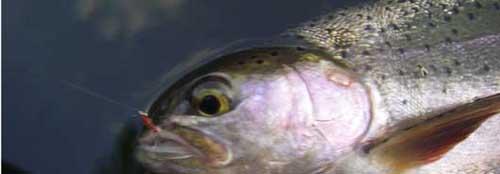 By Brett Rader ~~ As we walked down the stairs near outlet #2 on Lake Taneycomo I told my son Marlin to watch out for the back casts from the throngs of anglers drifting their hardware through the current of that outlet. The occasional upward yank from the elbow to elbow masses crowding that 8 foot stretch of current meant another trout had bumped a line, escaped a snag to the pectoral, or perhaps even taken one of the many parade floats that get thrown in front of their faces on a constant basis. There was a time in my life that I would stand there like the rest of them, looking like opening day at Bennett Springs...OK, maybe not that bad...but hoping to get that prime spot at the base of the stairs where I could drift my bug through holding fish that are longing to get back to their birth place...the hatchery. Are there fish there? You Bet! Hundreds of them sometimes. They're always there...every day, and they're easy to catch. But that's not why we were there. We had much bigger things in mind today. What we needed right off the bat were the right conditions. We knew we had those conditions before we left the house. Looking off our deck I saw a quiet and still Lake Taneycomo. We're about 4-5 miles downstream from the dam, so I called 417-336-5083 to hear what they may be generating as it can take a half hour or so before generation makes it down to our place. Good news! Zero units generating. We had our ideal conditions...we had our plan of attack. Today we would be stalking and sightcasting to trophy browns and rainbows. If you're a fly fisherman I'm sure you've heard the term sightcasting before. It simply means visually spotting a holding fish and throwing your fly in an attempt to catch that one particular fish. I think a lot of people get a little intimidated by that term. Maybe they question their casting accuracy or maybe they just don't know how to spot holding fish underwater and therefore don't bother trying. They'll try their luck dredging the deeper, darker holes hoping to pluck an unseen trophy on a hope and a prayer. Don't get me wrong...the deep holes hold fish and I fish them often. I'll even pull a big one out of there from time to time, so they're always worth exploring. But you would be amazed at how many fish over 20" can be caught in water barely deep enough to cover their backs...sometimes not even that deep! Have you ever walked along a bank on upper Taneycomo and watched fish dart from the shore as you take those first few cool refreshing steps into the water? Maybe you just saw a swirl or a big shape pushing water away on the surface as it raced to deeper cover. Maybe you frantically throw your big indicator, weight and fly in the general direction as you mutter something like..."man, those were some nice ones!". It happens again as you splash through shallow water towards one of your favorite runs like Rebar or the Big Hole. You think to yourself that you can't catch those fish...way too shallow...couldn't even set my float shallow enough to fish it and they never take softhackles or dry flies there anyway. So you trudge on through, watching the wakes of some big fish part like the Red Sea as you blindly make a bee line to your favorite hole... you know, the same one you've been talking about in the truck with your buddy before you even got to the river. You know where you're going but first you have to walk through that shallow water to get there and all those spooky fish just get you more excited about reaching your predetermined destination. Well let's take a step back for a second, take a breath...practice a little patience and really examine what's going on there in that shallow water on the banks. The banks and shallow water on the shores of upper Lake Taneycomo are loaded with monster brown and rainbow trout. You've seen them before in all the situations I've described above. If you look close you'll see quite a bit of surface activity created by these fish. If you look REAL close you'll even see a tail or dorsal fin waving in the air at you now and then like a bonefish on a Bahama flat. What are these fish doing? They're digging for scuds. Trout predominately eat two things in Lake Taneycomo...midges and scuds. And with all things being equal, scuds are their favorite, and provide the most nutrition for the energy expended. Our lake is LOADED with scuds. It's why all those trout follow you around and bump your ankles as you walk around. Your shuffling feet disturb the bottom causing scuds to lodge free from the gravel bottom as they frantically swim back down to the safety of the riverbed. Well, there's a ton of scuds in the shallows around the banks up there and these fish are always on the prowl for the occasional stray and, in fact, move the gravel around with their snouts attempting to dislodge the bounty beneath. By now you're saying..Ok Hemmingway!...get to the point! How do I catch them. Would you believe me if I said it was easy? How about if I said you stand a good chance of catching a 20" plus fish without even getting your feet wet. OK, here we go. One word! Presentation! They key is putting your fly (a scud) in front of these active fish in a natural and non-threatening way. If a fish is moving in any way, shape, or form, it's a target. Even those that are just hanging in a current or on the bottom (like brown trout) not budging at all, can be caught at times so if you see a fish you want to catch...try it! Lets start with equipment. We're talking fly fishing here. Your basic 4-5 wt rod...8 1/2 - 9 feet is just fine. Heavier than a 5 is getting a little clunky. Lighter than 4 and you'll have a hard time landing these bad boys. WF or DT floating line...no sinking or sink tip. You won't be using a lot of line so the line quality is really not too critical. Tippet...I'm a huge believer in fluorocarbon. In fact, I use nothing but Rio Fluoroflex Plus or the new Deceiver fluorocarbon from Umpqua. I'll use 6x if there's a chop in the water or if it's overcast. If it's clear and calm, I'll typically use 7x. Here's where a 4 wt rod or a mid to full flex 5 wt will pay dividends as it will protect your tippet more. Your strike indicator isn't always necessary but I typically use one half of one pinch-on Palsa float. If it's windy I'll use a whole Palsa, but I always use the regular white Palsa and not the colored ones. There are two reasons for that. I think the white is the least threatening. From under the surface it's the least contrasting color even being mistaken perhaps for bubbles on the waters surface. The other reason is that the colored versions have that sharp edge where they apply the color that can cause a few more tangles on false casts. That theory I have for all indicator fishing and not just for stalking. What comes next??...the weight right??..No! In fact, I don't use any weight with this method in most cases. The reason is, we don't want to cause a lot of surface noise when we make our presentation, PLUS, you want your fly to drop slowly and naturally in the water column and not 90 miles an hour behind a chunk of lead. That may sound odd to you but trust me, it makes a big difference. Next comes the fly. I won't lie to you...this is critical. In this case, size matters and I never fish anything bigger than a 16 and usually prefer fishing #20's. What I typically do is tie a size 20 fly on a #18 hook to get a little better hookup percentage. What also matters is a natural looking scud. No bead heads, wire ribbing...holographic dubbing, shell backs or any of that eye catching, flashy material typically found on today's popular patterns. My favorite pattern as you might have guessed is one of my own Chartered Waters creations I call the Bit Scud. "Bit" meaning just a little bit of a thing. A simple, understated beauty that would get overlooked in anyone's fly box. Another solid pattern I tie is the SoftShelled Scud in the same sizes as above. Lastly, is the G-Bug. It wouldn't be a stretch to say I've caught over half of the fish I've ever caught in my life on a G-Bug in one form or another. In this case I'm using #18's to #22's. Lastly, is the depth. You want your fly about half a foot deeper than the water you're fishing. One and a half feet deep is a good rule of thumb as most of this fishing is done in about a foot of water. OK...you got all that? Now it's time to catch some fish! The first thing you'll notice when you walk along a bank looking for fish is that you're the only one doing it. Nobody fishes this way. I took a client out this Memorial Day weekend and we had the North bank from outlet # 2 down to #3 all to ourselves, so you'll love the elbow room. 99% of the time I'll never put a foot in the water when I'm stalking. There are a few good flats where you can walk out over them but most of it is done from the bank. One reason is to remain hidden and to let the fish remain calm in their regular routine. The other reason not to enter the water is, you're taking away targets. Remember how those fish follow you around when you wade? We'll...if you're in the water the fish are attracted to your walking. Unless you're a shuffler (and we know you're not a shuffler right?)...we don't want the fish at our feet. Lastly is, standing on the bank you have a better view of the fish below you...and don’t forget your polarized sunglasses. All are subtle advantages you gain, but you always want as many advantages as you can get. The next thing you want to do is take out about 10 feet of fly line from the end of your rod while holding your fly in your non-casting hand. The goal here is to be ready to flip your fly out in front of a cruising or scudding fish without having to strip line or false cast and it's really just a flip of the wrist to shoot it out there. I'll sometimes slowly wave my line in a soft figure 8 pattern as I walk the shore to keep it out of the moss and water and ready to shoot towards my target. I know it sounds a little too "River Runs Through It" cute, but it really does allow you to quickly respond to a target fish. Keep a low profile. I'm not talking hands and knees here but you can bend down a little and flip your fly sidearm to keep commotion down to a minimum. Sometimes you'll find fish working a particular area and you can actually wait in one area for fish to cruise past you as opposed to hunting them down. Before you send one towards a fish, take a second to get your fly wet and to squeeze all the air out of it while holding it underwater. Remember you don't have any weight so you need a saturated fly so it slowly falls in the water column. While your primary target is moving fish, don't pass up a big stationary fish either as they will react to this presentation. That being said, the active ones will make more decisive moves on it. The water current is slow to nearly nonexistent in these areas so you want to put your fly sometimes up to 10 feet or more in front of the fishes general bearing depending on how fast the fish is moving. The key is to have your fly arrive at the bottom at the same time to just before the fish arrives at the same spot. Watch how long it takes your fly to fall in the water column while you're fishing so you know how long it will take to get it in front of the fish as it moves towards your offering. It takes 7-10 seconds for my Bit Scuds and G-Bugs to fall a foot and a half with no weight. Keep that in mind as you cast ahead of your target. So now you've found a fish. You're rigged and ready....you've been quiet and he's about 10ft off shore moving slowly to your left. Flip your fly out there about 10 feet in front of him trying your best to land your rig straight out over the water with a soft touchdown. By that I mean you want to cast farther than the amount of line you have out, so the rig will straighten out over the water and not land fly first followed by tippet, indicator and leader. You know when you have a real good cast...all the line you have stripped out shoots through your guides so hard that it pulls a few clicks off your drag before straightening out then softly floats down completely straight?...That's what you're looking for in a very short distance and not quite so hard. The goal is to have as little "slack" between your fly and your indicator as your fly floats (sinks) down in the water. Don't despair when you spook a few fish. It will happen. It still happens to me. The good thing is these fish get over it pretty quick and there's a good chance you'll see him again within 4-5 minutes. So now you've done everything right. You're fly is in front of that fish...it reaches bottom about a foot or two ahead of the fish...what next? Watch the fish's reaction. You'll know if he saw it and if he's interested. Often, if you're a little off target but the dropping fly catches the fishes eye he will make a move towards the fly...you're getting close to payoff now. You'll see the fish quicken the pace as it moves in for the take. Don't get nervous!...Ah, go ahead and get a little nervous. That's what it's all about anyway, right? The adrenaline rush...the anticipation...the moment of truth...if you're not a little nervous then it's not fun. Your fish will slow right before inhaling it...it will probably cock its head a little to get a better angle before picking it up...you may see the mouth open as it sucks it in but the real image you're looking for is that tell tale flash of white from the inside of the fishes mouth. That little flash of white means the fish has inhaled your fly and that's your key to pull the trigger. Set it quick!...but not hard. Remember, these are educated fish that have lived in this river for a few years and they've seen and felt more than one phony scud. You typically have less than a second to react before he's spitting it back out and won't be interested in that pattern for the rest of the day. They will occasionally hold on to it longer, but don't count on it. The one thing my clients have a hard time learning is, being quick enough with the hookset. Even veterans find it surprising how quick you need to be. At this point you may be asking yourself why the need for an indicator? My eyes are the first indicator I use. If I can see the fish and I can see my fly (or at least the general area where my fly would have fallen to) I'm looking for the white flash. If the fishes body obstructs the view of its mouth or there's a chop on the water or even a glare where you can't see the fish clearly...then I'm watching that indicator for the slightest little twitch and I mean slight. That is the reason to get that cast out there straight so when the fish does take it there's a direct connection to that indicator. Did I say the slightest twitch?? I meant the SLIGHTEST TWITCH!!! When I take clients on a stalk I tell them to set the hook when I say go. I want them to watch the indicator (or the fish) so they learn, but often, especially early on they tell me "How did you know there was a fish on there?" I saw the twitch! Rarely will that indicator go under. Sometimes it will just start moving without a twitch, meaning the fish sucked it in so passively that it didn't even make it twitch. It's subtle no doubt, but soon you'll be picking it up and it will come much more naturally to you. Lastly you need to do a little preventive maintenance before you send your fly towards a fish. Make sure your line is tangle free...no wraps around the tip or butt section...you're not standing on your fly line , etc. When you stick these fish they will run like a bonefish out of that shallow water taking every inch of slack you have out and then some. Keep your drag light and be patient. Their first instinct is deeper water and you'll get some blistering runs. Again, isn't that what it's all about? The thrill, the excitement. The anticipation of the take, the explosion of water and power and it all happens right before your eyes. You'll learn a lot about how a trout behaves by sight fishing. The subtleties of how a fish reacts to different situations will surprise you and most definitely educate you. It is by far the most exciting method of fishing you can experience. In my humble opinion it is the best way to catch trophy trout here on upper Taneycomo. This method works all year long and is best with zero to one unit of water generating. You can find fishable pockets with two units running but you start needing more weight, bigger indicators and it becomes less of a finesse presentation game and more typical of indicator fishing. Do you want to catch a brown trout of a lifetime? Try this around October through January up by the dam when they're spawning and you may just want to stay here forever. The pictures shown here are of my 11 year old son Marlin and myself on a June 6th 2004 trip fishing, about 1-1/2 hours total. All these fish were over 20 inches and all different fish. We lost two bigger browns and probably caught about 30 fish total in that time. Every day isn't this good but many are. You can drop me an email or go to our website at Chartered Waters or call 1-866-362-1928 if you need further explanation of this technique or if you want to pick up a few of these fly patterns. Of course we'd love to take you out on a guided trip for a hands on education and our guarantee that you will catch fish or your trip is free. Folks, you have to try this technique! You'll be amazed at the results and how much more water will suddenly become available to you. With a little more patience and a little more concentration you may never leave the bank again! At the very least you'll think twice about splashing through those shallows before scoping out a potential fish of a lifetime. Stalking trophy Lake Taneycomo trout. It's my favorite way to fly fish for trout. It just may become your favorite way too!
 -
By Brett Rader ~~ As we walked down the stairs near outlet #2 on Lake Taneycomo I told my son Marlin to watch out for the back casts from the throngs of anglers drifting their hardware through the current of that outlet. The occasional upward yank from the elbow to elbow masses crowding that 8 foot stretch of current meant another trout had bumped a line, escaped a snag to the pectoral, or perhaps even taken one of the many parade floats that get thrown in front of their faces on a constant basis. By Brett Rader ~~ As we walked down the stairs near outlet #2 on Lake Taneycomo I told my son Marlin to watch out for the back casts from the throngs of anglers drifting their hardware through the current of that outlet. The occasional upward yank from the elbow to elbow masses crowding that 8 foot stretch of current meant another trout had bumped a line, escaped a snag to the pectoral, or perhaps even taken one of the many parade floats that get thrown in front of their faces on a constant basis. There was a time in my life that I would stand there like the rest of them, looking like opening day at Bennett Springs...OK, maybe not that bad...but hoping to get that prime spot at the base of the stairs where I could drift my bug through holding fish that are longing to get back to their birth place...the hatchery. Are there fish there? You Bet! Hundreds of them sometimes. They're always there...every day, and they're easy to catch. But that's not why we were there. We had much bigger things in mind today. What we needed right off the bat were the right conditions. We knew we had those conditions before we left the house. Looking off our deck I saw a quiet and still Lake Taneycomo. We're about 4-5 miles downstream from the dam, so I called 417-336-5083 to hear what they may be generating as it can take a half hour or so before generation makes it down to our place. Good news! Zero units generating. We had our ideal conditions...we had our plan of attack. Today we would be stalking and sightcasting to trophy browns and rainbows. If you're a fly fisherman I'm sure you've heard the term sightcasting before. It simply means visually spotting a holding fish and throwing your fly in an attempt to catch that one particular fish. I think a lot of people get a little intimidated by that term. Maybe they question their casting accuracy or maybe they just don't know how to spot holding fish underwater and therefore don't bother trying. They'll try their luck dredging the deeper, darker holes hoping to pluck an unseen trophy on a hope and a prayer. Don't get me wrong...the deep holes hold fish and I fish them often. I'll even pull a big one out of there from time to time, so they're always worth exploring. But you would be amazed at how many fish over 20" can be caught in water barely deep enough to cover their backs...sometimes not even that deep! Have you ever walked along a bank on upper Taneycomo and watched fish dart from the shore as you take those first few cool refreshing steps into the water? Maybe you just saw a swirl or a big shape pushing water away on the surface as it raced to deeper cover. Maybe you frantically throw your big indicator, weight and fly in the general direction as you mutter something like..."man, those were some nice ones!". It happens again as you splash through shallow water towards one of your favorite runs like Rebar or the Big Hole. You think to yourself that you can't catch those fish...way too shallow...couldn't even set my float shallow enough to fish it and they never take softhackles or dry flies there anyway. So you trudge on through, watching the wakes of some big fish part like the Red Sea as you blindly make a bee line to your favorite hole... you know, the same one you've been talking about in the truck with your buddy before you even got to the river. You know where you're going but first you have to walk through that shallow water to get there and all those spooky fish just get you more excited about reaching your predetermined destination. Well let's take a step back for a second, take a breath...practice a little patience and really examine what's going on there in that shallow water on the banks. The banks and shallow water on the shores of upper Lake Taneycomo are loaded with monster brown and rainbow trout. You've seen them before in all the situations I've described above. If you look close you'll see quite a bit of surface activity created by these fish. If you look REAL close you'll even see a tail or dorsal fin waving in the air at you now and then like a bonefish on a Bahama flat. What are these fish doing? They're digging for scuds. Trout predominately eat two things in Lake Taneycomo...midges and scuds. And with all things being equal, scuds are their favorite, and provide the most nutrition for the energy expended. Our lake is LOADED with scuds. It's why all those trout follow you around and bump your ankles as you walk around. Your shuffling feet disturb the bottom causing scuds to lodge free from the gravel bottom as they frantically swim back down to the safety of the riverbed. Well, there's a ton of scuds in the shallows around the banks up there and these fish are always on the prowl for the occasional stray and, in fact, move the gravel around with their snouts attempting to dislodge the bounty beneath. By now you're saying..Ok Hemmingway!...get to the point! How do I catch them. Would you believe me if I said it was easy? How about if I said you stand a good chance of catching a 20" plus fish without even getting your feet wet. OK, here we go. One word! Presentation! They key is putting your fly (a scud) in front of these active fish in a natural and non-threatening way. If a fish is moving in any way, shape, or form, it's a target. Even those that are just hanging in a current or on the bottom (like brown trout) not budging at all, can be caught at times so if you see a fish you want to catch...try it! Lets start with equipment. We're talking fly fishing here. Your basic 4-5 wt rod...8 1/2 - 9 feet is just fine. Heavier than a 5 is getting a little clunky. Lighter than 4 and you'll have a hard time landing these bad boys. WF or DT floating line...no sinking or sink tip. You won't be using a lot of line so the line quality is really not too critical. Tippet...I'm a huge believer in fluorocarbon. In fact, I use nothing but Rio Fluoroflex Plus or the new Deceiver fluorocarbon from Umpqua. I'll use 6x if there's a chop in the water or if it's overcast. If it's clear and calm, I'll typically use 7x. Here's where a 4 wt rod or a mid to full flex 5 wt will pay dividends as it will protect your tippet more. Your strike indicator isn't always necessary but I typically use one half of one pinch-on Palsa float. If it's windy I'll use a whole Palsa, but I always use the regular white Palsa and not the colored ones. There are two reasons for that. I think the white is the least threatening. From under the surface it's the least contrasting color even being mistaken perhaps for bubbles on the waters surface. The other reason is that the colored versions have that sharp edge where they apply the color that can cause a few more tangles on false casts. That theory I have for all indicator fishing and not just for stalking. What comes next??...the weight right??..No! In fact, I don't use any weight with this method in most cases. The reason is, we don't want to cause a lot of surface noise when we make our presentation, PLUS, you want your fly to drop slowly and naturally in the water column and not 90 miles an hour behind a chunk of lead. That may sound odd to you but trust me, it makes a big difference. Next comes the fly. I won't lie to you...this is critical. In this case, size matters and I never fish anything bigger than a 16 and usually prefer fishing #20's. What I typically do is tie a size 20 fly on a #18 hook to get a little better hookup percentage. What also matters is a natural looking scud. No bead heads, wire ribbing...holographic dubbing, shell backs or any of that eye catching, flashy material typically found on today's popular patterns. My favorite pattern as you might have guessed is one of my own Chartered Waters creations I call the Bit Scud. "Bit" meaning just a little bit of a thing. A simple, understated beauty that would get overlooked in anyone's fly box. Another solid pattern I tie is the SoftShelled Scud in the same sizes as above. Lastly, is the G-Bug. It wouldn't be a stretch to say I've caught over half of the fish I've ever caught in my life on a G-Bug in one form or another. In this case I'm using #18's to #22's. Lastly, is the depth. You want your fly about half a foot deeper than the water you're fishing. One and a half feet deep is a good rule of thumb as most of this fishing is done in about a foot of water. OK...you got all that? Now it's time to catch some fish! The first thing you'll notice when you walk along a bank looking for fish is that you're the only one doing it. Nobody fishes this way. I took a client out this Memorial Day weekend and we had the North bank from outlet # 2 down to #3 all to ourselves, so you'll love the elbow room. 99% of the time I'll never put a foot in the water when I'm stalking. There are a few good flats where you can walk out over them but most of it is done from the bank. One reason is to remain hidden and to let the fish remain calm in their regular routine. The other reason not to enter the water is, you're taking away targets. Remember how those fish follow you around when you wade? We'll...if you're in the water the fish are attracted to your walking. Unless you're a shuffler (and we know you're not a shuffler right?)...we don't want the fish at our feet. Lastly is, standing on the bank you have a better view of the fish below you...and don’t forget your polarized sunglasses. All are subtle advantages you gain, but you always want as many advantages as you can get. The next thing you want to do is take out about 10 feet of fly line from the end of your rod while holding your fly in your non-casting hand. The goal here is to be ready to flip your fly out in front of a cruising or scudding fish without having to strip line or false cast and it's really just a flip of the wrist to shoot it out there. I'll sometimes slowly wave my line in a soft figure 8 pattern as I walk the shore to keep it out of the moss and water and ready to shoot towards my target. I know it sounds a little too "River Runs Through It" cute, but it really does allow you to quickly respond to a target fish. Keep a low profile. I'm not talking hands and knees here but you can bend down a little and flip your fly sidearm to keep commotion down to a minimum. Sometimes you'll find fish working a particular area and you can actually wait in one area for fish to cruise past you as opposed to hunting them down. Before you send one towards a fish, take a second to get your fly wet and to squeeze all the air out of it while holding it underwater. Remember you don't have any weight so you need a saturated fly so it slowly falls in the water column. While your primary target is moving fish, don't pass up a big stationary fish either as they will react to this presentation. That being said, the active ones will make more decisive moves on it. The water current is slow to nearly nonexistent in these areas so you want to put your fly sometimes up to 10 feet or more in front of the fishes general bearing depending on how fast the fish is moving. The key is to have your fly arrive at the bottom at the same time to just before the fish arrives at the same spot. Watch how long it takes your fly to fall in the water column while you're fishing so you know how long it will take to get it in front of the fish as it moves towards your offering. It takes 7-10 seconds for my Bit Scuds and G-Bugs to fall a foot and a half with no weight. Keep that in mind as you cast ahead of your target. So now you've found a fish. You're rigged and ready....you've been quiet and he's about 10ft off shore moving slowly to your left. Flip your fly out there about 10 feet in front of him trying your best to land your rig straight out over the water with a soft touchdown. By that I mean you want to cast farther than the amount of line you have out, so the rig will straighten out over the water and not land fly first followed by tippet, indicator and leader. You know when you have a real good cast...all the line you have stripped out shoots through your guides so hard that it pulls a few clicks off your drag before straightening out then softly floats down completely straight?...That's what you're looking for in a very short distance and not quite so hard. The goal is to have as little "slack" between your fly and your indicator as your fly floats (sinks) down in the water. Don't despair when you spook a few fish. It will happen. It still happens to me. The good thing is these fish get over it pretty quick and there's a good chance you'll see him again within 4-5 minutes. So now you've done everything right. You're fly is in front of that fish...it reaches bottom about a foot or two ahead of the fish...what next? Watch the fish's reaction. You'll know if he saw it and if he's interested. Often, if you're a little off target but the dropping fly catches the fishes eye he will make a move towards the fly...you're getting close to payoff now. You'll see the fish quicken the pace as it moves in for the take. Don't get nervous!...Ah, go ahead and get a little nervous. That's what it's all about anyway, right? The adrenaline rush...the anticipation...the moment of truth...if you're not a little nervous then it's not fun. Your fish will slow right before inhaling it...it will probably cock its head a little to get a better angle before picking it up...you may see the mouth open as it sucks it in but the real image you're looking for is that tell tale flash of white from the inside of the fishes mouth. That little flash of white means the fish has inhaled your fly and that's your key to pull the trigger. Set it quick!...but not hard. Remember, these are educated fish that have lived in this river for a few years and they've seen and felt more than one phony scud. You typically have less than a second to react before he's spitting it back out and won't be interested in that pattern for the rest of the day. They will occasionally hold on to it longer, but don't count on it. The one thing my clients have a hard time learning is, being quick enough with the hookset. Even veterans find it surprising how quick you need to be. At this point you may be asking yourself why the need for an indicator? My eyes are the first indicator I use. If I can see the fish and I can see my fly (or at least the general area where my fly would have fallen to) I'm looking for the white flash. If the fishes body obstructs the view of its mouth or there's a chop on the water or even a glare where you can't see the fish clearly...then I'm watching that indicator for the slightest little twitch and I mean slight. That is the reason to get that cast out there straight so when the fish does take it there's a direct connection to that indicator. Did I say the slightest twitch?? I meant the SLIGHTEST TWITCH!!! When I take clients on a stalk I tell them to set the hook when I say go. I want them to watch the indicator (or the fish) so they learn, but often, especially early on they tell me "How did you know there was a fish on there?" I saw the twitch! Rarely will that indicator go under. Sometimes it will just start moving without a twitch, meaning the fish sucked it in so passively that it didn't even make it twitch. It's subtle no doubt, but soon you'll be picking it up and it will come much more naturally to you. Lastly you need to do a little preventive maintenance before you send your fly towards a fish. Make sure your line is tangle free...no wraps around the tip or butt section...you're not standing on your fly line , etc. When you stick these fish they will run like a bonefish out of that shallow water taking every inch of slack you have out and then some. Keep your drag light and be patient. Their first instinct is deeper water and you'll get some blistering runs. Again, isn't that what it's all about? The thrill, the excitement. The anticipation of the take, the explosion of water and power and it all happens right before your eyes. You'll learn a lot about how a trout behaves by sight fishing. The subtleties of how a fish reacts to different situations will surprise you and most definitely educate you. It is by far the most exciting method of fishing you can experience. In my humble opinion it is the best way to catch trophy trout here on upper Taneycomo. This method works all year long and is best with zero to one unit of water generating. You can find fishable pockets with two units running but you start needing more weight, bigger indicators and it becomes less of a finesse presentation game and more typical of indicator fishing. Do you want to catch a brown trout of a lifetime? Try this around October through January up by the dam when they're spawning and you may just want to stay here forever. The pictures shown here are of my 11 year old son Marlin and myself on a June 6th 2004 trip fishing, about 1-1/2 hours total. All these fish were over 20 inches and all different fish. We lost two bigger browns and probably caught about 30 fish total in that time. Every day isn't this good but many are. You can drop me an email or go to our website at Chartered Waters or call 1-866-362-1928 if you need further explanation of this technique or if you want to pick up a few of these fly patterns. Of course we'd love to take you out on a guided trip for a hands on education and our guarantee that you will catch fish or your trip is free. Folks, you have to try this technique! You'll be amazed at the results and how much more water will suddenly become available to you. With a little more patience and a little more concentration you may never leave the bank again! At the very least you'll think twice about splashing through those shallows before scoping out a potential fish of a lifetime. Stalking trophy Lake Taneycomo trout. It's my favorite way to fly fish for trout. It just may become your favorite way too! View full article
-
-
-
You can edit title by edit/more reply options
-
FYI - this was me and my son clearing the 12 inches we got last night. Now the drifts are over 10 feet high. He said it'll be JUNE before the snow is all gone. I'm visiting them in Beverly- north of Boston.
-
We're getting pounded here in Branson!
-
You need to reduce the size of images to less than 2 megs to upload to the forum. There's lots of free programs and services that will do that. I have a mac - Preview comes with the operating system and it will do it. Those who have PC's chime in and help on this.
-
Flowing through the heart of Branson, Lake Taneycomo is the most diverse fishing lake in the country, sporting world-class rainbow and brown trout as well as bass, crappie and blue gill angling. But it's most famous for its trout fishing. Why is trout fishing so consistently good year round? The Missouri Department of Conservation stocks Lake Taneycomo with about 550,000 trout annually. Stockings occur on several days of each week and are dispersed by pontoon boat throughout the lake. In the summer months, when fishing pressure is the highest, as many as 64,000 rainbows averaging 11.5 inches or longer are placed in the lake, ensuring everyone at least a chance to catch their limit of four trout daily. Both rainbows and browns are reared locally at the Shepherd of the Hills Hatchery, located just below Table Rock Dam. Article - Justification for Rainbow Trout stocking reduction in Lake Taneycomo, 12/2017 Brown trout comprise a small percentage of stocked trout in Lake Taneycomo. MDC stocks about 15,000 once a year in the spring. Browns are considered a "trophy trout" in Taneycomo and, thus, a special lake-wide regulation mandates that a brown must be 20 inches or longer to keep, and only one may be kept per day. Four total keeper trout are allowed per day with a two-day possession limit of eight trout total. Lake Taneycomo is a part of the White River Chain of Lakes. Our lower dam, Powersite, was built in 1908 and actually is the oldest hydro-electric dam built west of the Mississippi River. When Table Rock Dam was constructed in 1958, water from the bottom of the 200-foot dam was cold, thus supporting coldwater species of fish. As a federal project, the government appropriated Neosho Federal Hatchery to provide rainbow trout to the once warm water fishery. In 1957, construction of the state hatchery, Shepherd of the Hills, was started at the base of Table Rock Dam. Shepherd provides the balance of trout stocked in Taneycomo, as well as providing trout for the rest of the state's trout program. Table Rock Dam is managed by the U.S. Corps of Army Engineers. The Southwest Power Administration tells the Corps when and how much water to flow through the facility. Flow is dictated by flood control and power demand. As much as 20,000 cubic feet per second can be released through its turbines, but even more can be moved over the top of the dam through its 10 flood gates. As much as 78,000 cubic feet per second was released in the flood of 2015/16 (winter), a record release that will hopefully never be broken when Table Rock. But the highest Table Rock Lake has ever been is 935.46 feet in the flood of 2011. Water flow dictates fishing conditions and techniques. When the water is off, there is little to no current, and Taneycomo acts like a lake. But when water is released, depending on how much water is released, the current increases and water level rises -- and Taneycomo shows her river heritage. Random Information: Table Rock Dam: Elevation at the top of the spill gates is 933 feet, when the gates are closed. Of course when the gates are opened, this elevation will rise with the gates. The spill over elevation is 896 feet. The spill gates are 45 feet wide and 36 feet tall. Good Radio Program/Podcast - Outdoor Guys Radio Show featuring Phil Lilley talking about Lake Taneycomo. Fishing License and Trout Permits Before heading to the water for a fishing trip, be sure that you have the required license and permit. Anyone fishing in upper Lake Taneycomo (above State Highway 65 bridge) is required to have a trout permit. Adult trout permits (age 16 and older) cost $10 and a youth trout permit (age 15 and under) costs just $5. Both expire on March 1st following the purchase. In addition to the trout permit, a general fishing license is required for anyone 16 years and older. Non-Missouri residents can purchase a one day license for $8, or a 3 day license for $24. An annual license is also available for $49. Missouri residents can purchase their annual fishing license for just $12. Missouri residents over age 65 are not required to purchase a fishing license. Note: To KILL a trout, whether intentional or unintentional, is considered possession, so be careful. It might be safer just to buy the trout stamp. Costs: Missouri Resident Annual License is $12 Non-resident annual license is $49 Trout permits are only sold annually, and they are $10 for adults and $5 for kids under 16 years of age All Missouri licenses and permits expire on March 1 Non-resident One Day - $8 Non-resident Three Day - $24 Missouri Residents over age 65 only need a trout permit $10 Buy Missouri Fishing Licenses Online! Did you know? The name Lake Taneycomo was derived from its location in Taney, County, MO, hence Taney-co-mo. Lake Taneycomo looks like a river, but dams at both ends impound the water, making it a lake. Lake Taneycomo is one of four lakes in the chain of the White River system. Beaver, located in northwest Arkansas, is at the top of the chain, followed by Table Rock, then Taneycomo and lastly Bull Shoals. Lake Taneycomo's lower dam, Powersite, brought into service in 1913, is the oldest hydroelectric dam west of the Mississippi. Table Rock Dam was constructed in 1958. The dam's height made the water released from Table Rock cold year round, turning Taneycomo into a prime place to stock trout. The Missouri Department of Conservation's Shepherd of the Hills Hatchery stocks Taneycomo with approximately 500,000 rainbows and 15,000 browns annually. In addition, 200,000 rainbows are trucked in from the Neosho Federal Hatchery located in Neosho, Missouri. The number of rainbows stocked correlates with the fluctuating fishing pressure Taneycomo receives. In another words, 90,000 rainbows are stocked in each summer month when fishing pressure is high but only about 30,000 rainbows in each winter month, give or take a few hundred. There are four turbines located at Table Rock Dam. Two warning horns are located below the dam to warn anglers of impending water release. Water levels can rise as much as 12 feet below the dam, and the currents can be swift. Be wise and be safe. The current Missouri state record brown trout was also caught on Lake Taneycomo on September 4, 2019 by local fishing guide, Bill Babler. It weighed 40 pounds and 6 ounces, measuring 41 inches long. It was caught on a Berkley's pink worm fished under a float, 6x tippet which is less than 4-pound test. Here's a link to the story. The second brown trout Missouri state record was caught on Lake Taneycomo on February 23, 2019 by Paul Crews of Neosho, Missouri. It weighed 34 pounds, 10 ounces, measuring 38 inches long, 27 inch girth. It was caught on an 1/8th ounce sculpin colored jig, 4-pound line. It was released successfully and this brown, named Frank, has been seen and videoed many times since. Some years back, the dock manager at Lilleys' Landing Resort & Marina retrieved a dead brown trout floating above the dock. After measuring and weighing the dead fish, it was determined that it would have been a world record, measuring 44 inches long. The story made the Paul Harvey radio show. State Record Fish on Lake Taneycomo: White Sucker - Four pounds, eight ounces caught Nov. 19, 1990, by James E. Baker Jr. of Reeds Spring, MO Brown Trout - 34 pounds, 10 ounces caught February 23, 2019, by Paul Crews of Neosho, MO. View full article
-
Trout Magnet!
-
Fishing Buddy Report - Feb. 10 & 11, 2015
Phil Lilley replied to Stevan's topic in Upper Lake Taneycomo
Glad you had a good time. The guys have said it's been a little tough jig fishing off the dock this week. Sounds like the salmon PB is the hot bait right now! We are in snowy Boston, MA enjoying a visit to see our new granddaughter. -
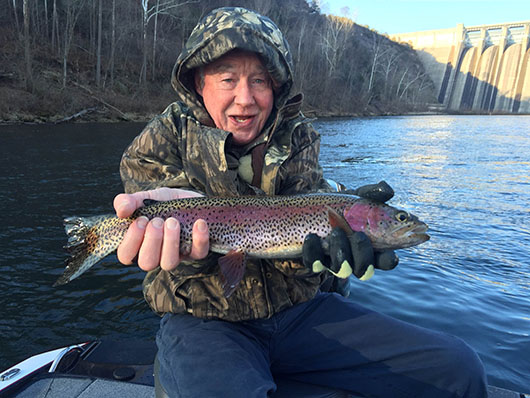
It's getting a little difficult to predict what water generation patterns on Lake Taneycomo will be. As this chart below indicates, the Southwest Power Administration ran water continuously through the weekend, then went back to running a little in the morning and then in the evening. Personally, I like this pattern, but I also like when dam operators switch it up and run at least a half unit all day. That's my favorite current for fishing. Trout fishing has been absolutely fabulous. We hosted the 27th annual R.A.W. trout tournament Saturday in which 60 teams competed for prizes. This is a group of anglers mainly from the St. Louis area that started getting together for a weekend of fishing or hunting back in the 80's. Now they only have this one event. It's a closed tournament -- you have to be invited by a R.A.W. "member" to participate. I saw a lot of trout Saturday, many rainbows in the one-pound range that were colored up as if they had been in the lake for a while. There was one legal brown caught and weighed in, 23-inches long, 5.78 pounds. It took big trout. It was caught in the Short Creek area on salmon-colored paste Power Bait. The team said they caught five other browns on the bait, all under 20 inches. Operators at the dam were running at least a half unit all day Saturday, so many anglers were either throwing jigs or drifting bait on the bottom. Some were anchored or tied up along the banks where it was safe to do so. One account I'll mention, because it's typical of what to expect on Taneycomo, is from Bob Wehnert. He said he and his son, Nick, did really well fishing a pink and white Trout Magnet under a float on Friday but couldn't get a bite at all with it Saturday morning. So Nick switched to a jig and started catching trout just as they had on Friday. The best advice is that f you're not getting bit with what you're throwing, change it up. Change colors, bait, depth, action, go to a smaller line diameter . . . and move! I talked to several anglers Saturday who said they had to keep moving around to keep catching trout consistently. If you get out early while the water is running and can boat to the dam, throw 1/8th-ounce sculpin jigs from the cable to Trophy Run. This is some of the best rainbow fishing you'll find anywhere. But the window is small. Watch for dropping water and boat out quickly, or you'll be using the trolling motor. Again while the water is running, try throwing some small stick baits for browns and rainbows. Besides Rapalas, Bill Babler, one of our fishing guides, uses RC Stick, Lucky Craft Pointers, Rebels and Super Suspending Trout Magnet baits. Turner Jones micro jigs have been hot lately. We've had a hard time stocking the good colors lately. These jigs are made in Springfield, Missouri, by the Jones family. Turner Jones has been in poor health, and family members have stepped in to take over filling orders, but the lull between created a shortage in jigs, and our inventory ran out on the best colors. Now that they have been restocked, I'll be mentioning them again in my reports. Sculpin and ginger-colored jigs are working best in the small micros under a float four- to six-feet deep in all areas of the lake. We're starting to play with new marabou jig colors. In our shop, we stock about 30 different color combinations in six sizes. The jig company that ties all our jigs only ties in one or two-color combinations, but using three colors can be good. Although we're still experimenting, we think tying in a thin piece of bright color like orange, red or chartreuse or lighter green may trigger more bites. Stay tuned for our results. Zig Jig makes a triple color which seems to be popular down on the White River in Arkansas, using sculpin, olive and a light olive. I don't know a lot about Zig Jigs, but it does seem to us that the amount of marabou used on our jigs does make a difference, especially the lighter, accent color. We're tying in a thin piece of accent color to highlight the jig color, against the darker, earth-tone colors. It does makes sense, especially if you're imitating a sculpin fish which has a bright color highlight running on the tip of its dorsal fin, usually orange, white or both. These jigs may cost a little more because of the extra time it takes to tie them, but they might be well worth it. As I said, we're still experimenting. We're still seeing a lot of small rainbows from the federal stocking we received this winter. These trout come from the Neosho, MO, hatchery and normally are smaller than the rainbows from Shepherd. They also lack the rainbow fluorescence and tend to be more silver, which is where they get their name, "silver bullets." If you're catching these trout and want to release them to keep bigger rainbows be careful when handling and unhooking them, especially when using bait. If they swallow the hook, instead of trying to retrieve it, cut the line and let the fish drop back into the water. It will have a better chance of survival with the hook left in versus the hook being pulled out. Steve Dickey has been using scuds to catch fish for his clients lately. He's drifting them on the bottom using just a little weight to get it down to the bottom when the water is running. He's doing the best on #16 gray. When the water is shut down, he's fishing micro jigs and other custom flies he ties under a float 4 to 6 feet deep. Good news for people fishing/wading below the dam. High water events have eroded dirt from underneath steps at outlets #2 and #3. This set of stairs in just above outlet #3. A MDC crew added concrete steps this week! Picture courtesy of Brett Rader.
-
Lilleys' Lake Taneycomo Fishing Report, Feb 13
Phil Lilley posted a article in Taneycomo fishing reports
 It's getting a little difficult to predict what water generation patterns on Lake Taneycomo will be. As this chart below indicates, the Southwest Power Administration ran water continuously through the weekend, then went back to running a little in the morning and then in the evening. Personally, I like this pattern, but I also like when dam operators switch it up and run at least a half unit all day. That's my favorite current for fishing. Trout fishing has been absolutely fabulous. We hosted the 27th annual R.A.W. trout tournament Saturday in which 60 teams competed for prizes. This is a group of anglers mainly from the St. Louis area that started getting together for a weekend of fishing or hunting back in the 80's. Now they only have this one event. It's a closed tournament -- you have to be invited by a R.A.W. "member" to participate. I saw a lot of trout Saturday, many rainbows in the one-pound range that were colored up as if they had been in the lake for a while. There was one legal brown caught and weighed in, 23-inches long, 5.78 pounds. It took big trout. It was caught in the Short Creek area on salmon-colored paste Power Bait. The team said they caught five other browns on the bait, all under 20 inches. Operators at the dam were running at least a half unit all day Saturday, so many anglers were either throwing jigs or drifting bait on the bottom. Some were anchored or tied up along the banks where it was safe to do so. One account I'll mention, because it's typical of what to expect on Taneycomo, is from Bob Wehnert. He said he and his son, Nick, did really well fishing a pink and white Trout Magnet under a float on Friday but couldn't get a bite at all with it Saturday morning. So Nick switched to a jig and started catching trout just as they had on Friday. The best advice is that f you're not getting bit with what you're throwing, change it up. Change colors, bait, depth, action, go to a smaller line diameter . . . and move! I talked to several anglers Saturday who said they had to keep moving around to keep catching trout consistently. If you get out early while the water is running and can boat to the dam, throw 1/8th-ounce sculpin jigs from the cable to Trophy Run. This is some of the best rainbow fishing you'll find anywhere. But the window is small. Watch for dropping water and boat out quickly, or you'll be using the trolling motor. Again while the water is running, try throwing some small stick baits for browns and rainbows. Besides Rapalas, Bill Babler, one of our fishing guides, uses RC Stick, Lucky Craft Pointers, Rebels and Super Suspending Trout Magnet baits. Turner Jones micro jigs have been hot lately. We've had a hard time stocking the good colors lately. These jigs are made in Springfield, Missouri, by the Jones family. Turner Jones has been in poor health, and family members have stepped in to take over filling orders, but the lull between created a shortage in jigs, and our inventory ran out on the best colors. Now that they have been restocked, I'll be mentioning them again in my reports. Sculpin and ginger-colored jigs are working best in the small micros under a float four- to six-feet deep in all areas of the lake. We're starting to play with new marabou jig colors. In our shop, we stock about 30 different color combinations in six sizes. The jig company that ties all our jigs only ties in one or two-color combinations, but using three colors can be good. Although we're still experimenting, we think tying in a thin piece of bright color like orange, red or chartreuse or lighter green may trigger more bites. Stay tuned for our results. Zig Jig makes a triple color which seems to be popular down on the White River in Arkansas, using sculpin, olive and a light olive. I don't know a lot about Zig Jigs, but it does seem to us that the amount of marabou used on our jigs does make a difference, especially the lighter, accent color. We're tying in a thin piece of accent color to highlight the jig color, against the darker, earth-tone colors. It does makes sense, especially if you're imitating a sculpin fish which has a bright color highlight running on the tip of its dorsal fin, usually orange, white or both. These jigs may cost a little more because of the extra time it takes to tie them, but they might be well worth it. As I said, we're still experimenting. We're still seeing a lot of small rainbows from the federal stocking we received this winter. These trout come from the Neosho, MO, hatchery and normally are smaller than the rainbows from Shepherd. They also lack the rainbow fluorescence and tend to be more silver, which is where they get their name, "silver bullets." If you're catching these trout and want to release them to keep bigger rainbows be careful when handling and unhooking them, especially when using bait. If they swallow the hook, instead of trying to retrieve it, cut the line and let the fish drop back into the water. It will have a better chance of survival with the hook left in versus the hook being pulled out. Steve Dickey has been using scuds to catch fish for his clients lately. He's drifting them on the bottom using just a little weight to get it down to the bottom when the water is running. He's doing the best on #16 gray. When the water is shut down, he's fishing micro jigs and other custom flies he ties under a float 4 to 6 feet deep. Good news for people fishing/wading below the dam. High water events have eroded dirt from underneath steps at outlets #2 and #3. This set of stairs in just above outlet #3. A MDC crew added concrete steps this week! Picture courtesy of Brett Rader.
 -
Duane is working with his spey casting... we may see it soon.
-
Pete Wenners February 11Th. Video Report
Phil Lilley replied to Bill Babler's topic in Table Rock Lake
Pete's posting his video on facebook and youtube. It just hasn't shown up on his youtube page yet. -
Pete Wenners February 11Th. Video Report
Phil Lilley replied to Bill Babler's topic in Table Rock Lake
I'd love to help that happen... -
While I'm gone, Duane and Ryan are trying to keep up the pace.
-
While I'm gone, Duane and Ryan are trying to keep up the pace. View full article
-
Pete Wenners February 11Th. Video Report
Phil Lilley replied to Bill Babler's topic in Table Rock Lake
I only see 2/4 report on his youtube page. -
Nice to have you.
-
http://missoulian.com/lifestyles/recreation/article_594ee061-df2e-5889-8362-4f981304d3ef.html
-
I think ppl are waiting to see if this is a REAL threat to MDC. Legislators submit bills all the time that are not acted on. I'm sure there's a point in the process that we should raise our heads and take action. I'm sure in the meantime, a letter to our representatives would not hurt. I think we have to be careful of the "cry wolf syndrome". I'm not saying this is one but if the general public hears the cry for action too many times when it's not needed, when the real time comes to take action, no one does anything. To speak to the situation, I don't see any reason to repeal MDC's funding. Their reasons are (from the article): 1. "Better" accountability. 2. MDC hasn't done a good job lately. 3. Wasted money. 4. Overstepped. 5. Purchased too much land. 6. Haven't purchased enough land. 7. Are arrogant and don't listen to the people. 8. Public meetings for show only - don't have any intentions to change direction. 9. Not enough representation. Only 4 commissioners and they aren't accessible to the people. Most of these are personal opinions by a few people. You hear their voices because they are upset and want change. Some want change for personal reasons/ personal gain, i.e. land use. The majority of Missouri residents don't have any problems with MDC -- but to be fair, most don't have any dealings with MDC. What you don't hear is what we hear about our federal gov't - 1. Over taxation. 2. Corruption. 3. Inflated salaries. 4. Criminal misuse of funds. 5. Any kind of "gate" that would cause the non-sportsman in Missouri to sit up and take note. If all this causes MDC to tighten up their policies and be more open to suggestions from the public and from legislators, I'm all for it. But MDC should not dig in their heals and play the personal tit for tat game and make this personal in any way, even if the other side is doing just that.

