duckydoty
-
Posts
3,601 -
Joined
-
Last visited
-
Days Won
20
Content Type
Profiles
Forums
Blogs
Events
Articles
Video Feed
Gallery
Everything posted by duckydoty
-
Dulls the blade pretty good too!
-
The bite was a little slow. Only caught 2 fish on the one drift. Picked them up on white jigs. One of the fish was 19 inches and the other was about a 15-16 inch buck. Only one other boat out there on the upper end while we were there.
-
The freyed nylon rope does work good for catching gar on the fly rod. A stinger hook on a streamer also works well. I found them just like you described on the James River last year while white bass fishing and ended up catching 4 of them on clouser minnows. Gar are very good to eat, just hard to clean. I usually use a chop saw to cut the head and tail off then tin snips to cut it open down the middle of the back. Peel it open like a tin can and cut the back straps out. Very white meat and very tasty.
-
All small males for us in the morning yesterday, but I heard some bigger ones were getting caught in the evening
-
I ended up with a limit not long after you left. Went over to Swan to give MonaChari a chance at some more....notta!
-
Are you using western cedar? What is the darker colored wood. I built one in 1995. It took about 100 hrs from start to finish. I use to have two books with several different designs and patterns for the stages. Someone borrowed the books and never returned them. I've been wanting to do a kayak. Might do one when I return from Alaska this fall. Looking real good! Nice job and you will be sitting on the water in style for sure!
-
Chartreuse/White????? I usually do better on all "In Black" when Johnny Cash is on.
-
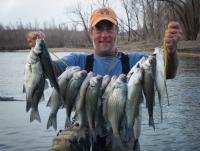
A buddy of mine and his girl friend pulled two limits of whites out of the water this evening. Tomorrow should be some good fishing down at Blunk Hole. Weatherman says it will shut down again on Saturday.
-
Nice! That fish looks as big as your partner!
-
Slow Stripping Mink After Dark Last Night
duckydoty replied to duckydoty's topic in Upper Lake Taneycomo
It is just a strip of white mink palmered on a size 10 mustad streamer hook with a small cone on it. Just like the pine squirrel sculpins -
Talk about a tight squeeze.....check it out!
-
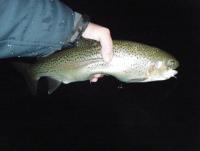
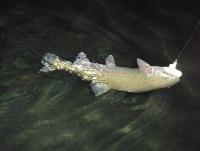
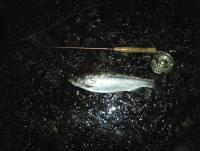
Got to the parking lot around 9 p.m. and there were only 4 other cars there. That suprised me. Wanted to fish the flats between 1 and 2 but when I got to the water, all the occupants to the other vehicles were fishing there. Went to the bottom end of the flats and caught a nice bow on the 1st cast. I can tell you I was fearful of "the first cast curse for a bit. Made about 3 more cast and decided to head to the "Big Hole". Absolutely no one below outlet #2. 1st cast at the big hole was my big fish of the night. Only about 18 inches but it sure did put up a fight. Now, I'm not gonna say I caught a fish on every cast, but I sure did get a bite on every cast for well over an hour. Slow stripping white mink was killing them. Fishing started slowing down about midnight, only getting bites on every other drift. Left around 1 a.m. Fishing was awesome! Hope they keep the trend up of shutting generation down.
-
I figured it would be kind of slow so I've been taking advantage of the water being off at Taney. Might be good down there on Friday, but the weather this weekend is gonna slow it down again. Did you see any snaggers that far up?
-
yes
-
Good Wade Fishing Today 15 March 2010
duckydoty replied to duckydoty's topic in Upper Lake Taneycomo
Yep, I let that on slip out on this post. -
Good Wade Fishing Today 15 March 2010
duckydoty replied to duckydoty's topic in Upper Lake Taneycomo
-
Good Wade Fishing Today 15 March 2010
duckydoty replied to duckydoty's topic in Upper Lake Taneycomo
First fly (dry fly) tie on regulary then another piece of tippet with improved clinch to the bend of the hook on the dry fly. -
You are right. It is 139. Kansas holds the World Record at 144 pounds. Here is a good link to snagging info put out by the MDC paddle fish snagging They dont mention anything about using the flyrod though. Now if you want a real challenge...try a 70 pounder on a 10 wt.
-
Good Wade Fishing Today 15 March 2010
duckydoty replied to duckydoty's topic in Upper Lake Taneycomo
It is really not that bad. I fished about 6 hours today and only had them tangled bad twice. DD'sMC did not get tangled bad at all. -
Good Wade Fishing Today 15 March 2010
duckydoty replied to duckydoty's topic in Upper Lake Taneycomo
Not this time laker67.....I put the whooopin on her today! -
Oh yea, I think the Missouri state record is 143 pounds caught on Table Rock Lake. 60-80 pounds is very obtainable on the James River Arm of Table Rock.
-
Spoonbill or paddle fish are a filter feeder like whales. They filter the water through thier huge mouths and gills and feed off of small organisms like plankton. They have no bones, all cartlige like a shark. They are very good to eat, but you must get rid of all the dark meat that runs along its sides. They have a texture much like pork tenderloin. You can fry it, bake it, broil it, boil it, grill it, and smoke it. They will not bite on anything you can put on a hook, but a few have been known to get hung up on trout lines and limb lines accedintally. There are two main ways of snagging them. One being from the bank, the other, from a boat. Spoonbill like many other fish are programed to run up feeder streams and rivers to spawn when waters start reaching certain tempuratures. They will start staging in lower parts of these streams, closer to the lakes that they are in and wait for the water to reach a certain temp and usually have a swell coming down the river or stream, then they will make thier run. This is when bank snagging can be very productive. Most people that snag from the bank use a 10 foot or larger surf rod with a spinning reel spooled with 80 pound braided line. They will throw a 2-6 ounce weight with a size 7/0 or larger treble hook. The boat snaggers do better by finding the staging areas and troll through them with 8-16 ounce weights and the same treble hook set up. Boaters usually use a shorter stiffer snagging rod. Some paddle fish live in rivers and not lakes, like the Mississippi and Missouri Rivers. These fish will make runs from the river to feeder creeks and streams or to the tailwaters of a lock and or dam. These are good areas to consentrate on snagging for them. Below Bagnel dam is a good example of this, or below Alton Lock and Dam on the Mississippi just north of St. Louis. Hope some of this helped
-
Good Wade Fishing Today 15 March 2010
duckydoty replied to duckydoty's topic in Upper Lake Taneycomo
I believe there are alot of people in town for "Spring Break", lots of kids around today. -
The water was off today on Taneycomo and there was some excellent fishing going on. Check the generation schedule to see if they will shut it down again while you are here. Listen to Phils podcast with Bill Babler's report. Sounds like there is some good fishing to be had down by the landing also.
-
The water was off at Lake Taneycomo today and My MonaChari and I got some great midge fishing in. My MonaChari landed 25 + fish. I have no idea how many I landed, but it was quite a few. Size 20 black midges with a brown bead and copper wire worked best about 12 inches under a dry fly. Indicators would spook them. ... There were a few people down there taking advantage of the water being off.