
Phil Lilley
-
Posts
19,030 -
Joined
-
Last visited
-
Days Won
132
Content Type
Profiles
Forums
Blogs
Events
Articles
Video Feed
Gallery
Everything posted by Phil Lilley
-
Some but not this many.
-
Thanks for posting. How was the size and health of the fish you caught? Did they fight good or sluggish?
-
Not along our bank but they feed that way up in the trophy area all the time.
-
-
I traveled to Tulsa Thursday and spoke to the TU/FFF chapter there that evening. I showed the video - the last part of this video. I shot it in bright sunlight Thursday morning before I left. Two things: The glimmer off the shells - you would think that would catch the eye of a trout, right? So shouldn't you tie/buy scuds with UV dubbing and/or some kind of tinsel in the body? Hook style - guys at the meeting were asking why are we tying most scuds on a curved hook... why not a straight hook? Rolan Duffield has tied his scuds on a 3769 TMC hook since the 60's... he got it right. Any other thoughts? Action: Shouldn't you work a scud more? Even swim a scud?
-
Taney, since the early 80's, has seen fewer scuds in the lake. They've come and gone - why? I don't think anyone knows. Some say pollution, some say silting, some said stocking too many trout (back in the 80's and 90's)... everybody has an opinion. But since our water is in the mid 60's these bugs have exploded.
-
You wonder why we used UV dubbing... the sunlight glimmers off the shells. I bet it catches the eye of a trout pretty quick! Think?
-
Turn it up to 1080P HD
-
 by John Neporadny Jr. As massive schools of shad surround them, black bass build up an insatiable appetite in the fall at the Lake of the Ozarks. During October and November, bass gorge on these baitfish even after they've filled their bellies. While some smaller bass feed by chasing and busting through the schools of shad, a e bigger bass tends to lurk under the cover of boat docks and pounces on any baitfish that enters its ambush zone. When weather conditions are ideal, you can catch plenty of bass on a variety of lures as they chase schools of baitfish, but the most consistent way to catch bass in the fall is to target boat docks. A local expert who targets docks for consistent fall bass action is Chad Brauer, Osage Beach, Mo., a former touring pro angler and son of famed professional angler Denny Brauer. Since the lake contains a multitude of boat houses, Chad Brauer keys on certain types of docks that hold bass better in the fall. "I like a dock with white Styrofoam underneath because of all the types of foam, it seems to draw the best algae, which attracts invertebrates and those invertebrates bring in the baitfish," says Brauer. He looks for older docks that have several posts or piers under the walkway and possibly some brush sunk underneath the floating structure. Location also plays a key role in selecting which docks to try in the fall. Brauer opts for main-lake piers, which he believes many anglers overlook as they head for the coves in the fall. He tries main-lake docks on the flats where the front ends of the floating cover sit over depths of 10 feet or less Weather and water temperature determines where fish will be positioned on a dock during autumn. Lake of the Ozarks bass remain in the brush under the docks during the summer. As the water cools in the fall, bass start suspending under the dock's foam. "Rather than moving up towards the bank, they just more right up underneath the docks," Brauer says. The foam becomes perfect cover for bass as they wait for schools of shad to swim by the docks. Later in the fall, bass move into the shallows behind the docks where Brauer catches them around the walkway posts. The dropping water temperature eventually triggers the lake turnover, which can make fishing tough around any type of cover. "I think the fish tend to scatter more and that makes them harder to catch," says Brauer. "The fish will still be around the docks, but something happens to them and makes them goofy." He believes shallow docks produce best during this phenomenon since they have less of a depth range for bass to scatter than docks in deeper water. Weather fronts also cause the bass to relocate on a dock throughout the fall. Brauer notices bass move to deeper parts of the dock when a cold front passes through. If the weather turns warm again, the fish migrate back to the shallow end. "You have to experiment every time you go out because sometimes inexplicably they move to the other end of the dock and sometimes they are scattered out all over," he says. Bass also tend to position differently on windy or calm days When the wind blows, Brauer targets the side where waves crash into the docks and push baitfish toward the foam. Since bass frequently change hiding spots almost daily, Brauer covers all the sections of the floating cover until he discovers which sections are holding fish that day. "I have a lot of success right on the very end and right in the very back (the corners) of the docks," he says. When bass suspend under the foam Brauer selects lures that stay in the fish's strike zone longer. His favorite fall dock techniques include running a spinnerbait just below the surface or swimming a slow-falling jig and pork chunk next to the foam. The swimming jig technique requires matching a jig with a pork chunk or plastic trailer buoyant enough to slow the lure's descent. Brauer usually starts with a 3/8-ounce jig and later switches to a 1/2-ounce model if he wants a lure with a larger profile. To give the jigs more buoyancy, Brauer attaches either a pork chunk or a plastic crawfish. Black and blue are his favorite fall colors for the jig-and-craw combination, while an all-white selection works best for his jig and pork. He retrieves both combinations with 20-pound test line, which is heavy enough to give the lures increased buoyancy and abrasion-resistant for fishing over dock cables or underneath walkways. Swimming the jig requires a faster-than-normal retrieve. "The bigger pork or the bigger plastic craw gives the lure a little more buoyancy and helps it swim right below that foam a little better," Brauer says. "I use a pumping motion just to cover a little more depth range. Once you narrow down as to how deep the fish are then you don't have to pump the lure as much." A slow-rolling pump of the jig also gives the lure more action as it swims along the foam. Brauer also runs a spinnerbait about 1 to 2 feet below the surface to coax bass out from under the docks. If you can't find bass chasing shad on the surface this fall at the Lake of the Ozarks, throw to the docks to save your day on the water. For information on lodging and other facilities at the Lake of the Ozarks or to receive a free vacation guide, call the Lake of the Ozarks Convention & Visitors Bureau at 1-800-FUN-LAKE or visit the Lake of the Ozarks Convention and Visitors Bureau web site at funlake.com.
 -
They'll take a check too. Me and DD will be there Thursday and Friday nights only. Will fish Saturday am and take off about noonish. Thanks!
-
I'll bring smoked chicken for Friday night.
-
Thank you DD and everyone else that sacrificed so much for our freedoms.
-
Pete - we're not getting it. Don't worry. But the reason the White got it was to cool water temps way down away from the dam. The reason it would help Taney is to keep the water moving - that grows more bugs. It would help DO in the fall too. But it won't happen - not for a long long time. MDC doesn't think it's worth the effort and Congress won't just give us a ton of money without lobbyist pushing it. And there's no one pushing.
-
The higher the water temp the less O2 is can carry. Cold water can carry O2 better than warm water. "Carry" might not be the right word but I don't know a better one. Typically our lake temperature is in the mid 50's in the fall. It's 63 now and turbid. It's usually much clearer. So I'd think it's easier for a fish to breath in clear water vs turbid water, plus it's warm, plus it's low in O2. Triple whammy!
-
Yea- it was about 16 inches and that's probably about 15 mw of power. State says anything discharged from a point source below 6 ppm is pollution basically. But a discharge from a dam is not a point source, according to ... someone. That's how they get around state standards.
-
If the Corp would run 10 or 15 mw of water, that would be good for everyone. Waders could wade and the Corp would have to inject liquid O2 into the water. But that's not going to happen. It's too hard on their equipment (turbine blades). So we're talking about 35+ mw like they ran in August and September. Very little wading opportunities. MF would definitely help the food base. That would be the biggest positive. But it would take an act of Congress (literally) to get it and that won't happen for a long, long time.
-
The trout I'm catching below Lookout are in good shape. Maybe 1 in 5 are listless when they come in. I think the O2 is better as you go down lake.
-
It's not their fault... completely. They could raise the level of O2 they put in, yes. Their target level is 4 ppm and it should be 6 ppm. But it's always been 4 ppm and we suffer through this every fall. The difference is the water quality and the water temperature. I don't think it got this high even in 2011. And I know it wasn't this dirty. It would help if they ran water all the time like they did back in August and September but even I was wishing they'd shut it off back then--and so were guys who wanted to wade. Not that our "wishes" made any difference but now that we got what we wanted, it'd be better for the fish if they ran a little and injected O2. When they don't run water- very little O2 is added. Night time is the worse - no light, no wind. DO bottoms out. That's when they probably die. That and getting hooked, fought, picture and release. I find myself being a cheerleader every fall... "Come on cold, windy weather! Flip Table Rock!" Then we're ok for another 9-10 months. The good news is that there's going to be: A lot of trout in the lake this winter. MDC is still stocking- there's just not many being taken out. The fish we're catching are in great shape. Once they get some air, they'll be slamming our lures and flies.
-
 I have been asked a few questions recently about fishing Lake Taneycomo. After rereading all of my replies, I thought I would compile them and post them here for everyone. This information is just some of the things that have been productive for me over the years. They are not the only way to fish and not set in stone, but they are productive for me. Question..... "Do you fish big articulated streamers like Dungeons and such on Taneycomo? Do you catch more larger fish or are medium sized fish caught more often? What size tippet do you use?" I have fished T&A Rainbows on Taney during the fall brown run with success on both rainbows and browns. I don't normally fish the big articulated streamers though. I do most of my streamer fishing at night and mainly do sight fishing during the day. During the day after sight fishing all my favorite spots, I will play with some small streamers, wet flies, and even do some midging. During the day I will use 6x if I can get away with it, but most of the time, 7x. If I'm throwing the small streamers, like that minnow fly, I will bump it up to 4 or 5x tippet. It seems like on a fast strip, you can get away with bigger tippet. More of working on a reaction strike than a feeding strike. Sight fishing in the slower water, they have too much time to study it and you hardly ever get away with anything bigger than 6x. Night fishing, I mainly throw the streamers size 6 and smaller. 10's are probably may favorite, most productive sizes. The simple pine squirrel sculpins with a cone head work fine but pine squirrel does not come in white, so I use mink for that. I normally use 2x or 3x tippet at night. Leonards PMS, and Hybernators along with Mohair leeches are all great streamer patterns to use at night also. One thing to remember about night fishing......If you don't get a hit or a fish in 10 casts, you need to change it up. Change color, change fly, change stripping action. There are too many fish out there not to get a bite in 10 casts. I normally start with a black streamer on a dark night and a white one on a bright moon lit night. The first thing I change, usually within 3 cast is my strip. Either a dead drift, to a slow strip with a pause between strips to short very fast strips. If nothing with in 10 casts trying all those stripping methods, I change color. Colors I carry in the different streamers I use are White, Grey, Olive, Black, Red, and Purple. Once I run through all those colors in a certain pattern, I then change patterns and start running through the colors again. Sometimes you can get lucky on a good night and put to hand over 100 fish. Most of the time Ill catch 15-30 in a night. I do not always just catch big fish. Most of them are average fish, but after fishing down there for several years, I have got spots that tend to produce bigger fish every now and then, so as you can imagine, I hit those spots every time I go. Question..... "What are your most productive daytime patterns besides your minnow fly?" During the day, my most productive fly is the white chamois worm, midges, and sow bugs. As far as streamers other than the minnow fly...the pine squirrel cone head sculpins and white mink sculpins in a size 10. I normally will catch more fish on the worm, midges and sow bugs though. You might want to tie up some micro eggs because some of the bows are trying to spawn....match the hatch... Some crackle backs and some soft hackles can produce just as well as the streamers during the day also. Like I said, I only throw the streamers during the day when I get bored with the other stuff Question..... "Where do you buy your chamois? Are the midges just generic zebra-type midges?" You can get the chamois on eBay. It has to be white sheep skin that is very thin for doll clothes. My 4 favorite midges are zebra, rusty, prim rose and Pearl, and solid black. Question..... "What are the best flies to use if there is higher generation and the best way to rig them?" On high generation, if fishing the bank, I use White Chamois, Sow Bugs, Micro Eggs, San Juan Worms, and Midges. Favorite to least in that order. There are a lot of places you can still make your way down the bank with up to 3 units on. I use lots of weight to get it down fast. Sometimes up to 4 number 4 split shot. I place the split shot about 12 inches above the flies. Now on the midges, of course you would not use any weight. I only use the midges when I can see lots of fish rising in the seems and eddies close to the bank and then will put one on about 12 to 18 inches under the smallest indicator I can get. Most of the fish will hold close to the bank during generation so you don't need to cast out very far. Work the close seams and eddies within 10 feet of the bank. If I can see my flies on the short drifts, I will not us an indicator. If I can not, then I will put the indicator on. I love fishing down below outlet #2 with 2 units on. The water is perfect for fishing that bank under 2 units of generation. Just below outlet #2 is a tree that hangs out over the water with 2 units running. From that tree down, within 6 feet of the bank, usually holds lots of fish. There is a nice eddie just below the tree and then some giant boulders that create great fish holding eddies also. You can also drive over the dam and get access to the south side. The back side of the Island is a great place to fish during generation also. Note: Duane Doty guides on Taneycomo and other creeks and rivers in S.W. Missouri. He works at Lilleys' Landing Resort & Marina.
 -
I have been asked a few questions recently about fishing Lake Taneycomo. After rereading all of my replies, I thought I would compile them and post them here for everyone. I have been asked a few questions recently about fishing Lake Taneycomo. After rereading all of my replies, I thought I would compile them and post them here for everyone. This information is just some of the things that have been productive for me over the years. They are not the only way to fish and not set in stone, but they are productive for me. Question..... "Do you fish big articulated streamers like Dungeons and such on Taneycomo? Do you catch more larger fish or are medium sized fish caught more often? What size tippet do you use?" I have fished T&A Rainbows on Taney during the fall brown run with success on both rainbows and browns. I don't normally fish the big articulated streamers though. I do most of my streamer fishing at night and mainly do sight fishing during the day. During the day after sight fishing all my favorite spots, I will play with some small streamers, wet flies, and even do some midging. During the day I will use 6x if I can get away with it, but most of the time, 7x. If I'm throwing the small streamers, like that minnow fly, I will bump it up to 4 or 5x tippet. It seems like on a fast strip, you can get away with bigger tippet. More of working on a reaction strike than a feeding strike. Sight fishing in the slower water, they have too much time to study it and you hardly ever get away with anything bigger than 6x. Night fishing, I mainly throw the streamers size 6 and smaller. 10's are probably may favorite, most productive sizes. The simple pine squirrel sculpins with a cone head work fine but pine squirrel does not come in white, so I use mink for that. I normally use 2x or 3x tippet at night. Leonards PMS, and Hybernators along with Mohair leeches are all great streamer patterns to use at night also. One thing to remember about night fishing......If you don't get a hit or a fish in 10 casts, you need to change it up. Change color, change fly, change stripping action. There are too many fish out there not to get a bite in 10 casts. I normally start with a black streamer on a dark night and a white one on a bright moon lit night. The first thing I change, usually within 3 cast is my strip. Either a dead drift, to a slow strip with a pause between strips to short very fast strips. If nothing with in 10 casts trying all those stripping methods, I change color. Colors I carry in the different streamers I use are White, Grey, Olive, Black, Red, and Purple. Once I run through all those colors in a certain pattern, I then change patterns and start running through the colors again. Sometimes you can get lucky on a good night and put to hand over 100 fish. Most of the time Ill catch 15-30 in a night. I do not always just catch big fish. Most of them are average fish, but after fishing down there for several years, I have got spots that tend to produce bigger fish every now and then, so as you can imagine, I hit those spots every time I go. Question..... "What are your most productive daytime patterns besides your minnow fly?" During the day, my most productive fly is the white chamois worm, midges, and sow bugs. As far as streamers other than the minnow fly...the pine squirrel cone head sculpins and white mink sculpins in a size 10. I normally will catch more fish on the worm, midges and sow bugs though. You might want to tie up some micro eggs because some of the bows are trying to spawn....match the hatch... Some crackle backs and some soft hackles can produce just as well as the streamers during the day also. Like I said, I only throw the streamers during the day when I get bored with the other stuff Question..... "Where do you buy your chamois? Are the midges just generic zebra-type midges?" You can get the chamois on eBay. It has to be white sheep skin that is very thin for doll clothes. My 4 favorite midges are zebra, rusty, prim rose and Pearl, and solid black. Question..... "What are the best flies to use if there is higher generation and the best way to rig them?" On high generation, if fishing the bank, I use White Chamois, Sow Bugs, Micro Eggs, San Juan Worms, and Midges. Favorite to least in that order. There are a lot of places you can still make your way down the bank with up to 3 units on. I use lots of weight to get it down fast. Sometimes up to 4 number 4 split shot. I place the split shot about 12 inches above the flies. Now on the midges, of course you would not use any weight. I only use the midges when I can see lots of fish rising in the seems and eddies close to the bank and then will put one on about 12 to 18 inches under the smallest indicator I can get. Most of the fish will hold close to the bank during generation so you don't need to cast out very far. Work the close seams and eddies within 10 feet of the bank. If I can see my flies on the short drifts, I will not us an indicator. If I can not, then I will put the indicator on. I love fishing down below outlet #2 with 2 units on. The water is perfect for fishing that bank under 2 units of generation. Just below outlet #2 is a tree that hangs out over the water with 2 units running. From that tree down, within 6 feet of the bank, usually holds lots of fish. There is a nice eddie just below the tree and then some giant boulders that create great fish holding eddies also. You can also drive over the dam and get access to the south side. The back side of the Island is a great place to fish during generation also. Note: Duane Doty guides on Taneycomo and other creeks and rivers in S.W. Missouri. He works at Lilleys' Landing Resort & Marina. View full article
-
Many issues to talk about, as well as fishing, in the fall. Dissolved oxygen, water temperature, restricted flows...... confusing details to understand when fishing tailwaters. Wish we didn't have to consider them when JUST fishing, but they do affect the way trout move, hold, feed-- and don't feed-- and that affects our fishing strategy. I know this is old hat to some of you, but I'd like to go over the basics. Lakes change at different seasons of the year. As spring and summer pass, surface water warms and separations or layers form. Because water density changes when it differs in temperature, these layers become very defined as summer wears on. If you look at the Lake Profile - http://www.swl-wc.usace.army.mil/pages/reports/remote/profiles/tabpro.htm you will see a profile, kinda of a photograph, of the water at the dam at Table Rock. See where the temp drops, as well as the DO level, as it gets deeper. And the big drop near the top - this is called the thermocline and where, generally, a large number of fish will hold. As the water warms on the surface, the thermocline drops lower in the lake. We get our water at 130 feet deep and is marked by an asterisk to the side. As you see, the water temperature is colder at that level than the surface but the DO is very low and gets lower as you drop down. As colder weathers rolls in-- November and December-- surface temperatures drop, literally. Cold water is heavier than hot water and thus drops and "turns" the lake over at some point in the game. It's like a tilting table: when the load on top gets heavier than the load on the bottom, it tilts and turns over, leaving the heavier on the bottom. This happens generally from around Thanksgiving into December. Until then, we're stuck with low DO levels entering into LT. Dissolved Oxygen Water contains oxygen, H2O - O stands for Oxygen. Oxygen is measure by parts per million. On a scales of 0 to 12, 12 is about the highest you'll find in lake water- usually in the top layers where sunlight, wind and rain adds oxygen. In any lake or pond during the seasons, the layers form layers. Each layer has different density and oxygen levels, depending on the season and temperature of the water at the different levels. The layers start forming in late spring when the top levels start to warm. As summer rolls on, temps in the upper layers really rise and becomes lighter then the layers below. Because of the lack of sunlight, oxygen levels drop as you get lower in the lake or pond and later in the fall, DO amounts at the bottom are nile. As it gets closer to winter and the air temps drop and winds pick up, the surface temperatures drop also. Cold water is heavier than warm water thus this cooler water sinks to the bottom. This starts the the turning effect. When alot of water on top become cooler than the bottom- heat rises- the two levels mix and thus- good DO throughout the depths. The the cycle starts all over again. As far as the different levels- 0 - 12...... where 0 is real bad (no oxygen- things die) and 12 is usually the surface reading on a lake during alot of wind- may be even 13. The State of Missouri has said that anything under 6 parts is considered pollution. If a business or private individual discharges water with a lower reading than 6- they could get in trouble. But since a dam and the water it releases is not considered "point source" discharge, these rules do not apply and cannot be enforced. The Corp's low point is 4 parts- they try and not go below 4 when they release water from Table Rock. Fisheries for MDC has said that 6 parts is a good bottom indicator-- where fish and other water creatures can live, feed and reproduce. They also say anything below 3 parts can and will cause death in most trout, but this depends on water temperature also. Stress is the key. If a rainbow is already in stress because the water temp is above- say- 60 degrees and then he's hit with low DO- say 3 or even 4 parts, he could die. And the bigger the trout is, the more stress all these factors affect it. What does low DO do to our trout? It slows them down a bit. How do you know when DO levels are too low and threaten the life and health of trout? A high number is 12 parts per million (ppm). A low number is 0 ppm. Generally, fisheries biologist say 3 ppm is the bottom on the scale, and with high water temperatures, could cause death if prolonged. Six ppm is what the State of Missouri Clean Water Act says is the standard for "safe" water. But the Corps, as a federal agency, doesn't have to adhere to state regulations and has set its mark at 4 ppm. Are we happy about this? No. We've appealed for change but to no avail-- yet. The Corps does put restrictions on flow at Table Rock. These flow restrictions differ as the fall months progress and the water quality drops. This just means that even in peak times, levels will not exceed the ability to add enough DO to the effluent to keep levels above 4 ppm. There are three ways dissolved oxygen is added to the near-nil levels in September and October. The hatchery outlets are rich in DO. That's why you will see large numbers of trout with their noses in the effluent. The Corps has modified the turbines and added vents at the top of the chambers to allow air to mix with the water, creating a sloshing effect as it enters the lake. This is hard on the turbine blades, causing the surface of the blades to weaken. Corps officials like to reminds us about this -- that they are sacrificing for the good of the trout. When all of the above fails to add adequate DO to the tailwater, the Corps injects liquid oxygen directly into the turbines. Monitors keep track of DO levels as they enter the lake. One thing you have to realize-- when the federal government build dams, bureaucrats have to promise that the dams won't hurt the fishery in either the lake above or the tailwater below. When they build dams that are high and the water coming out is too cold for warm water species, they have to provide coldwater species for that fishery, such as the Neosho Federal Trout Hatchery producing 200,000 rainbows per year. Water quality standards also have to be maintained at a level the fish can survive and thrive. The definition of thrive is in question here. The Corps' definition is to "just get by." Sportsmen and fishing-related businessmen think thriving means the fish "move and grow respectively, with adequate food supply to reproduce." But the food supply is low, and there is no reproduction. That must change, and I believe it will in time. View full article
-
Seasonal Issue: Low Dissolved Oxygen and Restricted Flows
Phil Lilley posted a article in Lake Taneycomo
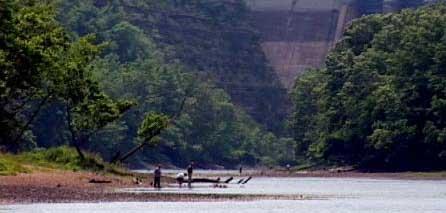 Many issues to talk about, as well as fishing, in the fall. Dissolved oxygen, water temperature, restricted flows...... confusing details to understand when fishing tailwaters. Wish we didn't have to consider them when JUST fishing, but they do affect the way trout move, hold, feed-- and don't feed-- and that affects our fishing strategy. I know this is old hat to some of you, but I'd like to go over the basics. Lakes change at different seasons of the year. As spring and summer pass, surface water warms and separations or layers form. Because water density changes when it differs in temperature, these layers become very defined as summer wears on. If you look at the Lake Profile - http://www.swl-wc.usace.army.mil/pages/reports/remote/profiles/tabpro.htm you will see a profile, kinda of a photograph, of the water at the dam at Table Rock. See where the temp drops, as well as the DO level, as it gets deeper. And the big drop near the top - this is called the thermocline and where, generally, a large number of fish will hold. As the water warms on the surface, the thermocline drops lower in the lake. We get our water at 130 feet deep and is marked by an asterisk to the side. As you see, the water temperature is colder at that level than the surface but the DO is very low and gets lower as you drop down. As colder weathers rolls in-- November and December-- surface temperatures drop, literally. Cold water is heavier than hot water and thus drops and "turns" the lake over at some point in the game. It's like a tilting table: when the load on top gets heavier than the load on the bottom, it tilts and turns over, leaving the heavier on the bottom. This happens generally from around Thanksgiving into December. Until then, we're stuck with low DO levels entering into LT. Dissolved Oxygen Water contains oxygen, H2O - O stands for Oxygen. Oxygen is measure by parts per million. On a scales of 0 to 12, 12 is about the highest you'll find in lake water- usually in the top layers where sunlight, wind and rain adds oxygen. In any lake or pond during the seasons, the layers form layers. Each layer has different density and oxygen levels, depending on the season and temperature of the water at the different levels. The layers start forming in late spring when the top levels start to warm. As summer rolls on, temps in the upper layers really rise and becomes lighter then the layers below. Because of the lack of sunlight, oxygen levels drop as you get lower in the lake or pond and later in the fall, DO amounts at the bottom are nile. As it gets closer to winter and the air temps drop and winds pick up, the surface temperatures drop also. Cold water is heavier than warm water thus this cooler water sinks to the bottom. This starts the the turning effect. When alot of water on top become cooler than the bottom- heat rises- the two levels mix and thus- good DO throughout the depths. The the cycle starts all over again. As far as the different levels- 0 - 12...... where 0 is real bad (no oxygen- things die) and 12 is usually the surface reading on a lake during alot of wind- may be even 13. The State of Missouri has said that anything under 6 parts is considered pollution. If a business or private individual discharges water with a lower reading than 6- they could get in trouble. But since a dam and the water it releases is not considered "point source" discharge, these rules do not apply and cannot be enforced. The Corp's low point is 4 parts- they try and not go below 4 when they release water from Table Rock. Fisheries for MDC has said that 6 parts is a good bottom indicator-- where fish and other water creatures can live, feed and reproduce. They also say anything below 3 parts can and will cause death in most trout, but this depends on water temperature also. Stress is the key. If a rainbow is already in stress because the water temp is above- say- 60 degrees and then he's hit with low DO- say 3 or even 4 parts, he could die. And the bigger the trout is, the more stress all these factors affect it. What does low DO do to our trout? It slows them down a bit. How do you know when DO levels are too low and threaten the life and health of trout? A high number is 12 parts per million (ppm). A low number is 0 ppm. Generally, fisheries biologist say 3 ppm is the bottom on the scale, and with high water temperatures, could cause death if prolonged. Six ppm is what the State of Missouri Clean Water Act says is the standard for "safe" water. But the Corps, as a federal agency, doesn't have to adhere to state regulations and has set its mark at 4 ppm. Are we happy about this? No. We've appealed for change but to no avail-- yet. The Corps does put restrictions on flow at Table Rock. These flow restrictions differ as the fall months progress and the water quality drops. This just means that even in peak times, levels will not exceed the ability to add enough DO to the effluent to keep levels above 4 ppm. There are three ways dissolved oxygen is added to the near-nil levels in September and October. The hatchery outlets are rich in DO. That's why you will see large numbers of trout with their noses in the effluent. The Corps has modified the turbines and added vents at the top of the chambers to allow air to mix with the water, creating a sloshing effect as it enters the lake. This is hard on the turbine blades, causing the surface of the blades to weaken. Corps officials like to reminds us about this -- that they are sacrificing for the good of the trout. When all of the above fails to add adequate DO to the tailwater, the Corps injects liquid oxygen directly into the turbines. Monitors keep track of DO levels as they enter the lake. One thing you have to realize-- when the federal government build dams, bureaucrats have to promise that the dams won't hurt the fishery in either the lake above or the tailwater below. When they build dams that are high and the water coming out is too cold for warm water species, they have to provide coldwater species for that fishery, such as the Neosho Federal Trout Hatchery producing 200,000 rainbows per year. Water quality standards also have to be maintained at a level the fish can survive and thrive. The definition of thrive is in question here. The Corps' definition is to "just get by." Sportsmen and fishing-related businessmen think thriving means the fish "move and grow respectively, with adequate food supply to reproduce." But the food supply is low, and there is no reproduction. That must change, and I believe it will in time.
 -
Many issues to talk about, as well as fishing, in the fall. Dissolved oxygen, water temperature, restricted flows...... confusing details to understand when fishing tailwaters. Wish we didn't have to consider them when JUST fishing, but they do affect the way trout move, hold, feed-- and don't feed-- and that affects our fishing strategy. Many issues to talk about, as well as fishing, in the fall. Dissolved oxygen, water temperature, restricted flows...... confusing details to understand when fishing tailwaters. Wish we didn't have to consider them when JUST fishing, but they do affect the way trout move, hold, feed-- and don't feed-- and that affects our fishing strategy. I know this is old hat to some of you, but I'd like to go over the basics. Lakes change at different seasons of the year. As spring and summer pass, surface water warms and separations or layers form. Because water density changes when it differs in temperature, these layers become very defined as summer wears on. If you look at the Lake Profile - http://www.swl.usace.army.mil/wcds/rdo2.html you will see a profile, kinda of a photograph, of the water at the dam at Table Rock. See where the temp drops, as well as the DO level, as it gets deeper. And the big drop near the top - this is called the thermocline and where, generally, a large number of fish will hold. As the water warms on the surface, the thermocline drops lower in the lake. We get our water at 130 feet deep and is marked by an asterisk to the side. As you see, the water temperature is colder at that level than the surface but the DO is very low and gets lower as you drop down. As colder weathers rolls in-- November and December-- surface temperatures drop, literally. Cold water is heavier than hot water and thus drops and "turns" the lake over at some point in the game. It's like a tilting table: when the load on top gets heavier than the load on the bottom, it tilts and turns over, leaving the heavier on the bottom. This happens generally from around Thanksgiving into December. Until then, we're stuck with low DO levels entering into LT. Dissolved Oxygen Water contains oxygen, H2O - O stands for Oxygen. Oxygen is measure by parts per million. On a scales of 0 to 12, 12 is about the highest you'll find in lake water- usually in the top layers where sunlight, wind and rain adds oxygen. In any lake or pond during the seasons, the layers form layers. Each layer has different density and oxygen levels, depending on the season and temperature of the water at the different levels. The layers start forming in late spring when the top levels start to warm. As summer rolls on, temps in the upper layers really rise and becomes lighter then the layers below. Because of the lack of sunlight, oxygen levels drop as you get lower in the lake or pond and later in the fall, DO amounts at the bottom are nile. As it gets closer to winter and the air temps drop and winds pick up, the surface temperatures drop also. Cold water is heavier than warm water thus this cooler water sinks to the bottom. This starts the the turning effect. When alot of water on top become cooler than the bottom- heat rises- the two levels mix and thus- good DO throughout the depths. The the cycle starts all over again. As far as the different levels- 0 - 12...... where 0 is real bad (no oxygen- things die) and 12 is usually the surface reading on a lake during alot of wind- may be even 13. The State of Missouri has said that anything under 6 parts is considered pollution. If a business or private individual discharges water with a lower reading than 6- they could get in trouble. But since a dam and the water it releases is not considered "point source" discharge, these rules do not apply and cannot be enforced. The Corp's low point is 4 parts- they try and not go below 4 when they release water from Table Rock. Fisheries for MDC has said that 6 parts is a good bottom indicator-- where fish and other water creatures can live, feed and reproduce. They also say anything below 3 parts can and will cause death in most trout, but this depends on water temperature also. Stress is the key. If a rainbow is already in stress because the water temp is above- say- 60 degrees and then he's hit with low DO- say 3 or even 4 parts, he could die. And the bigger the trout is, the more stress all these factors affect it. What does low DO do to our trout? It slows them down a bit. How do you know when DO levels are too low and threaten the life and health of trout? A high number is 12 parts per million (ppm). A low number is 0 ppm. Generally, fisheries biologist say 3 ppm is the bottom on the scale, and with high water temperatures, could cause death if prolonged. Six ppm is what the State of Missouri Clean Water Act says is the standard for "safe" water. But the Corps, as a federal agency, doesn't have to adhere to state regulations and has set its mark at 4 ppm. Are we happy about this? No. We've appealed for change but to no avail-- yet. The Corps does put restrictions on flow at Table Rock. These flow restrictions differ as the fall months progress and the water quality drops. This just means that even in peak times, levels will not exceed the ability to add enough DO to the effluent to keep levels above 4 ppm. There are three ways dissolved oxygen is added to the near-nil levels in September and October. The hatchery outlets are rich in DO. That's why you will see large numbers of trout with their noses in the effluent. The Corps has modified the turbines and added vents at the top of the chambers to allow air to mix with the water, creating a sloshing effect as it enters the lake. This is hard on the turbine blades, causing the surface of the blades to weaken. Corps officials like to reminds us about this -- that they are sacrificing for the good of the trout. When all of the above fails to add adequate DO to the tailwater, the Corps injects liquid oxygen directly into the turbines. Monitors keep track of DO levels as they enter the lake. One thing you have to realize-- when the federal government build dams, bureaucrats have to promise that the dams won't hurt the fishery in either the lake above or the tailwater below. When they build dams that are high and the water coming out is too cold for warm water species, they have to provide coldwater species for that fishery, such as the Neosho Federal Trout Hatchery producing 200,000 rainbows per year. Water quality standards also have to be maintained at a level the fish can survive and thrive. The definition of thrive is in question here. The Corps' definition is to "just get by." Sportsmen and fishing-related businessmen think thriving means the fish "move and grow respectively, with adequate food supply to reproduce." But the food supply is low, and there is no reproduction. That must change, and I believe it will in time. View full article
-
From very small to about 1/4 inch.

