
Phil Lilley
-
Posts
19,030 -
Joined
-
Last visited
-
Days Won
132
Content Type
Profiles
Forums
Blogs
Events
Articles
Video Feed
Gallery
Everything posted by Phil Lilley
-
May I ask... what creek did you fish?
-
<img class="alignnone size-full wp-image-178" title="Trolling for Walleye on Table Rock lLake - OzatkAnglers.Com" src="http://www.ozarkanglers.com.php5-24.dfw1-2.websitetestlink.com/table-rock/files/2011/10/Trolling-for-Walleye-on-Table-Rock-lLake-OzatkAnglers.Com_.jpg" alt="" width="480" height="204" /> <P>Rumor has it that fools up north take two foot long, fairy wands out on ice and dabble something called pimples up and down through holes for walleye. That's just wrong. I once read an extended debate on a walleye message board over exactly how many and what size chartreuse and fluorescent red beads needed to be arranged in what order on a crawler harness to catch walleye. Bear in mind, these were grown men arguing over worm fishing. However, the true depths of walleye madness are the men who knowingly put their bare legs in bogs full of leaches to attract and capture bait for walleye. This article is not about freezing, bait fishing or being bait. This article is intended as a primer for walleye trolling in our White River system. <P> Walleye thrive in four of the five upper White River lakes, although natural reproduction is limited in most. Both Missouri and Arkansas regularly stock walleye to supplement any natural reproduction in these lakes, and both impose 18-inch minimum length limits to protect the species from over harvest. The abundant shad within the lakes of the system help numerous specimens to exceed that length. Walleye to 30 inches are captured every year and larger fish are known to occur. <P> WHERE <P> <img src="http://www.ozarkanglers.com.php5-24.dfw1-2.websitetestlink.com/table-rock/files/2011/10/Trolling-for-Walleye-on-Table-Rock-lLake-OzatkAnglers.Com4_.jpg" alt="" width="291" height="480" hspace="6" align="right" class="alignright" style="margin-left: 6px; margin-right: 6px;" title="Trolling for Walleye on Table Rock lLake - OzatkAnglers.Com" />The first step is to remember some basics about the fish. Walleye are large, toothy perch. They are predatory, nomadic, and tend to loosely school. Their eyes, for which they are named, enable them to hunt well in low light. Although they will gleefully feed on worms, frogs, crawdads, and even leeches, they’re primary forage in our river system are shad and sunfishes. The key to finding and catching walleyes is their forage. <P> Both shad and bluegill spawn in the spring, at or near the full moon, when the water reaches the upper sixties and seventies. During that time period, the walleye will be holding outside of the shallows during the day and will move in during the low light. Mature threadfin shad are almost exactly the same size as number 5 and 7 Shad Raps. Mature sunfish, like bluegill and redear, are larger but have the same profile as Rapala's Dives To series. These baits, trolled along spawning banks such as rip rap and hard gravel and sand surfaces will pay off. The shad actually spawn in the extreme shallows and are usually visible during the key time. Sunfishes typically spawn in 3 to 10 feet of water. Because of the shallow depths, some fishermen use planer boards to place lines nearer the bank than the boat and avoid spooking fish. <P> After the shad spawn, the walleye will be as scattered as the shad. For a period of four to six weeks in May and early June, the most reliable means of finding walleye is to watch early each morning for explosions as white bass or small black bass forage over flats. These will mark locations of scattered shad, often near the edge of the flat where it rolls into a channel. More often than not, these locations will be an inside bends of the channel. Baits trolled a foot or two above the bottom of the flats will be the most frequently successful. Be aware that walleye will sometimes suspend at the depth of the flat but will locate out over the channel. Trolling patterns should include this open water as well as the flat. In normal years at the upper end of Table Rock (Big M to Holiday Island) the usual depth for the described flat trolling will be 15 to 25 feet during the day. At dawn, dusk, and on cloudy days, the fish may move shallower. <P> During June a different pattern will begin to develop. Walleye will begin to suspend in trees, especially where the timber is at or near the channel edges. The key to this pattern developing is the formation of the summer thermocline. As more and more of the bait and small fish begin to hold at its fixed depth, the pattern will continue to improve. Although counter intuitive, trolling is an effective way to take advantage of this pattern. The ideal location is where the tops of the remaining trees are at or just shallower than the depth the fish are holding. Almost as good is visible flooded timber sitting on a channel edge with only a few scattered trees standing in the channel itself. <P> <img src="http://www.ozarkanglers.com.php5-24.dfw1-2.websitetestlink.com/table-rock/files/2011/10/Trolling-for-Walleye-on-Table-Rock-lLake-OzatkAnglers.Com2_.jpg" alt="" width="480" height="309" align="middle" class="aligncenter size-full wp-image-179" title="Trolling for Walleye on Table Rock lLake - OzatkAnglers.Com" /> <P> <P> After the thermocline drops deeper than flat depths, the walleye may well continue to hold on some flats if the flat is brushy and has ambush/shelter locations in that brush. This pattern usually exists adjacent to a creek or river channel which cuts through the flat. As an example from the upper end of Table Rock, one such flat is 16 to 20 feet deep in normal late summers. The river channel is 30 to 32 feet. Once the thermocline is deeper than 32 feet, the productive area is up on the brushy flat. Where this pattern exists, the most productive trolling usually involves plowing a trolled crank bait along the bottom, often at speeds faster than one would expect. <P> A final location tip is also a late summer/early fall, deep thermocline pattern. The best description for this pattern is "broken bluff." Look for a location where an outside bend bluff is interrupted by a creek entrance. Troll at or slightly above the thermocline depth parallel to the bluff and continue the troll from where the bluff ends through the creek mouth and on to where the bluff begins once more. Shad schools often hold suspended at the junction of the creek and river channels. Where they do, the walleye will cruise. <P> Once October temperatures begin to chill the water and the thermocline weakens, these location patterns slowly disappear. <p style="text-align: center;"><img src="http://www.ozarkanglers.com.php5-24.dfw1-2.websitetestlink.com/table-rock/files/2011/10/Trolling-for-Walleye-on-Table-Rock-lLake-OzatkAnglers.Com5_.jpg" alt="" width="480" height="297" align="middle" class="aligncenter" title="Trolling for Walleye on Table Rock lLake - OzatkAnglers.Com" /></p> DEPTH AND SPEED <P> Depth and speed are the two variables that must be combined with location for trolling success. Tackle and equipment choices should be based upon controlling depth and speed. <P> The speeds most frequently effective for walleye are 1.5 to 2.8 miles per hour. The lower speed is where the angler counts on bites from feeding fish. At the higher end of the speed range, the bites are commonly reaction strikes. Instinct compels the fish to attack before the quick bait escapes. Depending on water temperature, the two causes for bites overlap somewhere in the middle. A GPS, handheld or integrated into the sonar unit, is invaluable for walleye trolling. The tool allows the fisherman to repeat any speed, which has provoked a strike. It also enables a thorough testing of different speeds. <P> One method to reduce the time spent looking for the right speed is to maintain a set speed with the boat, but change the bait speed. Pull forward on the rod, hold at the forward point for a few moments, and then allow the bait to stall by dropping the rod back. Strikes may occur on the pull forward, on the pause and slow down, or at the restart of the normal speed. On some outings, the only success may be on speed changes. In tree top trolling, many of the strikes happen when the bait temporarily hangs on a limb and then pulls free with a sudden acceleration. <P> Another speed variable is the lure's best speed for action. Before deploying any bait, test run the bait at various speeds within view from the boat. Not only can you verify the bait is tracking straight, but also you can find the speed at which the bait has the desired action. Select the bait based upon the anticipated speed range you will use. <P> Depth of the lure can be controlled by weight or by the dive curve of the bait. One alternative, especially useful on large lakes without timber like the Great Lakes, is the downrigger. The large cannon ball weight is sunk to a set depth on a wire line. The lure is clipped to run some feet behind the cannonball. The strike pulls the bait from the clip and the fish is landed directly. The depth control is precise with this system. Unfortunately, in impoundments such as Table Rock, the presence of submerged timber renders downriggers problematical. He who chooses to down rig in Table Rock limits himself to fewer fish holding locations. <P> Another alternative used elsewhere to control depth is to use snap weights. Lead weights are clipped to the line as it is released. By using predetermined weights and clipping at measured points, the depth of any lure can be controlled. With snap weights, the weight stays on after the strike and is removed as the line is recovered at the boat. When fishing alone, this recovery can become quite tricky. The snap weight system is not timber friendly, although it does outperform the downrigger system in marginal areas. <P> The weighting system used most effectively on Table Rock is lead core line. Lead core line is made by covering a thin wire of lead (or a politically correct metal) with a braided sheath of nylon or dacron line. The color of the sheath changes every ten yards. Thus fishermen ask one another how many colors they had out. The weight in the line adds sink to the lure, and the longer the length of lead core out the greater depth added. Most sources state that each color adds five feet of depth to the lure's dive curve. This depth is speed dependent: speed up and the added sink reduces; slow down and the depth increases. The advantage of lead core lies in the ability to troll lures such as #5 Shad Raps and floating minnows like Rapalas at depths they would otherwise never reach. <P> Field testing by reliable comrades has developed a formula which appears to be accurate at 2 MPH. Allow 5 feet of depth for each color plus add half the expected dive depth for the length of line out. <P> The usual lead core rig is a larger level wind reel on a moderately flexible rod. Typically, fishermen will spool a Dacron braid on the reel then attach five or more colors of lead core line. A monofilament leader is then placed at the end of the lead core. The usual method for attaching to lead core line is to strip an amount of the wire from the braided sheath and then tie the lines with the empty braid. <P> Lead core avoids many of the disadvantages of snap weights and downriggers. However, it does require dedication of an entire rod and reel rig to the method. In addition, anglers must become accustomed to planning trolling passes and course changes which allow for line, which sinks when it slows. <P> The fact that so many weight alternatives exist suggests fishermen have not been satisfied with the alternative – long line trolling. However, developments in the last decade have reinvented the method and increased its effectiveness. <P> METHOD AND EQUIPMENT <P> Long line trolling requires some specialized equipment, but that special equipment is not necessarily expensive. <P> The trolling rod can be any length, but most anglers find 6'6" to 7'6" the easiest to use. The rod should be medium power and have a moderate action. The medium/moderate action is more forgiving on the strike, during the typical walleye headshakes, and at the lunge walleyes always make at the boat. This avoids ripping the bait from the fish, an especially critical factor if you use low stretch braided line. <P> Many fishermen use Ugly Stick's, as they possess the desired action and are inexpensive and durable. Other alternatives include the Shimano Voltaeus or the Falcon HD series. I use an older Shimano Compre I bought to fish for large Brown trout as one rod and a Falcon HD for the other. I have an Ugly Stick as a spare for guests. <P> The reel selection depends on the line choice, so let's discuss lines first. As stated earlier, depth control can be critical so the line choice makes a difference. The larger the diameter of line, the more that water pressure pushes the line, and the lure, toward the surface. The depth a standard Wiggle Wart reaches on 15 pound test monofilament with 100 feet out will be only half as deep as the same lure on 10 pound braid that has 2 pound diameter (known as 10/2). <P> When long line trolling, 100 to 200 feet of line out becomes common. Braid not only shortens the length of line needed to reach a depth, it also increases the feel transmitted to the rod tip. Based upon these factors and experience, I strongly suggest using braid. However, not all braids are equal. Certain brands exhibit a greater tendency to fray; others snap at midline too frequently. While the different brands all have fans, I suggest you choose from Power Pro, Suffix, and Berkley's Fireline. Each brand is of excellent quality. Furthermore, I suggest 10/2 or 15/4 pound test. Personally, I use the Power Pro 10/2 line exclusively. <P> Choice of line not only affects the depth of the bait. It also determines the type of reel to be used. As the amount of line out determines depth, knowing that amount becomes important. <P> Old school fishermen rely upon linecounter reels. These reels have gears which flip a displayed number for every "x" spool revolutions. When properly filled with line, the number of revolutions to flip a number is roughly equal to one foot. By letting out 150 "feet" of line with a line counter reel, the fisherman can determine a rough depth for the lure and can return the lure to that same depth time and again. An alternative to the linecounter reels is to use metered line. The line is colored with a different color for every 25 feet of line. In that way, six colors are equal to 150 feet. Both Suffix and Power Pro make metered braid. Power Pro's is a 10/2 line and Suffix's is a 10/4 line. By using metered line the fisherman can avoid buying a bulky linecounter reel. <P> If you opt for a linecounter reel rod and reel combination, the Daiwa Sealine series enjoys the best reputation, although the expense of the Shimano linecounter may explain why it has so few fans. <P> If you choose to use a metered braid, any ordinary casting reel with a smooth drag may be used. I use a Shimano Citica on one rod and an Okuma Serrano on the other. Both were reels I replaced on bass rods with upgraded casting reels. <p style="text-align: center;"><img src="http://www.ozarkanglers.com.php5-24.dfw1-2.websitetestlink.com/table-rock/files/2011/10/Trolling-for-Walleye-on-Table-Rock-lLake-OzatkAnglers.Com3_.jpg" alt="" width="320" height="258" hspace="6" align="right" class="size-full wp-image-180 aligncenter" title="Trolling for Walleye on Table Rock lLake - OzatkAnglers.Com" /></p> A final piece of equipment remains for discussion. <P> Some years ago Mark Romanack and several others performed research by sending a diver down to observe the actual depth achieved by various crank baits when trolled on specific lines. The result of that research was a book titled Precision Trolling, also known as the Troller's Bible. The book is now in its 9th or 10th edition and printed on Tyvek to make it more water resistant. Go to fishing411.com to view the information and acquire a copy. This tool will save you time and money in presenting the baits at the right depth and speed. <P> Naturally, the research that Mark and his colleagues did has variables. The line diameter, the lure size, and, in the case of lead core trolling, the boat speed all affect the lure depth. You will need to experiment with your actual presentation and learn to adjust his dive curve graphs to your reality. For example, I know my choice of 10/2 Power Pro means I get an additional foot or two below his maximum depth of Wiggle Warts. Regardless, the book is worth it! <P> The method, once you are equipped, becomes simple. Move to the depth slightly shallower than what you expect to work. Begin to troll the areas you have selected, using the baits and enough line to troll the bait at the target depths. Move out to greater depths when you do not find success. Once you are 10 feet deeper than your start, move back to shallower than you started and try that. Sometimes they are shallower than you expect. Twice this last year, I caught very large (10+ pounds) fish only after I moved to shallower depths after starting and moving out from my starting depth. <P> LURES <P> <img class="aligncenter size-full wp-image-186" title="Trolling for Walleye on Table Rock lLake - OzatkAnglers.Com" src="http://www.ozarkanglers.com.php5-24.dfw1-2.websitetestlink.com/table-rock/files/2011/10/Trolling-for-Walleye-on-Table-Rock-lLake-OzatkAnglers.Com9_.jpg" alt="" width="432" height="480" /> <P> If you troll Table Rock, or any of the White River reservoirs besides Taneycomo, you will hang up. It is not a matter of "might" but "will." The Corps of Engineers cleared some areas, but even the cleared flats boast stumps, fence lines, and brushy stick ups from submerged gullies. After more than 60 years under water, creek channel edges, bluffs, and the old river channels still have cedars and some hardwood trees. To complicate matters, on the flats, walleyes tend to congregate at the changes. The places where the flat humps, bumps, dips, or drops to the deeps will produce best. And those changes are the most likely to have snags. Based upon these inevitable facts, some walleye fishermen simply don't troll lures. However, the fish are there and if you intend to catch them you will need to put those lures at risk. <P> <img src="http://www.ozarkanglers.com.php5-24.dfw1-2.websitetestlink.com/table-rock/files/2011/10/Trolling-for-Walleye-on-Table-Rock-lLake-OzatkAnglers.Com7_.jpg" alt="" width="203" height="480" hspace="6" align="right" class="alignright" style="margin-left: 6px; margin-right: 6px;" title="Trolling for Walleye on Table Rock lLake - OzatkAnglers.Com" />Uttering those brave words does not mean I enjoy losing lures. Instead, it means I have sought compromises. I have tried to find the most effective lures among those I can buy inexpensively. I have factored in the CHF as well. CHF is the comparative hang factor. The ugly truth is that some lures hang more easily than others. The newest Bandit walleye lure is an outstanding example. It catches fish. However, its triple hook arrangement means it hangs more frequently than the Reef Runner against which it competes. The Bandit has a higher CHF than the Reef Runner without an appreciable difference in FCA (fish catching ability). If you compare the price versus the CHF and then factor in the FCA, the Reef Runner is the winner. <P> All of the following comments are the result of my field experience and subjective comparisons of the FCA to the CHF, with expense considered. You are welcome to experiment and reach your own conclusions. I do ask you share what you learn. <P> First, all Rapala baits work really well. The only problem is their expense. 6 to 8 dollars per bait is expensive. Berkley Flicker Shads are an alternative to Shad Raps. Storm Thunder Cranks works as well or better than Tail Dancers. Bomber Fat Free Shads substitute very well for DT's. <P> Second, buy the Cabela's Reef Runner knockoff and spend half as much. <P> Third, even though Normark (Rapala) now owns Storm, the company's original series lures remain among the best at catching walleyes. The Wiggle Wart, Hot N Tot, and Thundercrank excel as inexpensive walleye lures. Just be sure you buy the original series and not the variations introduced by Normark to reduce costs of manufacture. <P> Size and color are additional keys. White with blue or purple, silver and silver with black and blue, Firetiger, and bone are all good. 2 to 4 inches baits are great. Do not be afraid to go larger than 4 inches. 5 to 10 pound walleye are accustomed to feeding on gizzard shad to 10 inches and bluegill from hand size to hogs. <P> <img class="aligncenter size-full wp-image-185" title="Trolling for Walleye on Table Rock lLake - OzatkAnglers.Com" src="http://www.ozarkanglers.com.php5-24.dfw1-2.websitetestlink.com/table-rock/files/2011/10/Trolling-for-Walleye-on-Table-Rock-lLake-OzatkAnglers.Com8_.jpg" alt="" width="459" height="480" /> <P> I hope this will help those who wish to enjoy the excellent walleye fishing available here in the Ozarks.
-
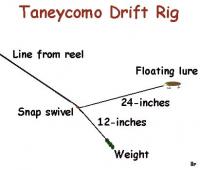
Loop is just a simple around and through loop.
-
-
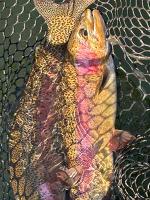
Flathead was released.
-
Stl Cardinals 2011 - The Road To Somewhere ?
Phil Lilley replied to Brian K. Shaffer's topic in Sports
I watched... of course! Excellent game. -
I fish it in the spring for whites and crappie. Have a friend who fishes it all year but he's never mentioned catching any smallmouth.
-
Is http://www.jamesriveroutfitters.com/ the only outfitters on the James? I was thinking there was a place in Hootentown to rent canoes. Can't find anything on the web.
-
<img class="alignnone size-full wp-image-1111" title="Lake Taneycomo in Autumn on Ozarkanglers.com" src="http://www.ozarkanglers.com.php5-24.dfw1-2.websitetestlink.com/lake-taneycomo/files/2011/10/Lake-Taneycomo-in-Autumn-on-Ozarkanglers.com_.jpg" alt="" width="500" height="279" /> <p> Looks like we’re going to have an early autumn this year. The leave on the bluffs here on Lake Taneycomo area already showing color. Hopefully the dry summer won’t diminish our fall colors this month but so far it hasn’t. Leaves are starting to dot the surface of the lake and that means mornings and evenings our rainbows will be midging the surface, feeding on midges and bugs that come off the leaves. Out in front of the resort, the wind pushes the leaves into a line and on both sides of the line you’ll find rainbows dimpling the surface. Now these rainbows will stay close to the surface unless a boat comes by and that pushes them down for just a short time. So we fish something that stays close to the surface where the trout are like a jig under a float, a zebra midge under a float or a shallow running crank bait, a spinner or spoon. Target those fish that surface. They aren’t moving very fast and will stay in the area you see them in. Most are small, freshly stocked rainbows but there are a few small browns and larger rainbows too. You’ll find these midging trout all up and down the lake, from the Landing all the way to the dam. Should think about using light line- 6x if you’re using tippet or 2-pound if you’re using mono.<p> There’s been no generation early in the day. It’s kicking on mid to late afternoon and running until about 10 pm. Early, there’s been little to no wind so the surface of the lake is slick. Early, the trout are staying in the shaded areas midging. Stands to reason the ones deeper are staying in the shade also. If you’re fishing something under a float whether it be a jig or fly, watch closely for the bite because it will be subtle. I’ve fished with some anglers who enjoy casting their line way out but the problem is they don’t see the bite cause the float is too far away. Gotta see it vibrate so keep it close. <p> Night crawler fishing about ¼- to ½-mile below Fall Creek has been pretty good the last few days. When the sun is up high, you should think about going to 2-pound line, small split shot and whenever, whatever—inject the worm with air and make it float. <p> There’s a bunch of trout at the Narrows above Fall Creek but there’s also been quite a few boats crowded in there. If you’re going to fish the narrow shoot, stay on the shallow flat and cast to the deep. Traffic isn’t a bad thing so grumble when someone motors through. Boats stir up the bottom and trout automatically move in looking for bugs that get kicked up. That means it triggers a feeding frenzy and you’ll catch a trout when that happens. One thing you don’t want to do- anchor in the middle or even in the channel. It’s not courteous and it’ll just cause you and others aggravation. <p> The chunk rock bank there just below the Narrows is deep and is holding quite a few fish. A jig and float should work well, using an orange headed brown or sculpin jig about 5 feet deep. This area is one of the first places you’ll see wind/chop in the morning so it’s a good place to start. Been catching a few warm water fish there too—blue gill, smallmouth bass and crappie. <p> I fished yesterday morning and caught a smallmouth and a crappie below Fall Creek’s dock along the new chunk rock bank throwing a 3/32nd oz olive jig and working it off the bottom there. Both were nice size! <p> Fly fishing below the dam has been interesting lately. Bruce Omans thought he had a big brown chasing his sculpin fly down in the big hole the other day but after the fish had been on a few seconds, it didn’t feel anything like a trout. It moved slow, but was very heavy. Then he got a glimce of it—a flathead catfish!!?? Not just a flathead but a 36-inch flathead! Taneycomo is becoming quite a diversified fishery!! <p> <img class="alignnone size-full wp-image-1107" title="Flathead Catfish on Lake Taneycomo - OzarkAnglers.com" src="http://www.ozarkanglers.com.php5-24.dfw1-2.websitetestlink.com/lake-taneycomo/files/2011/10/flathead.jpg" alt="" width="500" height="249" />
-
Where are the flies tied?
-
jpg- yes. If you can cut them down, make them no more than 500 px wide. Phil
-
It's on this site- under blogs. I create the article in Dreamweaver (html) and the post it. If you want to, send me the pics and I'll help. lilley @ lilleyslanding.com
-
Yea- can't believe B-Man didn't post the fish-of-the-year on Taney. What's up with that??? He had me going... I guess he has the rest of you going now too. Come on... post it! I wanna print it and post it on Lilleys' Big Fish Board! (Matt started it!)
-
<img class="alignnone size-full wp-image-1101" title="Lake Taneycomo Sept 29 Fishing Report" src="http://www.ozarkanglers.com.php5-24.dfw1-2.websitetestlink.com/lake-taneycomo/files/2011/09/Lake-Taneycomo-Sept-29-Fishing-Report.jpg" alt="" width="500" height="225" /> Generation patterns have changed a bit this week and it looks like the pattern will continue for a while. It’s a nice change from 24/7 generation, giving those of us who like to fish still-water techniques a chance to do that. They’ve been kicking the water on anywhere from late morning to evening times and running it until about 10 pm. Still finding quite a few rainbows down in our area of the lake, from Lilleys’ up past Trout Hollow. Boaters are trolling medium-size crank baits, rooster tails and small spoons and doing well. Dodging the schools of leaves on the surface of the lake is now tricky a little though. Rainbows are midging early and late in the day all over the surface, picking up small midge flies as they hatch from the lake. You can also catch these feeding trout using a small jig or fly suspended from the surface using a float and setting the depth at 12 to 24 inches deep. Jigs: earth colors like olive, brown or black. Flies: #14 or #16 zebra midge, black or red. You can use this same setup using a spin cast or fly rod. Yesterday was a good day to catch rainbows using one white and one chartreuse Gulp egg on a drift rig after the water started running and drifting from Trout Hollow down to our place. Several anglers said they limited in no time and some of the rainbows were nice sized, up to 14 inches. Night crawlers are working ok too but not as well as the Gulp Powerbait. This is usually not the case. I’ve been out only once this week and that was today. My dad is keeping one of Megan’s pups (from Darby)—a black lab male and I’ve been watching it a lot this week, hence the major reason I haven’t been out much. Don’t remember a pup taking so much time. Anyhow, I was pleasantly surprised to find a lot more trout in the trophy area this morning, especially at the narrows. I also found lots and lots of scuds in the gravel, something I haven’t seen since the high water in May. I worked a mink or brown #14 scud on the bottom in pretty shallow water at the narrows and could see rainbows as they spotted the fly and move to take it. Pretty fun. Also did well above and below the narrows using a jig and float, brown 1/125<sup>th</sup> oz jig with an orange head and setting the depth at 4 feet. Saw other trout caught using jig and float too. <img class="alignnone size-full wp-image-1099" title="Lake Taneycomo Fishing Report Sept 29" src="http://www.ozarkanglers.com.php5-24.dfw1-2.websitetestlink.com/lake-taneycomo/files/2011/09/Lake-Taneycomo-Fishing-Report-Sept-29.jpg" alt="" width="500" height="172" /> <img class="alignnone size-full wp-image-1100" title="Lake Taneycomo Report Sept 29" src="http://www.ozarkanglers.com.php5-24.dfw1-2.websitetestlink.com/lake-taneycomo/files/2011/09/Lake-Taneycomo-Report-Sept-29.jpg" alt="" width="500" height="203" /> Darby, my grand dog and mother of dad's new pup, just had to go in for a swim while fishing today. Actually she was trying to catch a rainbow I tossed back to the lake and fell in. But she took full advantage of the water plus she looked for the trout she could see from the boat. Rainbows scattered only to run around behind her to pick up the scuds she was kicking up. No, I didn't cast in behind her... but yes, I was tempted. You see, I didn't want to hook a dog instead of a rainbow! No generation means we can get up below the dam and do some wading. I’ve heard of a few big browns and rainbows up there but not in big numbers. Because of all the changes to the bottom structure up there, look around real well for holding trophies, especially in shallow water. The riffled water running through what we called and I guess still call the rebar area doesn’t look that deep but it’s deep enough to hold some big trout! Remember the oxygen is low in our lake right now. If you’re releasing what you catch, be mindful not to keep a trout out of the water very long. You’re working them hard on the fight, then pulling them out where they can’t breathe at all. After the pics are taken, you’re putting them back in water that is oxygen poor. Everything works against these trout—larger trophy trout compounds the problem. Just use common sense when fighting/handling trout. Thanks.
-
You can't fish off the wall but you can off the earth bank. Below and above the Landing walkway.
-
MDC bans porous-soled waders to help protect trout waters from invasive algae Porous-soled waders are prime suspects in human transport of “didymo,” or “rock snot.” JEFFERSON CITY Mo – In anticipation of winter trout fishing, the Missouri Department of Conservation (MDC) encourages trout anglers to help prevent the spread of a new threat to Missouri’s cold-water streams and rivers. Called “didymo” (Didymosphenia geminata) or “rock snot,” this invasive alga forms large, thick mats on the bottoms of cold-water streams and rivers, reducing the quality and quantity of food vital to fish such as trout. Didymo also clogs water intakes and boat motors. It interferes with fishing gear and eventually makes fishing nearly impossible, with devastating economic and environmental consequences. Didymo is native to northern parts of North America and Europe. While it has not been found in Missouri, rock snot has been found just south of the Missouri-Arkansas border in the White River. According to MDC Fisheries Biologist Mark VanPatten, didymo is kept in check naturally in other parts of the country and world by lower pH, or acidity, levels in the water. Missouri’s wealth of limestone creates higher pH levels in Show-Me waters. These higher pH levels can allow didymo to spread unchecked. “Preventing the spread of this invasive species into Missouri is critical,” VanPatten warns. “There is no way to control or eradicate didymo once it gets established in the state.” VanPatten emphasizes that recreational equipment such as boats, lifejackets and fishing gear--particularly porous-soled waders--are the most likely ways for didymo to spread into Missouri. “Porous-soled waders and wading boots, worn by many trout anglers, appear to be a likely pathway for the spread of didymo,” VanPatten explains. “The soles hold moisture for days and can harbor cells of this alga. Individual cells cannot be seen with the naked eye and only a single cell is needed to establish a stream-killing colony. Anglers who visit waters with didymo can, unknowingly, transfer these cells to the next stream they visit.” The Missouri Conservation Commission has approved a regulation change banning the use of porous-soled waders or footwear incorporating or having attached a porous sole of felted, matted, or woven fibrous material when fishing in trout parks and other specific trout waters. Pending public comment through the Secretary of State’s office, the new regulation will go into effect March 1, 2012, the opening day of catch-and-keep fishing at Missouri’s four trout parks. To help reduce the spread of didymo, MDC encourages anglers to remember: Check, then Clean or Dry. · Check all gear and equipment and remove any visible algae. Dispose of algae by placing it in the trash, not by putting it down a drain or into bodies of water. · Then Clean all gear and equipment with a solution of 2-percent bleach, 5-percent saltwater, or dishwashing detergent. Allow all equipment to stay in contact with the solution for at least three minutes. Soak all soft items, such as felt-soled waders and wader boot cuffs, neoprene waders and life jackets, in the solution for at least 20 minutes. · Or then Dry all gear and equipment for at least 48 hours by exposing it to sunlight. To help anglers clean their waders before entering Missouri trout streams, MDC has installed wader wash stations at Missouri’s five cold-water trout hatcheries: Bennett Spring State Park near Lebanon, Montauk State Park near Salem, Roaring River State Park near Cassville, Maramec Spring Park near St. James and Shepherd of the Hills Hatchery by the upper portion of Lake Taneycomo near Branson. All anglers are encouraged to replace their porous-soled waders with ones that have non-porous rubber or synthetic soles. Anglers can adapt felt-soled and other porous-soled waders to comply with the new regulation by sealing the soles with solutions of contact cement or marine rubber cement. VanPatten notes the cement may need to be reapplied after each use. MDC offers an instructional video for sealing waders at http://www.youtube.com/watch?v=n_udcfZqA_w “Adapting waders is not a cure,” VanPatten cautions. “It is just one step in prevention. It is still vital to check and clean or dry all waders and all other gear that have had contact with the water.” MDC held public open-house forums in March and April in communities near Missouri’s trout parks and hatcheries to help educate anglers, outfitters, retailers and boaters about the dangers of didymo, the need to replace porous-soled waders and to get public feedback on the proposed regulation change. For more information, visit www.mdc.mo.gov and search “didymo.”
-
Check the SWA website about 4 pm and you'll see what they'll do all weekend. No guessing. It's been accurate so far this week.
-
Where are the flies tied?
-
Fishing for bass in the fall can be a most rewarding experience for an angler's body and soul. The cooler temperatures provide a relief from the scorching heat that you had to endure during the summer and the leaves changing colors creates an eye-pleasing scene that lulls you into a state of tranquility. The fishing this time of year can be just as enjoyable, since the cooling water temperature triggers bass into gorging themselves on shad in preparation for winter. The action can get fast and furious on a variety of shad-imitating lures when you find bass feeding on baitfish. Turbid water and an abundance of flats in the upper ends of Lake of the Ozarks’ tributaries makes these areas ideal for bass in September. Some consistent fall patterns can be found on the Lake of the Ozarks in the upper reaches of the Osage, Grand Glaize, Gravois and Niangua arms. Favorite targets of local anglers are shallow docks along flats. The shad forage is tremendous both on the main lake and in coves during this time. Although patterns tend to be inconsistent in the fall due to the shad scattering throughout the lake, one type of cover always holds fish. Boat docks along flats are the best bets for good fall action, especially on the mid to upper Osage arm, which has plenty of these bass havens. A favorite fall pattern is flipping a ½-ounce black-and-blue jig and plastic crawfish on 20-pound test line behind docks or in the brush alongside docks 5 to 7 feet deep. Docks along the flats seem to produce better than the floating structures on the channel banks. The fish typically hold tight to cover so flip or pitch around the docks and let the jig fall into the cover. Allow the lure sit in the cover for a couple of seconds and shake your rod to make the jig rattle. If this fails to induce a strike, move on to the next target. A secondary pattern also works on docks or along flat points. Tie on a 3/8-ounce white or chartreuse spinnerbait with a silver single number 4 shallowleaf blade and wind it in with a slow, steady retrieve along the sides of docks. The jig pattern usually begins in late summer and lasts through October. The spinnerbait pattern works best in September and October. Since sunshine draws bass tighter to cover, the flipping technique produces better in sunny weather. The spinnerbait pattern calls for windy weather. The turnover completely shuts down fishing in the upper ends for a few days. You can usually avoid this situation by heading down lake to the clearer water areas by the dam, which usually turns over last. For information on lodging and other facilities at the Lake of the Ozarks or to receive a free 162-page vacation guide, call the Lake of the Ozarks Convention & Visitors Bureau at 1-800-FUN-LAKE or visit the Lake of the Ozarks Convention and Visitors Bureau web site at funlake.com.
-
http://www.trilakesmls.com/brn/maildoc/robertson_1317239761-Sep-28-2011-3_56_01pm.html Friends of mine asked me to post this.
-
This is an email I got in response to my inquiry - Contact Information Mountain Home Project Office 324 W. 7th Street Mountain Home, AR 72653 (870) 425-2700 I believe Mark Case is the Recreation Supervisor. Kelley Hurst(M) is one of the only Rangers I know down there, I believe he is in Recreation. Call this number and ask for one of those guys. I have not had time to make the call yet.
-
Glad to have you here, Becky. You live in my old stomping grounds - Parsons. I used to camp over where Big Hill is now. I've seen the lake but never fished it. Actually heading to Parsons this weekend for the LCMC 50th Celebration.
-
I drove to the dam and fished from about 3-5ish. Fished alittle after the water came on. Went directly down to Big Hole cause I hadn't been down there yet since spring. There's no long point anymore, just a big flat. Caught 4 small browns on a #16 red soft hackle and had a dozen more hook ups that came undone. Caught a couple nice rainbows in that bottom shoot dumping into the top of the hole. A guy fishing above me in that shoot hooked a nice brown but it broke him off. Looked to be over 20 inches. Saw one brown and one rainbow on the flat that were well over 20 inches. The trout I was watching down there seemed to be in good shape o2-wise. Fought hard and were feeding actively below and on the surface.
-
That's normal for the fall. As I've said before- the only oxygen comes from the outlets.
-
Love to hear how everyone does today. It's been a long time since we fished down water below the dam.
