

ness
-
Posts
10,229 -
Joined
-
Last visited
-
Days Won
102
Content Type
Profiles
Forums
Blogs
Events
Articles
Video Feed
Gallery
Everything posted by ness
-
I didn't know of John Prine until relatively recently. Love this stuff!!
-
I get that pea soup is hard to love. It looks disgusting -- like watered down baby food, or worse, Regan's puke. I don't remember when I first had it, but it wasn't when I was a kid. I'm sure my siblings and I would have pushed back hard like we did in the Great Liver and Onion Revolt of 1969. Dried peas are really pretty neutral-flavored to me. There's much more coming through from the broth and aromatic vegetables. I don't care for black-eyed peas -- I have the 'tastes like dirt' gene. Might be related to the cilantro 'tastes like soap' gene I have. Haven't researched it. Fresh peas are great, as are snap peas and snow peas. My grandmother, Saint Viola, introduced me to creamed peas which were done with canned Lesuer peas. I love that -- made it the other day as a matter of fact. You can disrespect peas, but DO NOT disrespect grandma Vi. So, I'm not gonna hold back on what I post just because I think a couple folks won't like it. And, I'm not gonna post negative comments about some of the disgusting stuff a few of you post either
-
How's that? You wearing a silk smoking jacket with ascot, holding a Peterson with some aged Haddo's Delight?
-
Beef. Gravy. Noodles. These are a few of my favorite things
-
So, let's say YOU end up with the virus. It doesn't show itself for a couple weeks, right? You're out without a mask. Any responsibility on your part to those people you infect? I don't buy the argument that masks cause more harm than good. If it keeps some things out of your nose or mouth, including your own fingers, you're better off. I get that you shouldn't feel that you're bulletproof wearing a mask and take unnecessary risks, but it's better than not having one on -- whether you're sick or not. Personally I feel it's irresponsible at this point to get out any more than absolutely necessary, and to be out without taking precautions such as wearing a mask.
-
On the list
-
Gawd I miss that guy!!!
-
He’s @Mitch f’s evil twin brother @Smalliebigs It’s complicated. One’s pretty cool, the other is nothing but trouble. PM me for details 😄😄😄
-
I gotta jump in here. The Mitch C{}##^*^## you refer to is not @Mitch f 😄
-
We don’t know the denominator.
-
Will the book be readable? Thanks for all your help. 😄
-
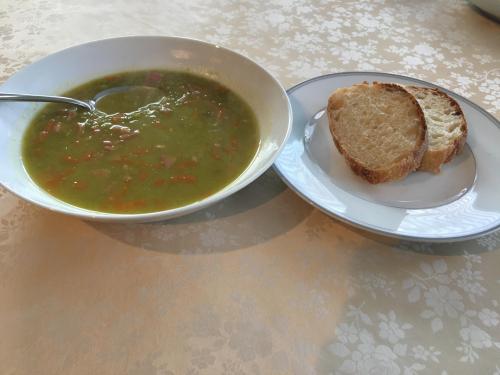
I post this with some trepidation. But I feel some sense of duty to defend this diminutive legume. I mean, what did peas ever do to you?? Split pea with ham soup, with a side of ho’made sourdough bread. All I am saying is give peas a chance.
-
I think he’s trying to get this thing back on track 😄
-
So I got a book in the mail. Can I heat it up to 180 degrees and be safe?
-
Just something for the good of the order— @ColdWaterFshr and @Mitch f are both good dudes, and great fathers who also care a lot about things beyond themselves. People just disagree on things sometimes. And that’s all I’ve got to say about that.
-
I've seen the topic discussed before in sourdough circles, and I remember there being some talk about certain municipalities using a different form of chlorine that doesn't evaporate as easily. Anyhoo -- Thanks for the idea. I think this falls into the 'if it ain't broke don't fix it' category. I'm really happy with the results.
-
Trying to sit through an episode of Flying Circus can be a challenge, no question. But I get a big laugh out of a lot of their stuff, in particular the movies. And those guys are funny. When Terry Jones died a couple months ago John Cleese commented, 'Two down.'
-
I’m not surprised in the least!
-
Yeah? You got a Maserati that does 185??
-
Apparently there are many who didn’t listen to the closing song to Life of Brian to the end. Or grasp that it’s all about sarcasm. 😄😄
-
@N9BOW Life’s a piece of s#%^, when you think of it! 😄
-
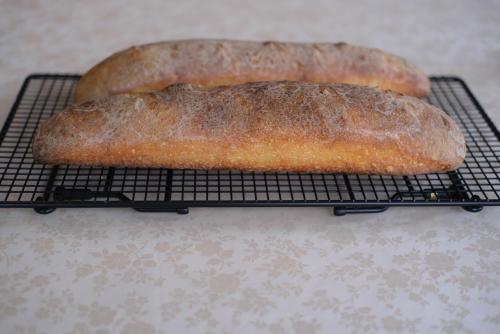
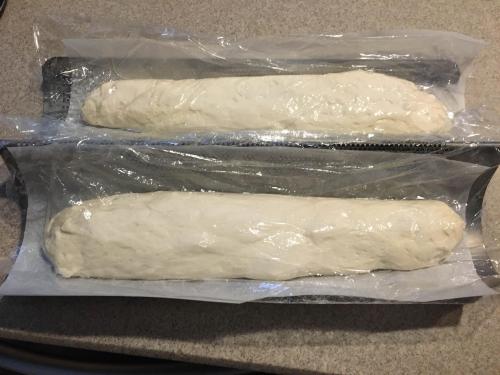
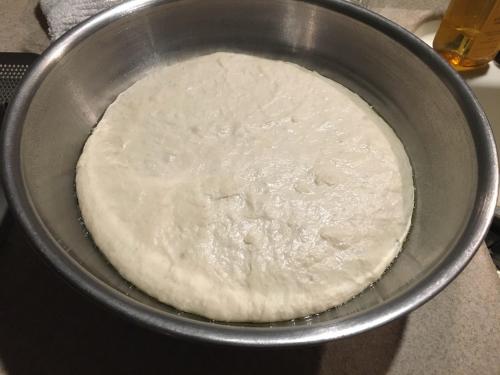
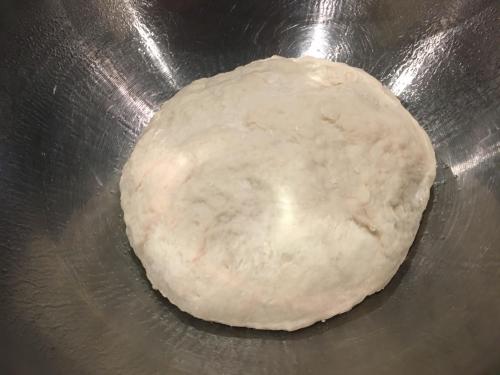
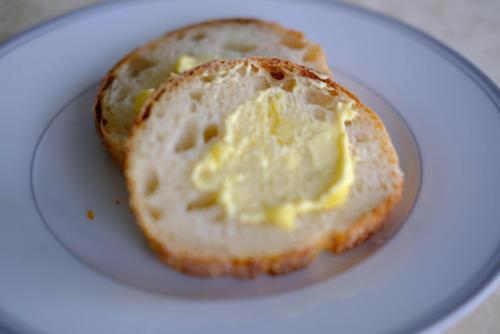
Alright, got things fired up and did a couple sourdough French loaves. Got the culture active the last couple days and then last night I got the dough going for an overnight rise. This morning, transferred it to the oven set on 'bread proof' (around 85 degrees), covered it with plastic wrap and let it proof for 2 hours. This warmer second rise helps develop the sourness as well as creating lift. After that I carefully formed two French loaves and placed them onto parchment paper on a French loaf pan and covered them with plastic wrap sprayed with cooking spray. Then back into the oven to proof further. In my experience, sourdough isn't really good at following the clock. This third rise is supposed to be 2-3 hours, but by about an hour and 45 minutes I could see it had risen quite a bit, had some good bubbles and was petering out. I know from experience that if you let it keep going it can deflate and get dense, so I moved forward. I removed the plastic wrap, carefully slashed the tops of the loaves (don't want to do anything to deflate it -- it's pretty fragile). Placed a loaf pan with about ½ cup water in the bottom of the oven, returned the loaves to the oven in the pan and turned the oven up to 450. At 45 minutes I checked the internal temp and it was around 200 (want about 210). I cranked the oven up to 500 (wanted more browning) and put the loaves back in for 5 minutes. Very happy with these results. Nice chewy crust, good texture with some decent air holes, good flavor. Just the right amount of sour, which is kinda why I go to the extra effort. So, sourdough isn't that much harder than regular bread. Maintaining the culture isn't anything more than stirring in some flour and bottled or distilled water (no chlorine) once a week and storing it in the fridge. The bread-making process isn't much different -- just takes longer because sourdough yeast isn't as strong as commercial yeast. No more steps, just longer waits in between.
-
Hah, missed this latest post but jut reread this whole thread and see the original post and now this. Never did try it. Not that I don’t believe you but I always use my Grandma Vi’s pancake recipe and can't bring myself to change. 😄 With all this time at home I may be more adventurous.
-
Kathy does eggs what she calls fry-poached. A little oil in the skillet, and a little water too. Crack in the eggs, cover and cook. Easier to get just like we like them, which is just slightly runny without any crispy white. Love this is technique. Used it this morning.