


mojorig
-
Posts
434 -
Joined
-
Last visited
-
Days Won
1
Content Type
Profiles
Forums
Blogs
Events
Articles
Video Feed
Gallery
Everything posted by mojorig
-
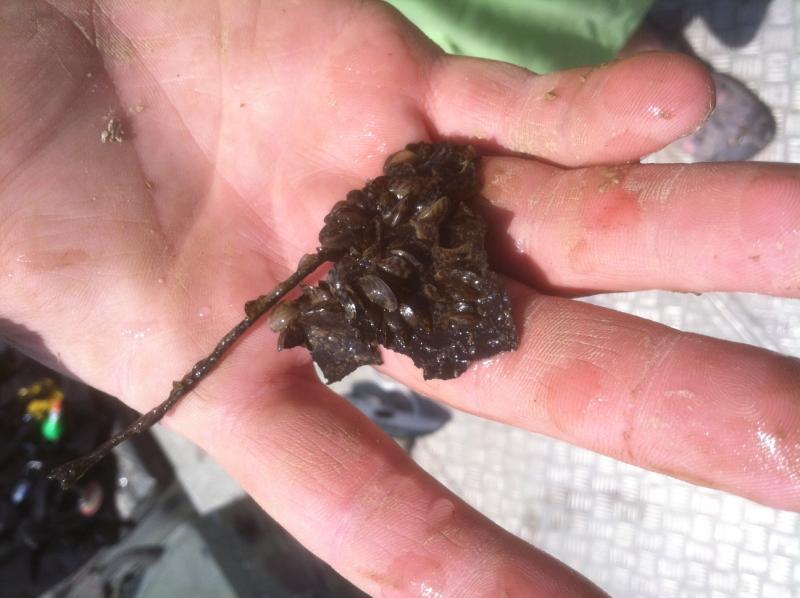
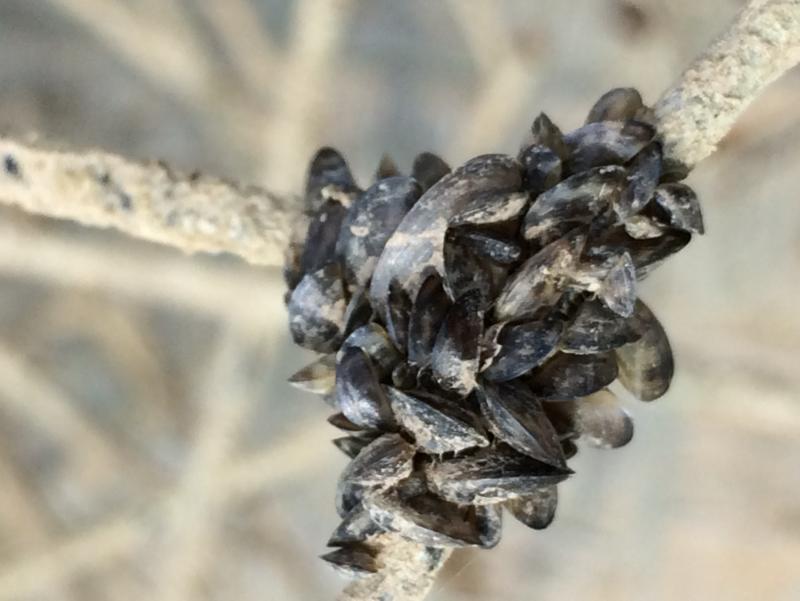
All, I know this is the Table Rock Lake page but I also know some of you also fish Bull Shoals Lake as well. I attached what I posted on the Lower Bull Shoals Lake page. We want to make sure that the zebra mussels don't get into anymore of the area lakes. Thanks all!! My post from the Lower Bull Shoals Lake Page: Now that Zebra Mussels are in Bull Shoals Lake, we are asking everyone to take a second and make sure your boat is dry. By taking a second, we as anglers can ensure that we are not contributing to the spread of zebra mussels to non-infected waters. Here is an example of how easy it could be to spread Zebra Mussels. The attached picture is a leaf we found while scuba diving in the back of Jimmy's Creek. There are well over 30 individuals on the single piece of leaf. I also attached another picture showing how they cluster up on anything. I just wanted to pass this info along to all of you.
-
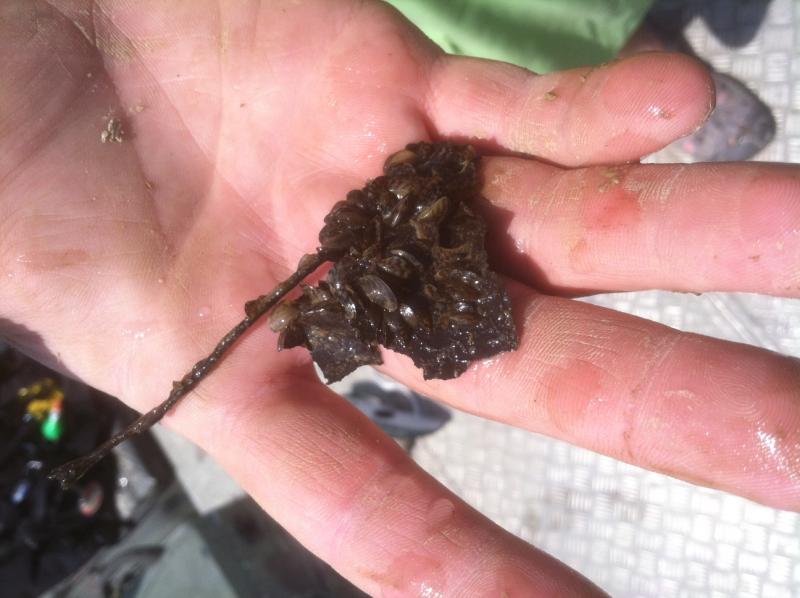
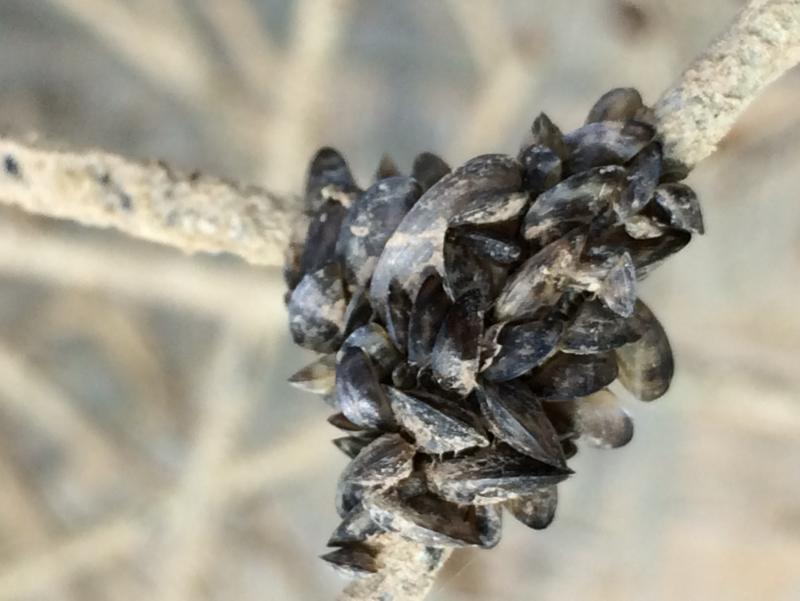
Now that Zebra Mussels are in Bull Shoals Lake, we are asking everyone to take a second and make sure your boat is dry. By taking a second, we as anglers can ensure that we are not contributing to the spread of zebra mussels to non-infected waters. Here is an example of how easy it could be to spread Zebra Mussels. The attached picture is a leaf we found while scuba diving in the back of Jimmy's Creek. There are well over 30 individuals on the single piece of leaf. I also attached another picture showing how they cluster up on anything. I just wanted to pass this info along to all of you.
-
Thanks, Champ!!
-
Texas does do a great job with stocking. Here is a link to their stocking history by lake (http://www.tpwd.state.tx.us/fishboat/fish/management/stocking/fishstock_water.phtml) or by species (http://www.tpwd.state.tx.us/fishboat/fish/management/stocking/fishstock_state.phtml). As you can tell, I am very envious of their website and the information they have on it. I have approached our administration about doing that with our website. Texas stocked 9,213,869 Florida and Northern Largemouth bass in 2013. In Arkansas, we stocked 2,288,886 Florida and northern largemouth bass (300,000 went into Beaver Lake). Texas hasn't posted any stocking numbers for 2014, yet. I will say Texas does a great managing the fisheries of their state. AGFC meets with them and other southern states on an annual basis. Like Champ 188 mentioned they do have a lot of funds to help out. They received $16,287,011 just from Sport Fish Restoration Funds in 2014. Arkansas received $5,924,602 and Missouri received $7,285,965. These funds come from 10-percent manufacturer's excise tax on fishing rods, creels, lures, and flies. States receive a proportional share based on the amount of land and water area in the state (40%) and the number of paid recreational fishing license holders (60%). If you want to know more about this program, here is a great overview done by the Outdoor Alabama (http://www.outdooralabama.com/research-mgmt/sport-fish.cfm). Champ188, I am very impressed with the water fertility posted!! Habitat and water fertility have impacts on reservoirs.
-

Dissolved Oxygen And Temperture Readings For Bull Shoals Lake 7-28-14
mojorig replied to mojorig's topic in Lower Bull Shoals
We saw walleye on the points when we were diving yesterday. -
Merc1997, Those are great questions!! In D-2, we are just responsible for the portion of Cricket Creek in Arkansas (2,000 acres). I cant answer the questions about the upper end for you. Plus, I want to make sure you get the correct information from the people in the area. Jon Stein is the AGFC biologist in D-1 over the upper portion of Table Rock in Arkansas. His email is Jonathan.Stein@agfc.ar.gov. Feel free to contact Jon with your questions about that. You will have to contact Shane Bush with the MDC to get information about their walleye sampling and stocking efforts in Table Rock. Again, I know I didn't really answer your questions but I want you to get the correct information. This is why I gave you the contacts that I have. AGFC and MDC personnel do meet every year to discuss what we saw during our annual sampling for that year of the border lakes.
-
True, there are times when we don't release some of the fish. The main reason in D-2 that we don't release some of the fish is for age and growth purposes. That is not an annual thing and when we keep fish it is usually less than 10% (likely closer to 6-8%) of the yearly sample. The walleye question did come up on this thread in the Beaver Lake page (). Also, the AGFC stocks Table Rock with walleye. We have stocked close to 70,000 walleye fingerlings per year for the last 10 years. Stockings have occurred at Cricket Creek or Romp Hole. Here is the D-1 biologist response that over sees those two AGFC projects that merc1997 mentioned. We also have started helping the MDC with their walleye project below the Powersite Dam on Bull Shoals Lake. Questions: At the end of the write-up there was a short paragraph that stated the following: "We completed the walleye spawning project on the Kings River and Beaver Tailwater this spring". Does this mean that AGFC collected brood fish from these areas for the hatchery? Answer: We collect adult walleye from the Kings River just above Table Rock Lake. We normally put in at the Romp Hole Access and motor downstream to collect a few bigger fish for spawning. We also work on Beaver Tailwater around the Highway 62 bridge, if water levels are right. We normally need about 20-30 females and around 30 males to complete the spawning project. Fish are spawned on the bank, if the females are free flowing eggs. If the fish are not free flowing, we take them back to the hatchery and Charlie Craig Hatchery personnel monitor them 24 hours a day until they can be spawned. Once the fish have spawned, the hatchery takes the brood fish back to the Kings River and Beaver Tailwater. The eggs hatch and the hatchery raises them to fingerlings. The fingerlings are then stocked back into Arkansas waters, including Beaver Lake.
-
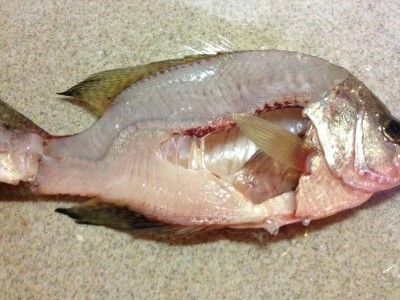
Most of the time, the humps are due to birth defects or injury during early life. We do not use high enough power while electrofishing to break backbones of walleye or bass. Our goal is to get a measurement and release them so you all can enjoy them. Edit: I forgot to include this picture from another website that we visit. This is a filleted crappie with an injured backbone.
-
Dissolved Oxygen And Temperture Readings For Bull Shoals Lake 7-28-14
mojorig replied to mojorig's topic in Lower Bull Shoals
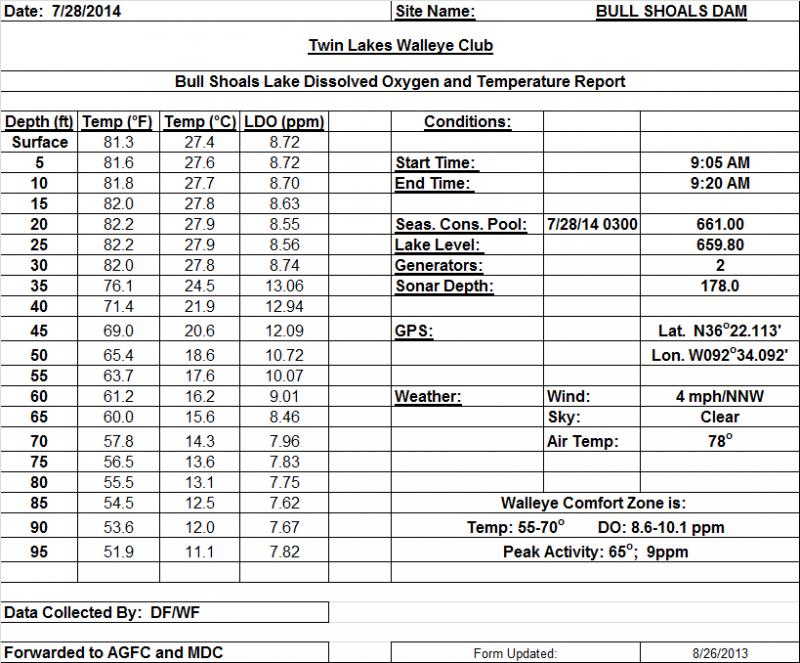
The walleye club anglers have been catching walleye and bass around 40 to 45 feet right now. -
Here are the daily water level readings for Table Rock Lake taken at midnight from January 1, 1960 to July 31, 2014. I have also included Bull Shoals Lake. They were taken at midnight from January 1, 1951 to July 31, 2014. I included Bull to compare the magnitude of elevation change during a high-water event. TR and BS Pool Elevs POR-1.pdf
-
I will have you an answer on Monday or Tuesday. I have requested this information from the COE.
-
Dissolved Oxygen And Temperture Readings For Bull Shoals Lake 7-28-14
mojorig replied to mojorig's topic in Lower Bull Shoals
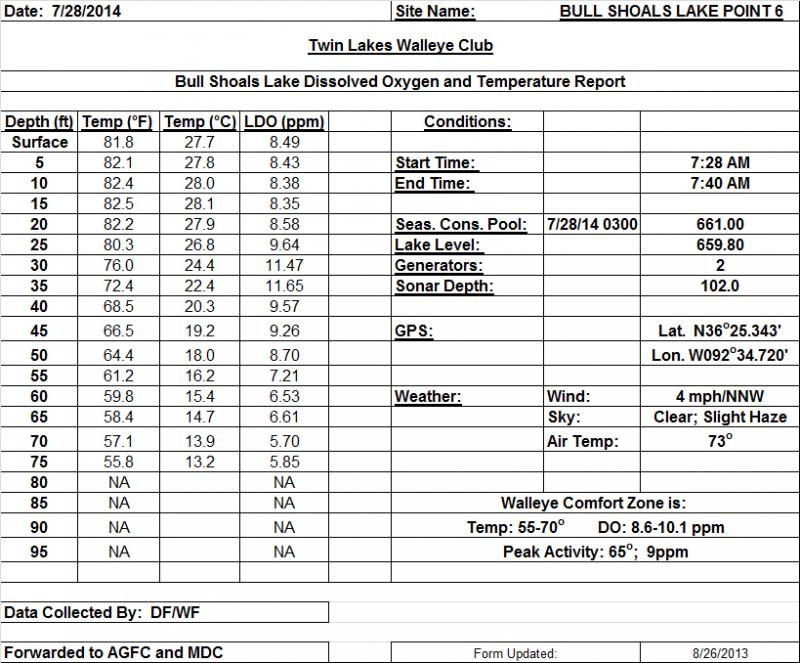
Actually, I was incorrect. The thermocline is from 35 to 45 feet at the dam and 30 to 35 feet at point 6. -
Jon is an excellent biologist and works hard for D-1.
-
Here is the latest Dissolved Oxygen and Temperature readings for Bull Shoals Lake for the Dam and Point 6 areas taken on 7-28-14. If you want to receive these readings on a more constant basis, please consider joining the Twin Lakes Walleye Club. I believe the membership dues are very reasonable (~ $20). They graciously donate this information to the MDC and AGFC. As for the readings, you can see a thermocline is now around 30-35 foot. However, fish could easily be found at 50, 60 or even 70 feet deep right now. As always, I hope this information will help you on your next fishing trip!!
-
Flippin, The reason the length decreased from age 6 to age 7 was there was only one age 7 fish collected. That one fish just happen to be a slow grower.
-
We look at each species individually. We look at each species separate because each one has different life history and population characteristics. The information we will be using in the future (I've only be in D-2 for 1 year) will be our annual sampling data along with age and growth and population modeling data for each species. Also, for Bull Shoals and Norfork, we work with MDC and their data to develop regulations that could be used on both sides of the border. This reduces complication with determining where you are at in the lake and what is the regulation (AKA Minnesota/Wisconsin BASS event where Brandon Palaniuk got DQ). Finally, we take angler opinions into consideration when determining a length or creel regulation.
-
Quillback, We only work the Cricket Creek arm of Table Rock in D-2. I am not sure about D-1 and the upper end of Table Rock. You are welcome to email Jon Stein at Jonathan.Stein@agfc.ar.gov. He would be the person to ask about that. Feathers and Fins, We are glad to be on here. We need to do a better job of getting the information about the fisheries into the hands of the anglers. We also get on here because we are avid anglers, too.
-
Excellent question. Here is one criteria used when selecting whether to use a slot or minimum length limit. I got this info from the Tennessee Largemouth Bass Management plan. We have similar language in the AGFC Black Bass management plan. The below information was develop by Novinger 1984. This is used by most states in some form. We also use the data we collected from Age and Growth studies to determine the size limits (minimum or slot) using fisheries data software used by many states. Minimum Length Limits Slot Limit 1. Low recruitment 1. High recruitment 2. Moderate to fast growth 2. Moderate to slow growth 3. Low natural mortality 3. High natural mortality on young (age 0-2) bass 4. Moderate to high fishing mortality 4. Moderate to high fishing mortality
-
Feathers and Fins, This is merely my opinion but I feel the prime spawning size largemouth bass is around 3-5 pounds (some 16-20 inches). That is typically the size of largemouth bass that our hatchery system spawns out. Those are important for the continuation of the population. O course, as anglers, we like the big ones. My suggestion is keeping ones that are barely over the length limit.
-
Shadow Bass From Norfork. Definite Maybe
mojorig replied to Ham's topic in General Angling Discussion
Ham, That is an Ozark Bass. Norfork has Ozark Bass in it. The Ozark Bass in only found in the Upper White River drainage. The Black River system (current, 11 point, etc) have shadow bass. -
Average age of the oldest fish that we typically see in our age and growth samples is around 10 -13 years. That doesn't mean that there isn't older fish in the population. I have seen a couple of 17 year old fish from a lake in SE Arkansas that basically had little harvest. The lake had a 16-21 inch slot. Those 17 year old fish were males in the slot.
-
Ham, The areas that we sampled on Bull Shoals Lake were: Bear Creek (16 samples), East Sugarloaf (16 samples), and Jimmy's Creek (16 samples). The areas that we sampled on Norfork Lake were: Bennett's Bayou (16 samples), Float Creek (16 samples), and Shoal Creek (16 samples).These can change from year to year. Historically, we don't sample that many smallmouth bass. We are going to try to specifically target them in the future. This will have to be done separate from our annual sampling. Quillback is correct that our device doesn't work below a certain depth. We usually work along the shoreline in 10 foot or less. I definitely agree that that are a lot of smallmouth bass and some really big ones in Bull Shoals and Norfork. Hopefully we can have some of you all ride along with us one night to see the whole operation. Again feel free to email me with any questions that you have. I would be glad to answer them for you. jtrisley@agfc.state.ar.us
-
I know you are looking for Table Rock data but here is some age and growth information from Bull Shoals (2012). These are the average lengths at age for 123 largemouth bass collected in the spring of 2012. We plan on doing another A&G project again next year (2015). These numbers shouldn't be too far off what you would see at Table Rock. Again these are just averages. I included a graph showing all fish ages. Some fish grow faster and some grow slower. We use this data to develop a growth curve. The curve allows us to determine how long it takes to reach a certain length (minimum length limit) or the age of a fish at particular length. Sorry for the bad table. I couldn't get it to work any other way. Age Length (Inches) 1 7.4 2 11.1 3 12.3 4 15.4 5 16.3 6 18.9 7 17.2 8 19.3 9 19.4 All fish ages.pdf Bull Shoals 2012 Growth Curve Otiliths.pdf
-
There is close to 60 crawfish species in Arkansas. Here is a link from the MDC website about invasive crayfish: http://mdc.mo.gov/fishing/protect-missouris-fishing/dont-spread-crayfish
-
Great, thank you!!

