Phil Lilley
-
Posts
19,030 -
Joined
-
Last visited
-
Days Won
132
Content Type
Profiles
Forums
Blogs
Events
Articles
Video Feed
Gallery
Everything posted by Phil Lilley
-
Not sure how long this will stay up. It's created through Google + hangout.
-
Editing Profile Problems
Phil Lilley replied to Jack Jones's topic in Messages for, and from, the Admin
The board has been upgraded and this issue should be fixed. -
Table Rock Lake Current Bass Fishing Report 3-4-13
Phil Lilley replied to Bill Babler's topic in Table Rock Lake
"Tomorrow Phil and I are walleye guys." No we're not. Someone wimped out... -
Editing Profile Problems
Phil Lilley replied to Jack Jones's topic in Messages for, and from, the Admin
There's a patch that cures that... I'm working on it. Thanks for pointing it out. -
Montauk Opening Day Report, Darrell Bentley
Phil Lilley replied to Phil Lilley's topic in Montauk State Park
Got me... I don't have a pic of the crowds. It's from the 28th. -
Naw... thanks for the thought but google knows when people click just to click. It could even get me in trouble. So carry on... enjoy!
-
I searched amazon last night for Muck boots. Today I see ads for.... amazon and Muck boots. I make an average of $11 per day on these ads. It helps to pay for the hosting of the site.
-
Fished from 5 till 6 last evening just above the boat ramp. The trout really didn't want to bite then either. And it was cold, icing in the guides. I videoed but don't like the way it turned out...
-
<img class="alignnone size-full wp-image-286" title="Montauk 2013" src="http://www.ozarkanglers.com/montauk/files/2013/03/Montauk-2013.jpg" alt="" width="500" height="320" /> Darrell Bentley of Reed's Fly Shop gives us a run down of the opening day's events, 2013 Opening Day at Montauk State Park. Here his report by clicking <a href="http://www.ozarkanglers.com/montauk/files/2013/03/Montauk-March-1.wav"><strong>HERE for WAV</strong></a> and <a href="http://www.ozarkanglers.com/montauk/files/2013/03/Montauk-March-1.mp3"><strong>HERE for mp3</strong></a>
-
Brian!!!
-
The No Wake buoys at Fall Creek Marina are out of the water. Please be advised that all boats need to run at least 50 feet from the dock for safety reasons. That section of the lake is very narrow and can get very congested with boats. Be safe, slow to idle speed and have a good fishing day!
-
Shad! Coming Through The Dam At Bull Shoals
Phil Lilley replied to Phil Lilley's topic in White River
That's a stock photo I use for most of John's articles... -
I called and talked to Charlie this morning. Recorded the conversation. Unfortunately, I had trouble with the recording and am not able to post it. He said the water will be a little high due to the snow runoff and discolored a bit but no more than it gets when a lot of people get in the river and wade. He said he thought fly fishers would do better if they'd wait for a couple of hours and let the river clear out. Then use a sinktip line and get some woolies or leaches down deeper. he said he was tying up some "killer" spinner woolies for his shop. He also mentioned the otters... he had talked to some people over the winter and made observations himself about the blooming population of otters in the park and how they were depleting the trout population in the winter.
-
by John Neporadny When spring arrives, it's prime time for catching crappie at the Lake of the Ozarks. By following crappie through their spawning cycle in the spring, you can consistently catch these tasty fish at the Lake of the Ozarks from March through May. One of the premier crappie anglers on the Lake of the Ozarks, Guy Winters, Camdenton, MO, knows where to find and how to catch crappie during the two main stages of the spawning cycle--the pre-spawn and the actual spawn). The pre-spawn period begins when the surface temperature climbs to around 50 to 52 degrees and crappie move into depths of 8 to 10 feet. "How long they stay there depends on how fast the water temperature jumps up," says Winters. This pre-spawn stage usually lasts until the water temperature rises to 61 or 62 degrees. This period usually runs from March through most of April. "A lot of people think the spawn happens the first couple of weeks of April on this lake, but it doesn't," Winters advises. "I've seen it in the first week of May sometimes before they actually go to the bank to spawn. Any time anybody asks me when they should come down to get in on the best fishing for spawning crappie on the Lake of the Ozarks I tell them the first or second week of May. Of course, there is some awfully good fishing before that but you have to work a little harder." Winters targets cover near pea gravel banks, which are the ideal spawning spots for Lake of the Ozarks crappie. "Crappie will identify with brush piles pretty heavy that time of year," Winters says. "They follow the creek channels or the tributary stream channels pretty close." If the weather has been cold in March, Winters searches for banks with shale or chunk rocks which warm up faster on sunny days. Finding a good area to fish for crappie is based mainly on personal preference. "I've got my favorite places but that's just because I know where I've put a lot of brush," says Winters. The crappie expert mostly concentrates on the Big Niangua close to his home, but he thinks the Little Niangua produces larger crappie than the Big Niangua because it receives less fishing pressure. He also believes the Grand Glaize has more legal-size fish because it also lacks fishing pressure. "You can find crappie in any area of the lake as long as you know where there is some good cover, it's not too far from a creek channel or tributary steam channel and it's within a quarter mile of a good spawning bank," says Winters, who finds fish both in the coves and on the main lake then. "The key is being close to that spawning bank." The best time of day for Winters during the pre-spawn is from 3 p.m. until dark. "Light penetration in the water determines when is the best time to fish. Crappie stay out a little deeper when the sun is up high because there is more light penetration in the water and when the light penetration starts to diminish a little bit, the fish come shallower and you don't have to work as hard for them." During the pre-spawn, Winters prefers Laker Paddlebugs (a cricket-shaped plastic body) and Curlybugs (a cricket-shaped plastic body with a curly tail) because these lures fall slower than the conventional plastic tube jigs. "I like the Curlybug and Paddlebug extremely well that time of year simply because the fish hang pretty tight to the brush lots of times and you have to float your lure right over the top of the brush. I can use those baits a lot of times when other people use tube jigs or curly-tail grubs and have to put a float on them." By keeping his rod tip at the 11 o'clock position, Winters can slowly glide the lure over the brush. He also likes to put a Laker StickGuard over the jig's hook which allows him to crawl the lure through the brush without getting snagged. This technique is especially effective when barometric pressure falls and crappie burrow into the brush. Most of the time, Winters hooks his plastic lures on a 1/32-ounce jighead, which he casts with 6-pound test line. When fishing thicker brush that stands up in the water, Winters sometimes switches to a 1/16-ounce jighead and 8-pound test line. The only time he uses 4-pound test is when the fish are deeper than 15 feet. A quick drop in barometric pressure causes Winters to present his lures vertically to crappie in the brush, but in most situations he pitches his lures to the cover and works them back. Stained water allows Winters to make short pitches to his targets, but clear water requires longer casts to prevent spooking fish. During the spawn, water clarity also determines what depth crappie build their nests. The clearer the water, the deeper the fish spawn. The fish seek some type of shallow pea gravel bank, but the area still has deep-water structure nearby, such as a creek or tributary channel. Winters says the female crappie hold along this deeper structure until they are ready to move in to deposit their eggs. When spawning in the shallows, crappie hang around any cover they can find. "A lot of times I've seen just one little stick sticking up and that's all that was there," Winters recalls. "I would cast there and not feel anything else but I would still catch 10 or 12 fish around it." On a cloudy day, Winters can catch crappie all day long during the spawn. But on bright sunny days he tries to avoid fishing from 11 a.m. to 2 p.m. when the light penetration in the water is the greatest. Lure selection is less critical during the spawn. "You can almost throw the kitchen sink at them and catch them then if you move it at the right speed," says Winters. "Lure presentation becomes more important than anything else during the spawn. A male fish guarding the nest is not an active feeding fish. He's defending a territory and if anything gets too close at too slow of a speed, he considers it to be a threat and he'll attack. If it's moving too fast he'll ignore it." Winters recommends keeping your lure 4 to 6 inches off the bottom to keep the jig in the crappie's strike zone. A jig-and-bobber rig becomes more effective during the spawn because the bobber allows you to work your jig slower through the nest and prevents the lure from falling to the bottom. In dingy water, you can set the jig 4 to 6 inches below the bobber since the fish will move as shallow as 1 1/2 feet. Besides the Curlybugs and Paddlebugs, other effective lures during the spawn at Lake of the Ozarks include plastic tube jigs, curly tail plastic grubs and Roadrunners. Winters' lure color selection is based on water clarity. In clear water he favors the following combinations: red and pearl, blue and pearl or yellow and pearl. For darker water, he prefers black and chartreuse, red and chartreuse or chartreuse and silver glitter. The spawn usually ends when the water temperature climbs to 70 degrees. The latest Winters recalls catching any crappie spawning along the bank is the beginning of the third week in May. Weather slightly alters the spawning cycle schedule each year, but if you plan a trip to Lake of the Ozarks during the spring, you'll be picking a prime time for crappie fishing. For information on lodging and other facilities at the Lake of the Ozarks or to receive a free 162-page vacation guide, call the Lake of the Ozarks Convention & Visitors Bureau at 1-800-FUN-LAKE or visit the Lake of the Ozarks Convention and Visitors Bureau web site at funlake.com.
-
<img style="margin-left: 7px; margin-right: 7px;" title="John Berry" src="http://www.ozarkanglers.com/white-river/files/2011/12/John-Berry.jpg" alt="" width="250" height="250" /> Last week I had a two day guide trip with a businessman from Wisconsin. My usual habit, when guiding the same client for two days, is to fish on the White one day and then fish the Norfork the next. Of course, if the client wants to fish one river both days, we do it that way. <a href="http://www.berrybrothersguides.com/" target="_blank"><img src="http://www.ozarkanglers.com/white-river/files/2012/05/Berry-Brothers-banner-ad.jpg" alt="" width="400" height="78" /></a><!--more--> Brett and his wife, Cindy, were staying at River Ridge Inn. I picked him up at 7:30 AM the first day. It was very cold and windy (complete with lake wind advisories) and Cindy passed on the opportunity to fish with us. We decided to fish the Catch and Release section because it had recently reopened after having been closed for three months to accommodate the brown trout spawn and it had been fishing very well. They were running three generators and the flow was a bit over 6.500 cubic feet per second (cfs) which is the rough equivalent of two full generators. I launched my White River Jon boat and motored up toward the dam. We were fishing large egg patterns below pink San Juan worms with a large AAA split shot (.8 grams) and a medium sized Thingamabobber as a strike indicator. We were doing well and hooking up a good fish on just about every drift. About ten o’clock we heard the horn sound at the dam. I knew from past experience that this signals some change in water flow through the dam. Sure enough, we saw another generator come on line and the flow increased to about 11,000 cfs or the rough equivalent of three and one half generators. This is more water flow than we have experienced in some time. The increased flow did not hurt the fishing. About this time, I looked up toward the dam and noticed the gulls actively feeding on something coming through the generators. This is the classic indicator for shad coming through the dam. The increased flow had triggered it and about a hundred gulls diving into the power house out flow to key in on shad coming through confirmed it. I told Brett that we were in for a very special opportunity, fishing shad! I clipped off the San Juan worm and egg pattern. I reached into my boat fly box and pulled out one of the white marabou jigs with a bit of flash that I always carry in case I run into this situation. I quickly tied it on, bent down the barb and motored up toward the dam. Brett hooked a fat eighteen inch rainbow on the first cast. We fought, landed and released it quickly. A couple of casts later he picked up another. For the next hour and a half the action was absolutely nonstop. We were catching two or three fat sassy trout on every drift. They were all in the fifteen to eighteen inch slot. We didn’t hit a really big fish but we were happy. Brett was absolutely stoked. He had never experienced trout fishing like this and was amazed by the size, girth, deep color and fighting abilities of the trout he caught. We boated a couple of dozen fine trout in that time period. About eleven thirty, it ended as quickly as it began. The flows decreased back to around 6,500 cfs. Our first clue was that the gulls quit feeding. We stuck with the shad pattern but the action had slowed. Now we were only picking up an occasional trout. A few minutes later we noted that the flows had greatly diminished. They were now about 1,500 cfs or the rough equivalent of less than one half of a full generator. The predicted flows for the day had indicated that that generation would be cut back around eleven o’clock. I knew that I would not have enough water to drift the area and headed for the ramp where I quickly put my boat on the trailer and got it out of the river, while I could. We had received an extra hour of higher water and higher flows than predicted. On the White, water flows are like a box of chocolates, you never know what you are going to get. We headed down to Rim Shoals to find some deeper water. We ate our lunch on a picnic table by the river. I launched my boat and we motored upstream. The wind was howling and it was difficult to get a good drift. The water was severely stained and full of trash. The river had been off for a few days prior to this day and the higher flows had flushed all manner of trash downstream. We picked up a couple of small fish but the going was tough. We decided to go somewhere else. Our best option was the Norfork. We trailered the boat to Quarry park and were pleased to see very few anglers there (I only saw three). I switched the fly rig over to a sowbug under a pink San Juan worm and we waded over to a good spot. The action was a bit slow but we managed to catch several nice trout to include a nice brook trout. About five o’clock Brett had caught enough trout and was ready to join his wife for dinner. On the drive back to River Ridge Inn, I worried about how I would be able to top the fishing on this day on the next day when we would fish again. The shad were not technically supposed to be coming through as it was not cold enough for a full shad kill. Someone forgot to tell the shad! John Berry is a fly fishing guide in Cotter, Arkansas and has fished our local streams for over thirty years.
-
I have too much respect for everyone's beliefs, and the Lord God, to let this go any further. I will not let this fishing forum move into the discussion of religion. That's one of my rules... No reflection on any posts here, just where it may go if I let it.
-
http://newmdcgis.mdc.mo.gov/public-maps-gallery-1.4/public-maps-gallery/map.html?webmap=1fc4dee14f6747d8924612aecbb48ac5 Map Link
-
<img class="alignnone size-full wp-image-279" title="Feb 27 Montauk" src="http://www.ozarkanglers.com/montauk/files/2013/02/Feb-27-Montauk.jpg" alt="" width="500" height="275" /> Darrell Bentley gives a great pre opening day report for the new trout season at Montauk State Park. River conditions as well as number of trout stocked and what they're biting on... he gives it all. <a href="http://www.ozarkanglers.com/montauk/files/2013/02/Montauk-Feb-27.mp3"><strong>Hear his report by clicking HERE</strong></a> <a href="http://reedstrout.com" target="_blank"><img src="http://www.ozarkanglers.com/montauk/files/2012/05/Banner-ad-800-wide.jpg" alt="" width="400" height="55" /></a>
-
They were BIG even that far up. Wish I could of seen them up closer.
-
Lilleys' Lake Taneycomo Fishing Report, February 27
Phil Lilley replied to Phil Lilley's topic in Upper Lake Taneycomo
-
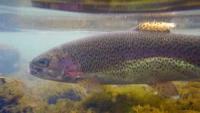
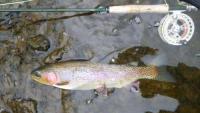
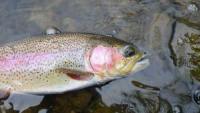
Winter is hanging on . . . actually it seems like it just arrived! Snow, well some sleet and thunder showers here, but no snow yet! But colder temperatures and a bit breezy makes tough fishing conditions. But trout don't mind. They like it! Trout fishing has steadily improved as winter goes by. What I consider to be our "trout opening" was the first weekend in January when our Boswell group came and fished. No one was impressed with the number or size of our trout that weekend but since we've seen better rainbows caught and more of them. But we aren't seeing as many good rainbows (15 to 18 inch) as we did in 2012. Why? Not sure. But it is what it is. This last weekend, we hosted our last winter trout tournament. At the weigh in, we saw quite a few nice pound to pound-and-a-half rainbows brought in and weighed. Most of these were males, sporting dark colors and a hooked lower jaw. Our Shepherd of the Hills Hatchery does stock male rainbows, and this is the time of year our rainbows spawn, so it's normal to see them, just not quite this big. Most of the trout caught in the tournament were caught on jigs. I talked to quite a few participants and they were throwing earth-colored 1/16th to 1/8th-ounce jigs straight, without a float. The largest rainbow was caught on a white jig and he caught it early in the day down by the railroad bridge. A hot area where they found good rainbows was between Short Creek down through the docks to where the old Sun Valley dock used to be and fishing the dock side of the lake. Colors: ginger, olive, olive/sculpin, tri-olive, sculpin/ginger, black and white. Capt. Bill Babler had a great trip on Monday, fishing primarily with night crawlers, with one unit running, drifting from Fall Creek past Short Creek. His clients caught rainbows and a few browns regularly for their six-hour guide trip. When the water is running, you don't need to inject air in the worms. A gentleman last week found crappie down at the Landing. He fished a minnow under a float and drifted in 10 to 15 feet of water. He said he caught some nice crappie and a few bass, too, along with trout. I went down there yesterday and ended up trolling a 1/16th oz head with a purple swimming minnow and caught one nice crappie, missed two more and caught three rainbows. It was windy and cold! I tried to stay within 50 feet of the Landing wall. Fly fishing below the dam has been very good. Scuds and sow bugs worked on the bottom, #12 to #20's in tans, olive and grays. On the flats, use a #16 rusty, P&P or ugly zebra midge under a palsa float 6 to 24 inches deep, depending on the depth of water. I drove up to the dam this morning and fished from the bank just above the MDC boat ramp for an hour. It was cold and windy, but I caught several very nice rainbows on a #16 rusty midge under a palsa six inches deep. They were midging even in the heavy chop. The Rebar area has produced some great rainbows this past couple of weeks. The veterans here have been using a tandem rig that includes a scud and soft hackle tied about 24 inches apart. Use the soft hackle below the scud. Also try a San Juan worm or a Mega worm in the fast water. When fishing the chute at Rebar, don't pass over the fast, shallow looking water towards the end of the chute. This is holding some very nice trout. If there is a chop on the surface, as there was this morning, strip and swing a soft hackle. Use lime green, red, black or pearl colors in size #14 to #18's. In the trophy area above Fall Creek, jig-and-float is working very well. Most of us use two-pound Vanish which is a fluorocarbon line. It disappears in the water better than regular mono filament. We're setting the float four- to six-feet deep, depending on the depth of water we're fishing and using small marabou and micro jigs. Marabou jigs: 1/125th to 1/64th-ounce in brown/orange head, sculpin/orange head (best), ginger, sculpin, olive, black and white. Micro: Half micros olive/orange head, ginger, gray/chrome head. If the water is running, use a full micro, pink/chrome head. Jig-and-float also works well below Fall Creek, anywhere in the main lake. You might set the depth of the jig a little deeper. Also use a Miracle fly under an indicator. This is a egg pattern developed by Jeremy Hunt. The best colors have been Oregon cheese and peach.
-
I take Paypal now...
-
Conditions basically. I want someone from one of the shops to give us information to post on the forum/site. Weaver's site has a lot of info. Wanted to call and talk to / record and post the voice report. I've emailed a couple of people. Waiting for responses. Thanks
-
Tim Homesley graciously called in and left a very informative river report for Roaring River, this just 2 days before opening of trout season at Missouri Trout Parks. Hear his report by clicking HERE (WAV) . . . or HERE (mp3)
-
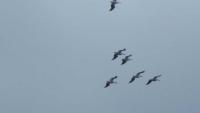
I'm about 90% sure these were big white pelicans. They were really wanting to land on the lake. I was at the boat ramp and there were people at the gauntlet-- no one between us so there was plenty of water there but they just didn't want to commit. I've seen them on Bull Shoals before but never here.