

Gavin
-
Posts
9,134 -
Joined
-
Last visited
-
Days Won
20
Content Type
Profiles
Forums
Blogs
Events
Articles
Video Feed
Gallery
Everything posted by Gavin
-
Looks like fun! Looked like they were ready but not on beds in the BP...Same with the Gogs...planning to stick to trout for the next couple of weeks. Should be some great dry fly action on the Current for the next couple of weeks....Caddis always...Cahills if you know where, when, and get really lucky.
-
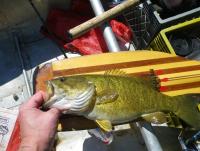
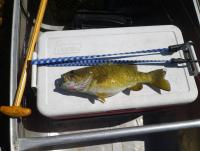
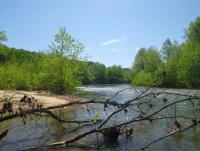
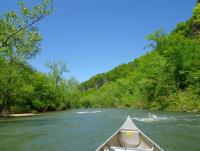
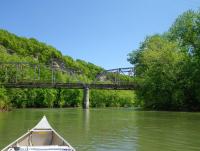
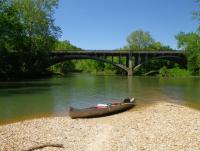
Thanks gents...it was a great day. My canoe needs some repairs so I rented one from Sheldon at Route 66 on the Big Piney. Small operation but very friendly..Did the 8 miles back down to his place...in 5 hours...Coulda done it in an hour if I wanted to yesterday. That old Osage handled pretty well. The jig was a just a white 1/2oz Swim Jig with a White 4" Zoom Fat Albert Curly Tail on the back. I was fishing it like a spinnerbait..Started with a 1/4 or 3/8oz White Spinnerbait and caught 8-10...but I wasnt getting down fast enough...The swim jig was the heaviest thing I could find in my tackle bag. Bought it for pond greenies...but it worked yesterday. Not a great numbers day...maybe two dozen, broke a rod, lost the handle on one of my baitcasters,but no complaints! Just an excuse to buy better stuff.




-
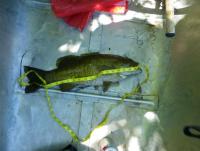
There are some better pics about.....but not here or tonight........Wish I had a dumb schmo or several along to take my picture:>)!...She ate a swim jig..Think it was 1/2 oz...with a 4" long trailer..To fast to finesse fish today.
-
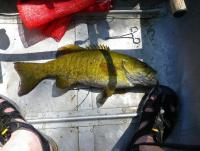
Great day but not easy fishing....water was rolling....make your first cast count and if you can get two into a good spot...bonus! Worked my tail off but it paid. New PB ....21x14!
-

Need Some Help - Clear Water Streams Off Of I70
Gavin replied to mic's topic in General Angling Discussion
New Baden, IL to KC.....KC sucks for access to the Ozarks...MIght meet up at Bennett...but that park sucks, and so does the Niangua...Gasconade & Osage Fort arent far east of there...Big PIney...further east....Thinking the G. Nade and the Big Piney are the northermost jewels of the Ozarks....the best part is further south. -
Title Or No Title, That Is The Question?
Gavin replied to BilletHead's topic in General Angling Discussion
You dont have to title a canoe unless you want to put a motor on it in Missouri. Wanted to register mine once.....but I found it to be more trouble than its worth. I've run a troller illegal on occassion...if I ever get caught....I'll plead stupid first, and pay the fine if ticketed.The fine will be peanuts when compared to the hassle and annual personal property taxes on a registered boat. -
Walleye/smallmouth Fly Advice On Eleven Point In Imboden/pocahontas
Gavin replied to chundler's topic in Eleven Point River
Jigs work anytime..when in doubt toss that. Dark, Light...see if there is a preference. Have fun! -
NIce Ride! Great Fish!
-
Need A Kayak Reccommendation
Gavin replied to hoglaw's topic in Tips & Tricks, Boat Help and Product Review
Thinking that you need two boats...The Coosa is a good riverboat by all accounts...but its not set up for lakes..Might take a look at the Wilderness System Ride for lake use. It has a more pronouced keel so it should track alot better. -
Good for you! Its been 10 days since I've found any.
-
I can tie a leader on in about 15 seconds with a surgeons knot. Uni to Uni, Albrights, and other fancy knots take to long. Here's an illustration...havent tried the canoeman loop yet. http://www.doalures.com/uploads/Docs/9102_DOA_10.28__Knot_Page.pdf
-
Think you might be surprised with how good fine braid is on spinning gear...It darn near eliminates line twist issues, great sensitivity, and long casts..the leader needs to be there though. It adds a degree of stealth, allows you to break off when you want too, provides some abrasion resistance for bottom bouncers, and eliminates some of the fouling issues when fishing treble hooked hardbaits. I usually go with mono on casting gear, cuz its cheap, I still backlash occassionally, and I dont have to worry about line sink when working topwater.
-
Ditched Power Pro along time ago for Suffix Performance braid.Havent tried the 832 Suffix...kinda pricey...Hi Vis Yellow in 6lb with a leader is my preference.
-
Must be a distintive feature behind Lonnie...Very nice catch!
-
MDC's mandate doesnt include pollution enforcement. You need to complain to someone else if you want something done about that.
-
Look on the bright side FW...This one makes sense and it wont cost you anything. The felt sole deal wasnt cheap.
-
Planning A Float: Big Piney Or Eleven Point?
Gavin replied to TroutRinger's topic in General Angling Discussion
Its first come first served...no water..and there is a pit toilet...Might have to run your own shuttle for that stretch on a Saturday, but you could try Boiling Springs.. I dont think the Rich's or Wilderness Ridge would be interested. -
Planning A Float: Big Piney Or Eleven Point?
Gavin replied to TroutRinger's topic in General Angling Discussion
Ditto...There's a free Forest Service Campground at Slabtown...I'd probably camp there, and float Mason to Slabtown... Greer CG on the 11pt is nice, so is the CG at nearby McCormack Lake. I wouldnt recommend Cane Bluff,Turner, or Whitten. -
Livingston down to Big Timber is some great water. The fish count is lower but the size potential is much better. I'd rather float there than up in the Valley.
-
There are lots of good reels out there, and I'm always on the lookout for a unique one to add to the collection. For daily drivers I like a sealed disc drag that wont get gummed up with grit. The Lamson Konic is a great reel for the price. Great design, Great Drag, reasonable price. If I wasnt completely satisfied with my Galvan OB's I'd grab a few of those.
-
http://www.madrivercanoe.com/pages/index/customer_service/archived_catalogs You might be able to find the specs here..
-
. Crayfish Regulation Change Key Information The Missouri Department of Conservation works with and for Missourians to sustain healthy fish, forests and wildlife, and a regulation change to limit the importation, sale or purchase of live crayfish in the state will help prevent invasions of non-native crayfish and help protect our waters and wildlife. The reason for the regulation change, which takes effect March 1, 2012, is to prevent further ecological damage to Missouri waters and wildlife by non-native crayfish species, which displace native crayfish, can introduce new parasites and diseases, and can alter and harm entire aquatic systems. Moving crayfish species native to one region of the state to new regions or bodies of water in the state where they are not native poses threats similar to importing non-native species. The regulation change limits the sale, purchase and importation of live crayfish in the state to human consumption, scientific research, or as food for confined animals kept by approved entities such as research institutions, agencies or publicly owned zoos. The regulation prohibits the importation, sale or purchase of live crayfish in the state for all other uses, such as fishing bait, pond stocking or as pets or pet food. Buying or selling live crayfish taken from waters of the state already was prohibited before approval of the new rule. Here are key details of the regulation change: Regulation Details: The Missouri Conservation Commission passed a regulation amendment to the Wildlife Code of Missouri in August 2011 that limits selling, buying and importing live crayfish in the state to human consumption, scientific research, or as food for confined animals kept by approved entities such as research institutions, agencies or publicly owned zoos. Scientific research does not include educational purposes such as class dissections or other demonstrations. The regulation prohibits the importation, sale or purchase of live crayfish in the state for all other uses such as fishing bait, pond stocking or as pets or pet food. Reasons for the New Regulation: Research shows that the introduction of non-native crayfish species in half of all U. S. states and many Canadian provinces has caused ecological damage to entire aquatic food chains and economic damage from decreased fishing opportunities. The introduction of non-native species of crayfish has displaced many types of native species including other crayfish along with insects, mollusks, fish, amphibians and reptiles. The introduction of non-native crayfish species has also caused declines in sport fish through the destruction and elimination of spawning and nursery habitat and predation on fish eggs. It has also altered the ecological functioning of streams and lakes. Moving crayfish species native to one region of the state to new regions or bodies of water in the state where they are not native poses threats similar to importing non-native species. Known Impacts of Non-Native Crayfish to Missouri: From reports by citizens, universities, field staff and other resource agencies, MDC has confirmed 21 invasions of non-native crayfish, resulting in declines of seven native species, including three recognized as state “species of conservation concern.” Known Causes of Non-Native Crayfish Entering New Waters: Most North American invasions are thought be a result of anglers using non-native crayfish as bait and releasing live bait into bodies of water. Despite ongoing public education about invasive species, a recent MDC survey of anglers shows that 40% of anglers report releasing live bait into fishing waters. Known causes of invasions in other states and Canadian provinces include distribution and release through the aquaculture industry, the pet and aquarium industry and through the biological supply trade. Harm from Moving Crayfish Species Around the State: Many bodies of water around the state have unique plant and animal communities that can be harmed by species not naturally found in those communities. Moving crayfish species native to one region of the state to new regions or bodies of water in the state where they are not native poses threats similar to importing non-native species. In 40% of Missouri’s known invasions, the invading species already appear on the state’s Approved Aquatic Species List (AASL) and have been sold by Missouri aquaculturists and bait shops. The list allows four crayfish species to be sold. All are “native” to some part of Missouri, but none are native to the entire state. Three of these species (Virile/Northern Crayfish, White River Crawfish, Red Swamp Crawfish) are proven invaders in other states. Catching and Using Live Crayfish: Anglers may harvest a maximum of 150 crayfish per day from Missouri waters and must be in possession of a valid fishing license to do so. Anglers are strongly encouraged to fish with live crayfish bait only on the body of water where the crayfish were collected, and then to dispose of any leftover bait appropriately. Transportation of live crayfish across drainages or regions of the state is strongly discouraged. Releasing Live Bait: Anglers should not release any live bait back into waters, including minnows, worms and other live bait. The release to the wild of live crayfish or any other bait is a violation of The Wildlife Code of Missouri. Using Dead Crayfish: Anglers may purchase dead or preserved crayfish for use as bait. Educators may purchase dead or preserved crayfish for use in classrooms. Raising, Selling and Transporting Live Crayfish: Missouri aquaculturists may raise crayfish in Missouri and sell them live, out of state, as long as the transaction occurs out of state. Sellers must abide by regulations of the state in which the sale occurs. Producers may also move crayfish stock from one production facility to another as long as no sale or purchase is involved. Live crayfish may be bought or sold only for human consumption, scientific research or as food for animals confined in an approved entity. Seller Responsibility for Customer Use of Live Crayfish: Sellers are not responsible for actions of customers who state that their purchase of live crayfish is for human consumption or other approved purposes but then use those crayfish for fishing bait. Importation of Live Crayfish: The importation of live crayfish into Missouri is prohibited unless the crayfish are received only for human consumption, scientific research or as food for animals confined by an approved entity. Selling Dead Crayfish: Missouri aquaculturists may raise crayfish in Missouri and sell them dead or preserved within or outside of the state. Buying Live Crayfish: People may purchase live crayfish within Missouri and/or import live crayfish into Missouri only for human consumption, scientific research or as food for animals confined by an approved entity. Selling Other Bait: The new regulation does not apply to other types of bait. Bait dealers should refer to the “Prohibited Species List” of The Wildlife Code of Missouri to avoid any import or sale of prohibited species, which is a violation of the Wildlife Code. Selling Quantities of Live Fish That May Contain Live Crayfish: A few specimens of live crayfish incidentally included in the sale of fish is not a violation of the new regulation. SUPPORTING RESEARCH FINDINGS 40% of anglers surveyed by MDC continue to release live bait in waters where they fish. An MDC study of Missouri’s bait industry conducted from 2002 to 2007 found that current approaches to crayfish bait regulation, regulation enforcement and regulation management have not adequately protected Missouri’s fisheries from non-native crayfish invasions. · 27% of shops were selling illegal species of crayfish, including the highly invasive rusty crayfish. · More than 50% of shops were selling species of crayfish not native to regions where they were being sold. · 97% of bait shop owners admitted or demonstrated that they didn’t know what species of crayfish they sold. · MDC inspections of bait shops found that many were unable to produce legally-required transaction receipts, many crayfish were being obtained from outside of Missouri and some shops were illegally selling crayfish collected from the wild. MDC surveys conducted during the summers of 2010 and 2011 found: · Based on a survey of all Missouri’s bait shops registered as crayfish sellers, about 30% derive an average of 7% of their annual income from live crayfish sales, with 1% being the most commonly reported value. · Based on a survey of all registered Missouri aquaculturists, about 29% derive an average of 4% of their annual income from live crayfish sales, with 0 to 2% being the most commonly reported values. · Based on responses from a survey of 188 Missouri pet shops, about 10% reported selling live crayfish with those sales amounting to an average of 1% of their total annual income. · About 70% of all 70 Missouri commercial fishers who use bait were either strongly or somewhat supportive of proposed regulation language that would prohibit live crayfish bait sales and purchase, but still allow for anglers and commercial fishermen to catch and use their own live crayfish bait wherever they choose. About 17% were either strongly or somewhat opposed to the proposed regulation language. About 91% of written comments supported the proposed regulation language. · About 12% of 2,612 high school science teachers surveyed and 40% of 58 college and university natural resources, biology and environmental science departments surveyed reported using live crayfish for educational purposes. About 72% of high school teachers and 54% of college instructors obtained their live crayfish from the wild. About 12% of high school teachers and 7% of college instructors got live crayfish from five biological supply companies. Sixty-four (64) % of educators admitted releasing live crayfish to the wild after use, although several regulations already prohibit such release. MDC staff have also received reports from pond owners, fisheries managers and fisheries consultants that crayfish are being stocked into outdoor ponds in regions of the state where they are not native. ADDITIONAL INFORMATION For more information about invasive crayfish, visit: · <a href=http://mdc.mo.gov/conmag/2007/06">mdc.mo.gov/conmag/2007/06, · http://news.opb.org/article/invasive-crayfish-may-be-class-pets-first/, · http://www.news.wisc.edu/9996,
-
Jig the rootwads with a crawfish colored crappie tube. Small crawfish make up about 80% of their diet.
-
A fly cast is a fly cast, there is no difference between casting a 3wt and a 10wt....but a heavier rod will really beat the tar out of you if you dont use good form.
-
What Fish Would You Like To Se Stocked And Where.
Gavin replied to Feathers and Fins's topic in General Angling Discussion
Will do Ron.


