
Phil Lilley
-
Posts
19,031 -
Joined
-
Last visited
-
Days Won
132
Content Type
Profiles
Forums
Blogs
Events
Articles
Video Feed
Gallery
Everything posted by Phil Lilley
-
I need some help. I finally gave in and tried using an iPilot system trolling motor a couple of weeks ago and loved it. Duane was right.... ok!?!? Anyhow, I've gotten some opinions about both companies, as well as advice on waiting on the new Garmin TM coming out this summer. But I can't wait on that... sorry. Spring is here! Garmin should have known that... Reliability is a big thing... is it going to hold up? The self retracting - I heard they have trouble keeping them working. But I'm old... and I think that's what they made for. Thanks
-
OA One Bass Tournament March 23, Eagle Rock
Phil Lilley replied to Quillback's topic in Table Rock Lake
-
I haven't looked in a while but back when I set this page up I found very little. But what I found I posted links here - If you find others, let me know and I'll add them to the list.
-
Looking at Weld-Craft's jon boats to replace some of our beat up Shawnees... anyone have any experience with these boats? Weld Craft in general? Thanks
-
They (IPB) have me updating quite often... "security updates". I don't know if this has anything to do with it... I just did one. May be it will work now.
-
It's an old piece... but I'll update it here soon.
-
Updated 9/27/2020 ~~ The fall 2020 fishing season looks to be one of the best in many years. Why? Simply because we're seeing a lot of down water -- no generation. This opens up the whole upper end of the lake to wading and fly fishing. Compare this to years past when we've had to contend with high water and limited wading access to the lake. On top of great water conditions, we're seeing lots and lots of brown trout moving up close to the dam to go through their spawning moves. We're also seeing an early run of rainbows brushing out spawning beds. Add to all of it the fact that our trout fishery is in the best shape it's been in since the 70's. Big rainbows and brown abound, not just in the trophy area but throughout the lake. ~~~~~~~~ Lake Taneycomo is a tailwater fishery. When Table Rock Dam is not generating, the water below the dam is stable and easy to read. I will, in this article, describe each area and how to fish for trout with a fly rod. I going to assume you are wading. The water below the dam isn’t very deep. In most areas, the water won’t be over your waders. There aren’t any holes or drop offs except directly around the boulders placed by the Missouri Department of Conservation for fish habitat. The deepest water is up close to the cable, marking the boundary line in which not to fish above. The water up close to the cable is deeper and wading is difficult. Most of the bottom of the lake is gravel but there is larger chunk rock as well as bed rock. There’s steady, slow current from the cable down to the Rebar Hole. Moving down close to the top of Rebar, the water does pick up speed. **Rebar was named for pieces of rebar sticking up out of the gravel, left by workers who constructed the dam back in the late 50's. But the flow of water has changed over the past couple of years (2019-2020). Instead of forming a chute and crossing over to the south side of the lake, it basically runs through a wide chute almost down the middle of the lake. There's no real deep spots to hold big fish... but the run does deepen eventually, and that's where you'll find big bruisers cruising around. The lake opens up below Rebar to a big pool we call Big Hole. What used to be a deep hole has filled in with gravel over the years but is still 4-5 feet deep. The water, again, moves slowly down to the Rocking Chair area. The Rocking Chair is marked by an access from the south side of the lake, where a person could walk down from a parking area to the lake and sit a rocking chair on the level bank there. Here you’ll find more chunk and bed rock bottom. Just before you get to the MDC boat ramp access (north side of the lake), the lake gets deeper and narrower, hugging the north bank. Some of the bottom is gravel as well as clay with a big gravel bar on the south side. At the bottom of this stretch, the lake again changes sides creating a long chute with a gravel bottom. This chute is much longer and wider than Rebar, emptying into a stretch called Trophy Run. Trophy Run is a development on the south side of the lake marked by a community building. The lake is very deep here, more than 8 feet in spots, and is not really wadeable. At the bottom of this run is Lookout Island. At Lookout, and lake becomes very shallow again but wide. There’s some current here but I wouldn’t call it a chute at all. At the island, the water starts to deepen, dumping into Lookout Hole. The bottom is all gravel through the shallow areas but turns into bed rock below the island. Flies Emergers: Soft Hackles, Cracklebacks, RS2, WD40, Parachute Midge — any fly they settles just below the surface. Soft hackle color and styles: Bodies can be thread with wire wrap, red, black, green, yellow, orange. Wire wrap only with copper, gold or silver. Flash or another type of mylar material, pearl, pearl red or pearl green. Sizes range from #14 to #20. I usually stay with #16’s and #18’s. Cracklebacks are tied with furnace hackle with various colors bodies. Peacock herl is the preferred material in natural green, yellow, orange and red. Size is usually a #14. RS2, Parachute Midge & WD40 – olive, cream and natural brown. Size #18 - #22. Dries: Blue Olive Dun, black ant, beetle, Adams, Humpy, Elk Hair Caddis, Royal Wolfe, hoppers, Griffin’s Gnat, Stimulator and cidada. Sizes #8’s and #22’s. Mice are fished mainly at night, skipped across the surface below the dam and down through most of the Trophy Area. Wet Flies: Scuds, Prince Nymph, Pheasant Tail, Squirrel Tail, sow bugs, various emerger patterns, San Juan Worm, Mega Worm, Miracle Fly, egg patterns and small bead head nymphs. Sizes vary from #14’s to #22’s. Scuds, or freshwater shrimp, are tied with many types of dubbing material — rabbit, squirrel, mink, possum, kangaroo, dog or cat, synthetics like rayon, and combinations of all of the above. They’re tied on either a TMC #2487, #2457, #3769, #3761 or a #200R hook, depending on your preference. They can be weighted or not. Some are tied with a shell back. Scuds in the natural can be varied shades of gray, olive, tan or brown. When they die they turn orange. They can be fished in sizes ranging from #12 to #24 but the average size is #14 to #20. Streamers: Woolies, Wooly Buggers, Sculpins, Pine Squirrel, PMS, Hibernator, Mo Hair Leach. Woolies and Buggers run from #10’s to #16’s in white, olive, purple, black, brown and pink. Sculpins usually are fished in size #8 or #10. Good colors are gray, ginger, olive, orange, brown or white. Pine Squirrel, PMS, Hibernators and Leeches are fished in the same sizes, adding black, blood red, purple and white to the color selection. Big Ugly Streamers: For the big ones, throw anything you want but Taneycomo isn’t known as a big streamer fishery, unlike its kin, the White River. They’re thrown at night if the water is off or during the day but the water should be running for best results. Fly Fishing Tactics Outlet #1 is a small stream that flows out a pipe, down a chute, then across a gravel bar in to the lake. The stream is very small and really doesn’t hold fish itself. There’s a dropoff at the end where it meets the lake. Trout will hold on this drop and will take a variety of flies, mostly nymphs and worms under an indicator. The lake from the cable down about 150 yards is wide with some current. This water is good for stripping flies and dead drifting nymphs and midges. This is one of the best places to strip sculpins along the bottom although the bottom is rocky and tends to catch heavy flies. But that’s the reason sculpin flies are good – there’s sculpins that live in the rocks. As the lake narrows and gets a little shallower, the current picks up. The trout can be more active in this area, picking up midge larva as well as scuds and sow bugs because the bottom is mostly gravel. Fish are apt to take surface and/or film flies like small dries, midges, soft hackles and cracklebacks. Outlet #2 enters the lake as a waterfall and doesn’t run very far before hitting the lake. Trout are attracted to this outlet more than any other because of the volume of water and the frequent run of trout food escaping from the hatchery raceways. Fish take many kinds of flies here, mainly dead drifting. The number one fly is a scud with egg flies and San Juan worms close behind. Because the water is faster here, you can get away with using a little heavier tippet. When the trout are fed in the hatchery, pellets escape and are washed in to the lake at the outlets. You may try a pellet fly, a small brown, round dry fly. The pool below outlet #2 is good for stripping small and medium size streamers, film flies and dead drifting midges. Also strip sculpins along the bottom here. Where the lake picks up speed again close to the Rebar Chute, you’re back to drifting scuds, midges, eggs and worms. In the chute, use all of the above but add more weight so that the fly gets to the bottom quickly. Most anglers use a strike indicator or float when dead drifting but some do not. Either is fine. Do what is most comfortable. The short stretch below the chute has changed over the years. It’s not as deep as it used to be but it’s still a very area for fishing a small dry or small midges. Swinging and stripping flies in the Big Hole, especially when there’s a chop on the water or at night, can be excellent fishing. Also dead drifting midges under an indicator. This big area is where you can start fishing a jig under a float–micro and small marabou jigs under a float in various earth colors, black, brown and sculpin being the best. At Rocking Chair, drift scuds, sow bugs, worms and egg flies in the slow current. Strip film flies if there’s a chop on the water. Throw small dries if the trout are rising to midges. Back too a jig and float at the boat ramp since the water is much deeper. Also beaded flies under a float at various depths. Using sink tip line, throw sculpins in this deeper water because there’s a very good population of sculpins here. The big chute is a great place to dead drift all kinds of flies close to the bottom and for stripping and swinging streamers and film flies. Work the end of the chute, where it opens out and slows, with those streamers and film flies. You’re jig and float will work very well through the long, deep water at Trophy Run. Pay attention to the depth of the jig because the water here can be as deep as 10 feet. Find where the trout are — start at 4 feet deep and work down. When the water starts to shallow up, go back to dead drifting nymphs and midges. As the current picks up, swing and strip film flies. Then, after the water gets deeper, fish all of the above — jigs, scuds, midges, eggs and worms. Also strip sculpins in this area. Notes and Techniques When using a fly or jig under an indicator in deeper water like from the cable down below outlet #1, Big Hole, MDC boat ramp or Trophy Run, a double fly rig is useful, pairing a heavier fly with a small fly. Use the heavier fly (jig may be) being on top and the smaller fly (zebra midge, scud or even soft hackle) on the bottom. We use this rig down lake in deeper water with a fly or spinning rod. Tippet recommendation: 6x – 7x. Use a dry fly as an indicator. There are times our trout will readily take a dry even though there’s no hatches occurring. Use a big enough dry to float your nymphs or midges. Keep your leader greased well so that your line doesn’t drag your dry under the water. Any of the dry flies I mentioned are good to use. Tippet recommendation: 6x – 7x. In areas where there’s fairly good current, and you’re dead drifting a nymph under an indicator, add a soft hackle below the nymph. At the end of the drift, let the flies swing up. This is good action for the soft hackle and chances are you’ll get bit at the very end of the drift. Tippet recommendation: 6x – 7x. Sight Fishing – Even with the water off, no generation, water level on tailwaters is constantly changing, most times by only inches. Fish are keenly aware of this and will work the edges of the water for bugs moving in and out with the water. When bugs (scuds, sow bugs) are on the move they are easy to pick off. Therefore, the edges of the shore is the best place to sight fish. When targeting these fish, use something they’re looking for — scuds, sow bugs, midges and worms. Don’t back down from using large imitations, especially where there’s schools of trout working a bank. Competition spawns aggressiveness and aggressiveness promotes eating flies that don’t look anything like natural food. Tippet recommendation: 5x – 6x. Case in point: The White Mega Worm. This big, fluffy yarn worm, sometimes tied on a very small jig head, is more than an attractor fly. Big trout are known to attack this fly in very shallow water. It also works in deeper water. If the fly disappears, it’s probably in a fish’s mouth — set the hook! I suggest using 4 or even 3x tippet. You’ll find yourself getting excited seeing the fish take the fly and setting the hook too hard can be a problem. Plus using a big fly like this, you can get away with heavier tippet. Midge flies are a fly fisherman’s staple on most tailwaters. Taneycomo is no different. We have midge hatches every day, sometimes all day and even at night. Without going into details like a midge’s life cycle, I just want to convey what midges to use in certain conditions. I’ve caught more trout using a simple rig where I use a zebra midge under a palsa float than any other technique. Depth is important. If trout are actively taking flies off the surface or in the film, set the indicator only 6 to 12-inches from the first fly. If there’s little or no activity, set it deeper and keep adjusting until you start getting bit. Tippet recommendation: 6x – 7x. Soft hackles and Cracklebacks are what I call film flies. Both can be skimmed across the surface or just under the surface in the film. Use long leaders and make long casts. There are many ways to retrieve this fly from short, fast to long, slow strips. If there’s current, letting the fly just drift and swing will draw a strike. Tippet recommendation: 5x – 6x. Streamers are worked in and same way except the fly is further under the surface. Sculpins are fished with heavy tippet. Most sculpin flies are weighted enough you shouldn’t need to use sink tip leaders. This fly is worked across the bottom so you should use it in gravel areas mainly. Sculpin move quickly from spot to spot, coming to a complete stop when they’re not moving. Your retrieve should mimic this action. Tippet recommendation: 2x – 3x. Tips Keep in mind trout in shallow water spook easily so stay on dry ground when ever possible. Rainbows will cruise the edges of the shore in very shallow water looking for scuds which travel along the banks. Don’t just arbitrarily wade out to the middle of the lake — you’ll miss some of your best fishing opportunities. Try to land your fly line as gently on the water as possible when casting. It is true our rainbows are used to anglers casting and wading in the upper lake but you’re chances improve greatly the more stealth you are in your presence. Proper mending of line is a must when dead drifting, swinging and even stripping flies. Pay attention closely and make adjustments where needed. Change. I suggest never casting and retrieving the same way more than a few times. Cover water like you’re painting a wall. Vary your strip patterns till you find what the fish like and then if they get off that pattern, change again. Same with flies. Change color and sizes will you find something that will work. Never assume they’re not feeding — they’re just not interested in what you’re throwing and/or how you’re offering it. Your indicator should be as small as possible to float and/or pull the fly through the water you’re fishing. If you’re dragging a fly across the bottom, like a scud, your indicator needs to big a little bigger so that the fly, when it catches the bottom, doesn’t stop, pulling the indicator under. This especially works in #2 outlet and the Rebar Chute. Dead drifting: Always set the hook downstream, into the fish’s mouth. Keep the rod tip low when possible and use the water to add tension to the line set. It will be a quicker hookset as well as keep your lone/fly from ending up in the trees behind you. Film flies: Soft hackles and cracklebacks. On the take, trout will almost always hook themselves. Setting the hook will break your line more times than naught. Read Water Conditions and Adapt Fish will almost always feed better under a choppy surface verses a calm, slight surface. Current does make up for no wind but still, a slight breeze does wonders for the bite. Couple of things to consider when reading the water. Darker skies and broken water — fly size can be bigger and so can your tippet size. Bright sunshine and slick surface conditions mean the fish won’t be as active and can see everything more clearer. Drop in tippet size and go to smaller flies. ** Added/Edited September 27, 2020 View full article
- 22 replies
-
- 12
-

-

-
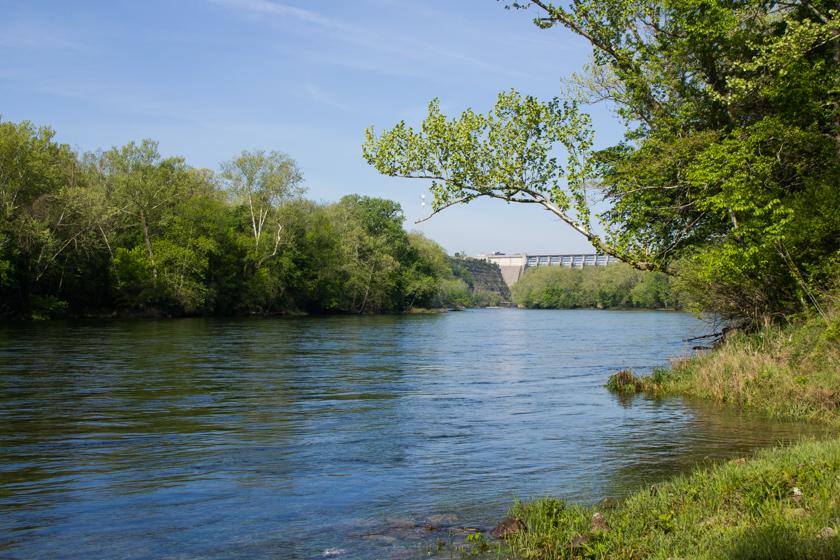 Here is the Lake Taneycomo Annual Report, MDC. 2018 LAKE TANEYCOMO ANNUAL REPORT .pdf
 -
Here is the Lake Taneycomo Annual Report, MDC. 2018 LAKE TANEYCOMO ANNUAL REPORT .pdf View full article
-
 Here is the Table Rock Lake Annual Report, MDC. 2018 TABLE ROCK LAKE ANNUAL REPORT.pdf
 -
Here is the Table Rock Lake Annual Report, MDC. 2018 TABLE ROCK LAKE ANNUAL REPORT.pdf View full article
-
I bet around 7:30 am Saturday i could be wrong
-
I've always hear spinner baits around docks way down by the lower dam in dead winter yields BIG bass.
-
Need to write something for the KC Star so I thought I'd just post it here for those who follow OAF. We had flood gates open at Table Rock Dam last week and through the weekend... but there's no flooding. The Corp is working on the intake screens on the lake side of the dam. Divers have to go down and pull off dead catfish and other nasty things that have piled up over the past few years on these grates. Of course, for that to happen, the turbines have to be offline, but because of the lake levels on Beaver and Table Rock, the Corps need to move some water so over the spill gates it came... bringing all kinds of fish with it including threadfin shad. Trout fishing was incredible over the weekend because of this flow, and the trout are still looking for shad now that the gates are close and turbines running, but it has slowed down. They're running anywhere from 1 to 3 units, and with rain in the forecast, it's not going to slow down any time soon. So fishing in the trophy area has been pretty good, throwing white jigs, spoons, small stick baits and shad flies. And these lures are still working well all the way to the Branson Landing because the shad drifted down that far. But the best fishing has been from Monkey Island down through the Landing. MDC stocked quite a few rainbows late last week and it's been pretty crazy. Best thing to drift with is pink or orange PowerWorms in the bottom, or if the water isn't running too hard, under a float 5-7 feet deep.
-
For LOZ Water Temp Click HERE
-
- 3
-
-
Gates off today at 11 am. Turbines will come back online. Turbines will be back offline this weekend and gates opened.
-
Just got an email from the Corp. Basically, they should be done with turbine maintenance today BUT they probably will do more work this weekend in which all turbines will be offline and gates opened. How much water released depends on this week's rainfall. This may be a pattern for quite a while. They talk about divers... the only thing I can think of it that they're trying to unclog the intakes on the lake side of the dam. When divers are in the water, gates 9 and 10 are releasing water. If they are not, more gates are opened, like what they did this past weekend. We saw shad in the water all day yesterday, more shad when more than 2 gates were opened.
-
 I wrote this as a Facebook comment, and what started as an answer to a question became rather lengthy and in depth. So I thought I'd post it here for future use. We do One Cast everyday. It's a video where originally we made one cast off the dock and kept track of how many we caught. It's become a little more than that the last couple of years but if you go back and watch the ones we did/do off the dock, we're doing the same thing you'd do off the shore below the dam. If you're really serious about this, you have to look at all the components of your presentation- your rod, line and lure. You need a long, medium light spinning rod, almost a medium. You can't work and set a hook with a wimpy rod, not throwing off the shore. I'd use a 7-foot rod, at least a 6-6. Match your line to the weight of your lure. I would try 2-pound Vanish and a true 3/32nd ounce jig. I say true because most jigs out there are not what they say they are. For instance, we carry PJ's jigs. They are almost a full size lighter than their label. Zig Jigs are a little lighter, not as bad. We've developed our own jig and they are very close, within 1/1000's of an ounce. But if you're using 4-pound line, use an 1/8th ounce jig. Play around with it and see what works best. But this combination - line and jig - is very important. And you have to match it to the current/depth of water. I don't think your cast should be out there as far as you can throw it every time. There are alot of fish just a few feet from the bank most times. Heck the guys out in boats are throwing to the bank's edge for a reason! Think of the area of water in front of you as a wall and paint it... work every inch, then move 6 feet, up or downstream. Don't keep throwing in the same place over and over... the fish are laughing at you about the tenth cast - "I've seen that lure before!" Well... if they could talk. When you're working the jig, hold your rod high enough to keep the jig up off the bottom but not too high that you can't set the hook, hard and fast. Don't move your rod tip much when you're working the jig but make short, sharp "jigs", giving it slack between moves. You need to make the jig fall - that's what triggers a strike. Yes they will hit it if it's just swinging and swimming but I guarantee you'll catch more if you get it to drop. Where you land the jig on your cast is equally important. Hitting the right spot in front of you as to current speed and depth of water, letting the jig drop enough, in time to be in front of the fish and get that 3-6 seconds "in the zone" before have to reel and repeat. Throwing above you - that "spot" - and distance of the cast is one formula... both components have to be right. That's where you use your long rod to extend the sweet spot a little. Gotta work it and practice. Vision in your mind - what is the jig doing? Find out what they want - fast or slow presentation. Change it up till you figure it out -- don't keep doing the same thing if it's not working. Change.... move.
 -
I wrote this as a Facebook comment, and what started as an answer to a question became rather lengthy and in depth. So I thought I'd post it here for future use. We do One Cast everyday. It's a video where originally we made one cast off the dock and kept track of how many we caught. It's become a little more than that the last couple of years but if you go back and watch the ones we did/do off the dock, we're doing the same thing you'd do off the shore below the dam. If you're really serious about this, you have to look at all the components of your presentation- your rod, line and lure. You need a long, medium light spinning rod, almost a medium. You can't work and set a hook with a wimpy rod, not throwing off the shore. I'd use a 7-foot rod, at least a 6-6. Match your line to the weight of your lure. I would try 2-pound Vanish and a true 3/32nd ounce jig. I say true because most jigs out there are not what they say they are. For instance, we carry PJ's jigs. They are almost a full size lighter than their label. Zig Jigs are a little lighter, not as bad. We've developed our own jig and they are very close, within 1/1000's of an ounce. But if you're using 4-pound line, use an 1/8th ounce jig. Play around with it and see what works best. But this combination - line and jig - is very important. And you have to match it to the current/depth of water. I don't think your cast should be out there as far as you can throw it every time. There are alot of fish just a few feet from the bank most times. Heck the guys out in boats are throwing to the bank's edge for a reason! Think of the area of water in front of you as a wall and paint it... work every inch, then move 6 feet, up or downstream. Don't keep throwing in the same place over and over... the fish are laughing at you about the tenth cast - "I've seen that lure before!" Well... if they could talk. When you're working the jig, hold your rod high enough to keep the jig up off the bottom but not too high that you can't set the hook, hard and fast. Don't move your rod tip much when you're working the jig but make short, sharp "jigs", giving it slack between moves. You need to make the jig fall - that's what triggers a strike. Yes they will hit it if it's just swinging and swimming but I guarantee you'll catch more if you get it to drop. Where you land the jig on your cast is equally important. Hitting the right spot in front of you as to current speed and depth of water, letting the jig drop enough, in time to be in front of the fish and get that 3-6 seconds "in the zone" before have to reel and repeat. Throwing above you - that "spot" - and distance of the cast is one formula... both components have to be right. That's where you use your long rod to extend the sweet spot a little. Gotta work it and practice. Vision in your mind - what is the jig doing? Find out what they want - fast or slow presentation. Change it up till you figure it out -- don't keep doing the same thing if it's not working. Change.... move. View full article
-
- 6
-
-
Duane saw shad down post Cooper Creek this morning... very nice!!
-
Reviews on Google and other venues get attention... we watch them like a hawk and I know Becky does too. If they get a few 1 and 2 star reviews, I bet heads will roll.
-
Well I'm not sure if this is right, only what I've heard in the past but the answer to your question could be it's different now because of a change in management. Different management plan for sure and I think it's risky not drawing down the lakes. It should start back in December and you'd think they'd use more hydro for power because it's cheaper than other sources, cleaner. I know they have to balance everything... and yes it has changed.
-
Had to edit the first post... I can't count. 9 gates open. They're open 1 foot each with #9 and #10 still open 2 feet. 10,500 c.f.s. 710.5 feet lake level
-
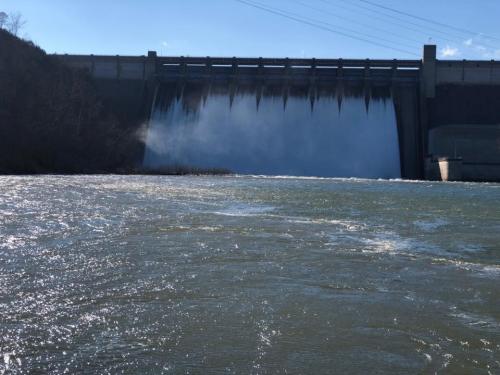
Table Rock Dam just opened 9 flood gates, #9 and #10 gates were already opened 2 feet each - the others I don't know how far they are opened but our lake level went from 706 to 709 feet. We only got a small amount of rain this morning but Beaver Dam reports getting 1 inch. Beaver Lake is already 2 feet above power pool while Table Rock is right at power pool level. It is super windy today and boating is very hard. But with 9 gates open, we are definitely going to see a lot of shad come over the dam. Will report back on fishing.
-
SPILLGATES OPENING TUESDAY, MARCH 5
Phil Lilley replied to Phil Lilley's topic in Upper Lake Taneycomo
Yea... throw right between all the guide boats


