
bfishn
-
Posts
2,109 -
Joined
-
Last visited
-
Days Won
6
Content Type
Profiles
Forums
Blogs
Events
Articles
Video Feed
Gallery
Everything posted by bfishn
-
Wow, that throws a new light on the phrase, "It took a 20 lb sack to be in the money"....
-
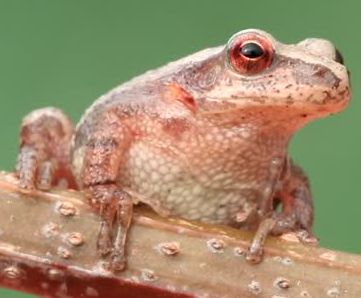
That's just a picture I borrowed from the web, but the ones I've seen looked just like that, red mostly on the lower half. When spawning they do a lot of rolling on their side, so you get kind of a red/brown flashing appearance. Full grown they're in the 3" range (as pictured). Walleye love 'em, I'd have to assume smallies would too. :-)
-
Cardinal Shiners are common in the Elk and turn red when breeding. I've seen big pods of them like you describe, but only in March & April.
-
Before you kill him send that picture to Ringling Bros... With a neck that long and off centered he might have a career in the freak show biz. :-)
-
I won a 27 can Yeti at a supplier's annual BBQ. It's awesome in every way but one; I don't dare risk being seen with it.
-
I think the folks that have been quietly fishing that stretch for decades before you arrived might have something to say about that. (But they probably won't, given their humble nature).
-
Is that the Stinking Creek or Middle Fork arm? Just curious, I grew up ~5 miles north of there when they built the lake.
-
Realtime Visibility, Temperatures and Elevation
bfishn replied to Ben Gillispie's topic in Table Rock Lake
Depth-interval DO telemetry would've cost an arm and a leg not that long ago. Shouldn't be that big a deal now. The biggest drawback with traditional DO sensors is the wet/dry cycle that happens with a portable meter, but a fixed installation beats that problem. Keeping the sensors clean could be a challenge. But once you get that whipped you could integrate the station data to create a live lake wide DO profile, which could prove more valuable than all the other data combined in the summer. -
Realtime Visibility, Temperatures and Elevation
bfishn replied to Ben Gillispie's topic in Table Rock Lake
Hmmm... you reckon any tournament pranksters might 'spill' a few buckets of mud and ice near the sensors closest to the area they want to fish right before a tournament? Nahhh. Pretty cool Ben. -
Kayak Bass Series(KBS) tournament on Table Rock Lake, May 21st
bfishn replied to Moswimb8slinger's topic in Table Rock Lake
Not too many things I'd pay to see, but that's one of them. :-) -
I'm sure I have, but the results weren't memorable. I'm convinced that long, skinny form factor baits are their preference, like chubs and stonerollers for all but the dog days when small sunfish and medium shad are good too. Pretty much anything you can net or trap in a small creek works good, including logperch, sculpins and madtoms. The creek baits stay lively when fished in the 60-65 degree depth ranges walleye spend the bulk of their time in. Warm water baits like sunfish and goldfish do better in the 70+ domain of the catfish. To be honest, the biggest advantage to goldfish is availability. When you can't spare the hour to rod-n-reel a baitwell full of green sunfish for the night, a 10 minute detour to grab some black goldies can save the day. I've caught some real nice flatheads on them, but I prefer sunnies if I can get 'em.
-
Just a "for what it's worth" from a guy that wore out a lot of goldfish, stick to the black ones.
-
Back in the '80s I caught (and released) several foot-long Hellbenders on creek shiners. If you'd told me back then how rare they are I'd have argued with you. If you think a greased pig is hard to hold on to, try to remove a hook from a Hellbender's lip. Caught a few American eels in the Arkansas River. Those too were many years ago. Haven't even seen one in the last 20. Had a 'gull take a swing and a miss at a free-lined live shad once. Glad he missed.
-
all snakes are dangerous, even Garter Snakes!
bfishn replied to Jerry Rapp's topic in General Angling Discussion
Goodun! Thanks Jerry! -
Exploring Population-Level Effects of Fishery Closure during Spawning: An Example Using Largemouth Bass http://sfrc.ufl.edu/allenlab/publications/Gwinn%20and%20Allen%20spawning%20closures.pdf
-
That describes walleye fry behavior to a tee. I (tried to) tank raise about 1/2 million when I was a trout farmer. At <1/8' at hatch, live food becomes a real challenge when you don't have a pond full of zooplankton prepared like the State boys do. I devised a jet system that helped suspend the extremely expensive, nanometer-sieved feed that a buddy at Bozeman USF&W recommended. It worked to some degree, but only about 10% fell for it. The others, determined to have a live meal, ate each other to (practical) extinction in a mere month.
-
I'm a filthy smoker too, but let's get back to cussing for a moment. When I was young and impressionable, there were 7 words the powers-that-be saw fit to censor... ...now there's 68. http://www.buzzfeed.com/mjs538/the-68-words-you-cant-say-on-tv#.uhZgQxnMj
-
Some of us do our best not to speak of it. :-)
-
^^^^ +1 ^^^^
-
Yeah, the new ones have some cool features like the layers and coordinate displays, but since they're simply auto-generated from the national GIS database they lack some detail, particularly in the high relief areas you noticed. The historical collection lacks all the new toys, as they are just scans of the older paper maps that were created from aerial photos, but they're a little better in high-relief detail. Unzipping the compressed file downloads is just a right click on the zipped folder, then select "Extract all". :-)
-
You can get free downloads of USGS topos from their Historical Topo collection at; http://nationalmap.gov/historical/ Your area of interest hasn't changed much in the last few decades, so maps from the '80s-90s should serve your purpose.
-
DEPTHFINDER WIRING
bfishn replied to TRRANGER's topic in Tips & Tricks, Boat Help and Product Review
Engineering Toolbox has you covered; http://www.engineeringtoolbox.com/amps-wire-gauge-d_730.html -
...even the fish has a jersey...
-
You go fishing. Every chance you get. You get your butt handed back to you. A lot. You learn from that. You build a strategy based on failures. Occasionally you'll get lucky. You learn from that too. When you finally develop a few successful strategies you'll find the satisfaction earned was well worth the effort.
-
Some interesting related trivia... The White River, Buffalo River, Kings River, and War Eagle Creek all begin within a 3 mile radius of each other. From there they flow west, north, and east, yet they all end up back together again. On the other side of the same high spot between Boston & Pettigrew, the Little Mulberry Creek, Mulberry River, Big Piney Creek, and the Illinois Bayou all begin within a few miles of each other and flow southerly to the Arkansas River.
